
- 40% reduction in liver fat content in preclinical studies for MASH
- Improved insulin and C-peptide responses in patients treated with Efsubaglutide Alfa
- Potential for diabetes remission observed in some patients after drug withdrawal
Experts view Efsubaglutide Alfa as a groundbreaking advancement in diabetes treatment, with its potential to restore pancreatic β-cell function offering a paradigm shift from symptom management to disease modification.
New Diabetes Drug May Do More Than Lower Blood Sugar—It May Heal
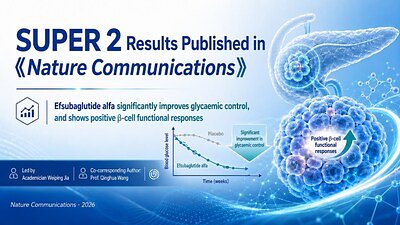
HONG KONG – May 13, 2026 – A groundbreaking study published in the prestigious journal Nature Communications has unveiled compelling evidence for a new type 2 diabetes drug that may not only manage the disease but partially improve the underlying cellular damage that causes it. The drug, Efsubaglutide Alfa, developed by Hong Kong-based Innogen Pharmaceuticals, has demonstrated a potential to go beyond simple glucose control, offering a glimmer of hope for true disease modification.
The publication details the results of the SUPER 2 clinical trial, a large-scale study that evaluated the long-acting GLP-1 receptor agonist in adults whose type 2 diabetes was inadequately controlled by metformin, a common first-line therapy. The findings confirm that Efsubaglutide Alfa significantly lowers blood sugar levels, but more importantly, it appears to improve the function of the body's own insulin-producing pancreatic β-cells.
This dual action represents a potential paradigm shift in a field long focused on symptom management, positioning the drug as a significant contender in the fiercely competitive multi-billion dollar market for metabolic diseases.
A Shift from Management to Modification
For decades, the primary goal of diabetes treatment has been to manage blood sugar levels to prevent long-term complications. Efsubaglutide Alfa belongs to a class of drugs called GLP-1 receptor agonists, which have already transformed diabetes care by stimulating insulin release in response to high glucose levels. However, the SUPER 2 study suggests this new compound may do more.
Led by Academician Weiping Jia and Professor Qinghua Wang, the drug's inventor and founder of Innogen, the trial incorporated sophisticated mixed-meal tolerance tests to assess the health of β-cells. The results were striking: patients treated with Efsubaglutide Alfa showed improved insulin and C-peptide responses after eating, along with other favorable metabolic changes. These findings suggest the drug is helping to restore the function of these vital cells, which become progressively weaker as type 2 diabetes advances.
"The ability to improve β-cell function is the holy grail of diabetes research," noted one independent endocrinologist not involved in the study. "We have become very good at managing the symptoms, but a therapy that can address the root pathophysiology and improve the body's intrinsic ability to regulate glucose could fundamentally change patient outcomes."
This isn't the first time Efsubaglutide Alfa has shown such promise. An earlier study published in Advances in Therapy found that a portion of newly diagnosed, drug-naïve patients who received the treatment experienced a remission of their diabetes even after the drug was withdrawn. The larger, more robust SUPER 2 data now provides powerful clinical support for the idea that improving β-cell function is a key mechanism behind these encouraging results, suggesting a potential for long-term, disease-modifying benefits.
Innogen's Ascent in a Crowded Field
The promising data for Efsubaglutide Alfa thrusts Innogen Pharmaceuticals into the spotlight as a formidable innovator. The company, with operations in Hong Kong and Pudong, successfully debuted on the Hong Kong Stock Exchange in August 2025, with its share price surging on the promise of its lead candidate. The publication in Nature Communications provides the scientific validation to match the market's initial enthusiasm.
Innogen enters a landscape dominated by pharmaceutical giants and blockbuster drugs like semaglutide (Ozempic, Wegovy) and tirzepatide (Mounjaro). The recent FDA approval of Eli Lilly's oral GLP-1 drug, Orforglipron (Foundayo), has further intensified competition by offering patients an alternative to injections. To compete, a new entrant needs a clear differentiator.
Innogen believes it has found one. While its competitors focus largely on superior glucose lowering and weight loss, Efsubaglutide Alfa's unique selling proposition is its potential to heal. The company is betting that the prospect of preserving or restoring β-cell function will resonate with physicians and patients seeking more than lifelong management. Furthermore, early data suggests the drug may promote a "fat-loss-with-muscle-preservation" effect, a highly desirable trait in obesity treatment.
Having already secured approval in China on January 23, 2025, where the drug is marketed as Diabegone, Innogen is now focused on securing its place on China's national reimbursement drug list. This move is critical for ensuring broad access and establishing a strong market foothold before expanding globally.
Hope for Millions and a Pipeline of Possibilities
The implications of the SUPER 2 study extend far beyond the laboratory. For the hundreds of millions of people living with type 2 diabetes, a treatment that could slow or even partially reverse the disease's progression offers profound hope. It suggests a future where patients may experience better long-term health and a reduced burden of care.
Innogen is already exploring the broader potential of Efsubaglutide Alfa beyond diabetes. The company has received approvals from both the U.S. FDA and China's NMPA to begin a Phase II trial for Metabolic Dysfunction-Associated Steatohepatitis (MASH), a serious liver disease often linked to obesity and diabetes. Preclinical studies in primates showed the drug could reduce liver fat content by an impressive 40%.
Simultaneously, a large-scale Phase IIb/III clinical trial named ENLIGHT is actively recruiting overweight and obese subjects to evaluate the drug's efficacy as a weight-loss treatment. With previous trials demonstrating significant weight reduction, Efsubaglutide Alfa is positioned to compete in the booming anti-obesity market.
By building a robust clinical program around a single, powerful molecule, Innogen is strategically leveraging its core innovation. The journey from a promising scientific concept to a globally recognized therapy is long and arduous, but with strong clinical data, a clear market strategy, and a drug that may fundamentally change the course of metabolic disease, Innogen Pharmaceuticals is a company to watch.