
- 166 pages: The book's concise length, designed for broad accessibility. - Independent publication: The book is self-published, positioning it outside traditional academic channels. - Multidisciplinary approach: Integrates geography, geology, and myth to reframe the conflict.
Experts would likely view this work as a unique, accessible contribution to the discourse, offering a fresh perspective by blending geography and cultural narratives, though its lack of formal academic credentials may prompt cautious reception.
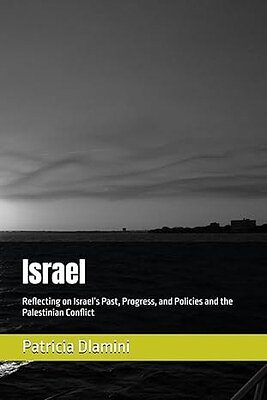
New Book Blends Geography and Myth to Reframe Israel-Palestine Conflict
DURBAN, South Africa – March 13, 2026 – By Melissa Adams
In a field saturated with dense political analysis and historical accounts, a new book by independent author Patricia Dlamini is proposing a radically different approach to understanding the Israel-Palestine conflict. The upcoming release, titled Israel: Reflecting on Israel's Past, Progress, and Policies and the Palestinian Conflict, aims to untangle one of the world's most enduring disputes by weaving together history, geology, and the power of myth.
Announced from her base in Durban, South Africa, Dlamini’s work seeks to guide readers beyond the simplified, often polarizing narratives that dominate news cycles and social media. Instead, it invites them to explore the deeper environmental and cultural undercurrents that have shaped the region for millennia, arguing that the land itself and the stories told about it are as crucial to the conflict as any modern political development.
A Multidisciplinary Approach
The central premise of Dlamini's book is that a true understanding of the present-day conflict is impossible without appreciating its layered foundations. The work deliberately steps back from a purely political-historical timeline to integrate less conventional, yet profoundly influential, factors.
A distinctive feature highlighted in the book's announcement is its focus on geology and geography. Dlamini explores how the physical landscape—its deserts and rivers, its strategic position as a crossroads between continents, and its ancient trade routes—has fundamentally shaped migration, settlement patterns, and the exercise of power for centuries. By examining these physical realities alongside historical events, the book argues that the very ground beneath the conflict has played a major role in human cooperation and competition.
"Understanding the Middle East requires more than following current events," Dlamini explains in the press release announcing the book. "To understand the present, we must also explore the deeper layers of the past—how geography shaped civilizations, how myths shaped identities, and how historical memory continues to influence politics today."
This approach extends to the powerful role of storytelling. The book treats religious traditions, cultural myths, and foundational national narratives not as fictions to be dismissed, but as influential cultural frameworks. Dlamini’s analysis considers how these stories have been used to explain origins, assert identity, and forge an unbreakable connection between people and the land. These narratives, the book contends, continue to shape political discourse and public perception with an emotional and symbolic weight that policy papers often miss.
An Unconventional Author Tackles a Complex Subject
While the book's ambitious intellectual framework is clear, the author's own background presents a compelling narrative. Patricia Dlamini is an independent writer whose previous published works are in the romance genre, including titles like The Competitor's Kiss: When Rivalry Turns to Romance, Who Really Wins? and Tides of Opposites: How Two Worlds Collide. A five-star review from Readerviews.com, mentioned in the new book's promotional materials, was awarded to one of her romance novels.
This pivot from fiction and romance to the intricate, high-stakes world of Middle Eastern geopolitics is unusual. Dlamini does not appear to have a formal academic background in Middle East studies or political science, positioning her as an outsider to the traditional scholarly community that typically produces literature on this topic.
However, her status as an independent author is a core part of the book's identity. It is presented not as a work of institutional scholarship but as a reflective analysis from a writer whose expertise lies in historical interpretation and the mechanics of narrative itself. The book, which is independently published and runs a concise 166 pages, appears aimed at a broad audience seeking clarity rather than a dense academic treatise. In this context, Dlamini’s background in storytelling could be seen as the very lens she applies to the conflict—examining how competing narratives, whether ancient or modern, have constructed the reality on the ground.
Mapping Minds and Borders
The book’s dual focus on geography and myth aims to create a unique map of the conflict, one that charts not only physical borders but also the boundaries of identity and belief. Dlamini’s thesis suggests that the symbolic meaning attached to the region is inextricably linked to its physical characteristics.
By integrating geology, the book promises to show how access to water, defensible terrain, and fertile land has been a source of power and conflict since antiquity. This long-term environmental perspective seeks to contextualize modern disputes over resources and territory within a much deeper history of human interaction with the land.
Simultaneously, the exploration of "myth-telling" delves into the psychological and cultural landscape. The book encourages readers to engage critically with the foundational stories that both Israeli and Palestinian communities tell about themselves. Dlamini emphasizes that the goal is not to debunk these narratives but to understand them as powerful forces that shape collective memory, justify claims, and fuel the powerful emotions surrounding the conflict.
"What readers often look for in books about Israel and Palestine is clarity," Dlamini states. "People want to understand how we arrived at the present moment. They want to explore the history behind the headlines and learn how different perspectives developed over time."
A New Voice in a Crowded Field
Literature on the Israel-Palestine conflict is vast and varied, including seminal works by scholars like Rashid Khalidi, Edward Said, and Ilan Pappe, who have shaped academic and public discourse for decades. Dlamini’s book enters this crowded field not as a direct challenge to these historical and political analyses, but as a supplementary text offering a different kind of framework.
Where other works focus on settler colonialism, political misrepresentation, or specific historical events, Dlamini’s contribution appears to be its synthesis and its accessibility. By explicitly connecting the physical land to the abstract stories told about it, the book attempts to forge a holistic narrative for the general reader. Its relatively brief format suggests an intention to provide an entry point into a complex subject, rather than an exhaustive scholarly account.
The project hopes to foster more informed and constructive dialogue by encouraging readers to examine the conflict from multiple viewpoints. By presenting a framework that values geography, history, and narrative equally, Patricia Dlamini aims to equip her audience with the tools to see the conflict in a broader, more nuanced perspective, moving beyond entrenched positions to a deeper awareness of the forces at play.