
- 98% of patients experienced no serious safety issues requiring reoperation
- 1.33% reoperation rate for hiatal hernia recurrence, significantly lower than traditional surgeries (2-17%)
- 602 patients tracked across 22 European centers for up to 6.75 years
Experts conclude that the RefluxStop® implant demonstrates a remarkably safe and effective alternative to traditional GERD surgeries, with long-term data supporting its potential to become a new standard of care.
New Acid Reflux Implant Shows Remarkable Safety in Landmark Study
VADUZ, Liechtenstein – April 21, 2026 – For the more than one billion people worldwide who suffer from the chronic pain and discomfort of acid reflux, a new horizon in treatment may be emerging. A landmark study published in Scientific Reports, part of the prestigious Nature portfolio, has unveiled compelling long-term safety data for RefluxStop®, an innovative implantable device developed by medtech company Implantica. The findings, representing the largest real-world assessment of the device to date, suggest a potential paradigm shift away from traditional surgeries that are often associated with debilitating side effects.
The extensive multi-center study tracked 602 patients with gastroesophageal reflux disease (GERD) across 22 European centers for up to 6.75 years. The results paint a clear picture of a device with an exceptional safety profile. Over 98% of patients who received the RefluxStop implant experienced no serious safety issues that required a reoperation, a critical benchmark for any long-term surgical solution.
A New Standard in Safety for GERD Treatment
Perhaps the most striking finding from the study relates to reoperation rates. The primary reason for a second surgery in the study group was the recurrence of a hiatal hernia, a condition where part of the stomach pushes up through the diaphragm. This issue required reoperation in just 1.33% of the RefluxStop patients.
This figure is dramatically lower than what is seen with the current standard of care for anti-reflux surgery, Nissen fundoplication. According to the study's authors and supporting clinical literature, recurrence rates for hiatal hernias in traditional procedures are approximately tenfold higher, with some studies reporting reoperation rates for complications or failure ranging from 2% to as high as 17% over ten years. The fact that all adverse events in the RefluxStop study were resolved satisfactorily for all patients further underscores the procedure's robust safety.
"I would like to thank Prof. Schoppmann and the 22 independent surgeons who contributed to this important milestone study in the field of GERD," said Dr. Peter Forsell, the inventor of RefluxStop and CEO of Implantica, in a statement. He emphasized the importance of the long-term follow-up, noting it "will impact the surgical treatment of GERD for years to come."
Addressing the Shortcomings of Current Therapies
The urgent need for a better solution is clear. GERD affects roughly 20% of the adult population in Western countries, creating a massive patient population often caught between imperfect choices. The first line of defense is typically lifestyle changes and medication, most notably proton pump inhibitors (PPIs). While effective for many, millions of patients find PPIs do not fully control their symptoms. Furthermore, growing concerns about the potential long-term side effects of these drugs, including risks to kidney health and bone density, have left many patients and doctors seeking alternatives.
For those with severe or medication-resistant GERD, the next step has traditionally been surgery, most commonly the Nissen fundoplication. This procedure involves wrapping the upper part of the stomach around the lower esophagus to tighten the valve and prevent acid from escaping. While often effective at stopping reflux, it fundamentally alters the patient's anatomy and can lead to a host of new problems. Common side effects include dysphagia (difficulty swallowing), pain when swallowing, and "gas-bloat syndrome," an uncomfortable inability to belch or vomit. These complications can significantly impact a patient's quality of life and are a primary reason many hesitate to undergo surgery.
The Science Behind a Gentler Approach
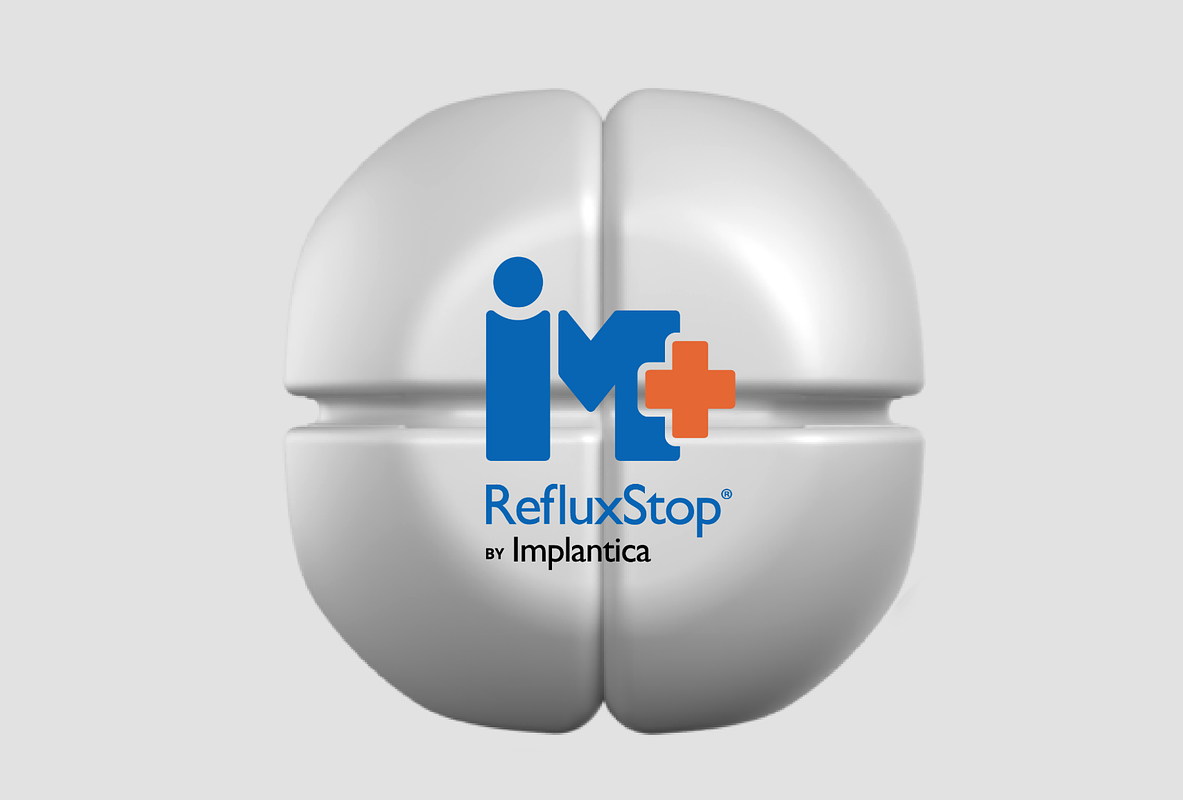
RefluxStop was engineered from the ground up to avoid these very complications. Its unique mechanism of action is what sets it apart from all other surgical options. Instead of encircling and compressing the food passageway, the RefluxStop device is a small, non-compressive silicone implant. During a laparoscopic procedure, it is placed on the outer surface of the upper part of the stomach, where it serves as an anchor.
This placement reinforces the lower esophageal sphincter, keeping it in its natural position below the diaphragm and restoring the body's own anatomical anti-reflux barrier. It treats the cause of reflux without interfering with the normal function of the esophagus. This physiological approach allows patients to eat, swallow, belch, and vomit normally—functions that are often compromised after a fundoplication.
The study's results validate this engineering philosophy, demonstrating that by avoiding compression of the food passageway, the device can achieve excellent reflux control without the associated side effects that have long plagued anti-reflux surgery.
Paving the Way for Global Access
This robust clinical data, now validated by a high-impact, peer-reviewed publication, is a cornerstone of Implantica's strategy as it seeks to enter the lucrative U.S. market. The company is closing in on seeking FDA approval, a rigorous process for which this long-term safety data will be indispensable. The findings were already presented at the 2025 American Foregut Society Meeting, where they were met with strong interest from leading U.S. surgeons and gastroenterologists.
"As we close in on FDA approval of RefluxStop®, real-world data confirming previously reported excellent outcomes is more important than ever," Dr. Forsell stated. "I strongly believe the accumulated clinical evidence positions RefluxStop® to drive a paradigm shift in the treatment of GERD worldwide."
For investors, this publication serves as a major de-risking event, providing the kind of independent, long-term validation that can pave the way for regulatory approval, physician adoption, and insurance reimbursement. With a global GERD treatment market projected to reach USD 8.0 billion by 2032, a device that can prove it is both safer and highly effective has the potential to capture a significant share. For the millions of patients struggling with the daily burden of acid reflux, the promise is not merely financial, but the potential for a long-term solution that restores health without introducing a new set of problems.
Topics & Related
Sustainability & Climate
Digital Transformation
Medical Devices
Cryptocurrency & Digital Assets
Related Company Pulse