
- 20-30% of patients on anti-amyloid therapies like Leqembi and Donanemab experience ARIA side effects, requiring rigorous monitoring.
- Neurophet's AI software automates detection of ARIA, potentially reducing the need for subjective visual inspections.
- Neurophet has received three FDA clearances, solidifying its position in the U.S. neuro-AI market.
Experts view Neurophet AQUA AD Plus as a significant advancement in Alzheimer's treatment safety, offering objective, AI-driven monitoring of treatment-related side effects and personalizing care through detailed brain analysis.
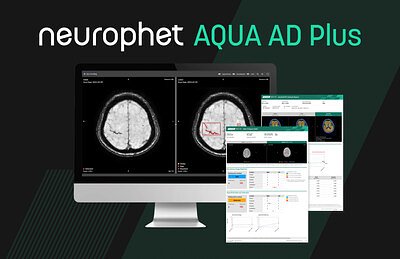
Neurophet's AI Gets FDA Nod to Refine Alzheimer's Treatment Safety
SEOUL, South Korea – February 06, 2026 – South Korean AI firm Neurophet has received 510(k) clearance from the U.S. Food and Drug Administration for its advanced neuroimaging software, Neurophet AQUA AD Plus. The decision marks the company's third FDA clearance and signals a significant step forward in using artificial intelligence to manage the complexities of Alzheimer's disease treatment.
The software is designed to provide a comprehensive, AI-driven analysis of brain scans, offering clinicians a powerful tool to evaluate patients throughout the Alzheimer's care continuum. This latest approval validates Neurophet's growing portfolio on a global regulatory stage and sets the stage for an accelerated expansion into the competitive U.S. healthcare market.
A New Tool for a New Era of Treatment
Neurophet AQUA AD Plus distinguishes itself by going beyond general brain analysis. The software's core innovation, and the key feature of its "Plus" designation, is its ability to use AI to automatically detect and quantify subtle but critical changes in the brain associated with new Alzheimer's therapies. Specifically, it analyzes MRI scans to identify hypointense lesions, such as cerebral microbleeds, and hyperintense lesions related to brain edema.
This capability is critically timed. The recent emergence of anti-amyloid antibody therapies, like Leqembi and Donanemab, has created both hope and a new set of clinical challenges. A known side effect of these treatments is Amyloid-Related Imaging Abnormalities (ARIA), which can manifest as the very edema (ARIA-E) and microhemorrhages (ARIA-H) that AQUA AD Plus is designed to track. According to clinical studies, ARIA can affect 20-30% of patients on these drugs, necessitating rigorous monitoring.
Patients undergoing these new treatments often require frequent MRI scans—as many as five or six in a single year—to ensure their safety. By automating the detection and quantification of these potentially dangerous side effects, the software aims to replace subjective, time-consuming visual inspection with objective, reproducible data. This allows neurologists and radiologists to more accurately assess risks and monitor the impact of treatment with greater precision.
Personalizing Care and Enhancing Patient Safety
The true impact of Neurophet AQUA AD Plus lies in its potential to personalize Alzheimer's care. By providing a detailed, quantitative report on brain structures, lesions, and other biomarkers, the software equips clinicians with the information needed to make highly individualized treatment decisions.
Before starting a patient on an anti-amyloid therapy, a clinician can use the software to establish a baseline and assess pre-existing risk factors. Once treatment begins, the tool provides a consistent method for tracking changes over time. This objective data can help determine patient eligibility for certain drugs, guide dosing adjustments, and inform the difficult decision of when to pause or halt therapy if side effects become too severe.
Beyond monitoring for ARIA, the platform offers a holistic analysis by integrating data from both MRI and PET scans. It can quantify brain atrophy, assess amyloid and tau protein levels through standardized uptake value ratio (SUVR) analysis, and evaluate vascular biomarkers. This comprehensive view provides deeper insights into the disease's progression and the patient's unique pathological profile, moving the field further away from a one-size-fits-all approach to Alzheimer's management. The goal is to not only improve the efficacy of treatments but also significantly enhance patient safety by catching complications early.
A Strategic Play for the U.S. Market
This third FDA clearance is a cornerstone of Neurophet's aggressive strategy to capture a significant share of the U.S. neuro-AI market. Following previous clearances for Neurophet AQUA (for brain atrophy analysis) and Neurophet SCALE PET (for PET image analysis), the approval of AQUA AD Plus completes a powerful suite of tools tailored for the modern dementia clinic.
The company is entering a dynamic and competitive space. Key players in the U.S. include Cortechs.ai, whose NeuroQuant software was cited by Neurophet as a predicate device in its FDA submission, and icometrix, which recently received authorization for an AI tool specifically designed to monitor ARIA. Neurophet's strategy appears to be one of comprehensive integration, offering a single platform that addresses neurodegeneration, key protein pathologies, and treatment-related side effects.
Neurophet's ambitions are clear. In late 2025, the company hired Josh Cohen, a former executive from competitor Cortechs.ai, to serve as its Head of Americas Business. This move signaled a serious commitment to building a commercial infrastructure and establishing distribution partnerships across the continent. The company is leveraging its leadership position in the Asia-Pacific market as a springboard for this global expansion.
"Receiving FDA 510(k) clearance for Neurophet AQUA AD Plus represents a significant milestone that allows us to introduce our advanced Alzheimer's imaging technology more broadly in the U.S. market," said Jake Junkil Been, Co-CEO of Neurophet, in a statement. "We plan to accelerate our expansion across the U.S. by strengthening collaborations with healthcare institutions and strategic partners."
The Future of Data-Driven Neurology
The approval and rollout of tools like Neurophet AQUA AD Plus represent a broader shift in neurology toward data-driven, quantitative medicine. For decades, the interpretation of brain scans relied heavily on the trained eye of a radiologist, introducing potential for subjective variability. AI-powered analytics promise to standardize this process, providing a level of detail and consistency that is difficult to achieve manually.
This transition is not just about efficiency; it's about unlocking deeper clinical insights. By meticulously tracking changes in brain volume, lesion counts, and protein buildup, these technologies create a rich, longitudinal dataset for each patient. This data can help refine treatment protocols, improve the design of future clinical trials, and ultimately deepen the scientific understanding of Alzheimer's disease itself.
As Neurophet and its competitors deploy these advanced diagnostic aids into clinics and hospitals, the focus will be on seamless workflow integration and demonstrating clear value in improving patient outcomes. The ability to manage new, powerful Alzheimer's therapies safely and effectively may well depend on the precision and reliability of the AI-driven tools designed to support them.