
- 5% GDP Defense Target: NATO members may be asked to dedicate 5% of GDP to defense by 2035, up from the current 2% target. - 32-Nation Alliance: NATO includes 32 member countries as of 2026. - Admiral Vandier's Tenure: Admiral Pierre Vandier has led NATO's Supreme Allied Commander Transformation since September 2024.
Experts agree that NATO must rapidly adapt its military strategies, increase defense spending, and foster technological innovation to maintain deterrence in an era of heightened global security challenges.
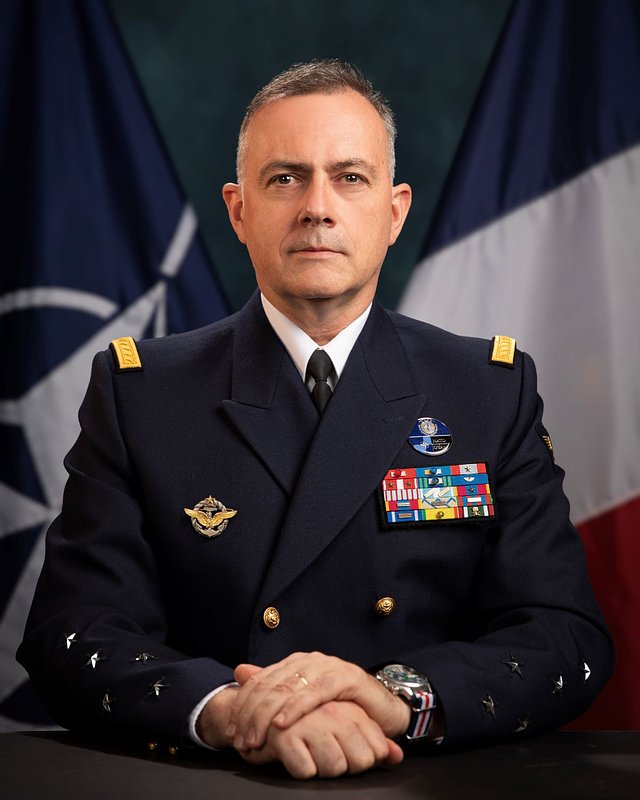
NATO Commander to Outline Alliance's Future Amid New U.S. Demands
WASHINGTON, D.C. – February 05, 2026 – As the North Atlantic Treaty Organization confronts a rapidly shifting global security landscape, one of its top military leaders is set to address the future of the alliance and its direct implications for United States security interests. Admiral Pierre Vandier, NATO's Supreme Allied Commander Transformation (SACT), will speak at the National Press Club in Washington on February 10, an event that comes at a pivotal moment for transatlantic relations.
Admiral Vandier's remarks are expected to detail how Allied Command Transformation (ACT), NATO's strategic warfare development command based in Norfolk, Virginia, is steering the 32-nation alliance to maintain its military edge. The address gains significant weight in light of a new U.S. defense posture that places unprecedented demands on European allies to increase defense spending and assume greater responsibility for their own conventional defense.
The Architect of Adaptation
Admiral Pierre Vandier, who took command as SACT in September 2024, brings a wealth of combat and leadership experience to his role. A career naval aviator in the French Navy, he has participated in missions over the First Gulf War, Bosnia, Kosovo, and Afghanistan. His career includes command of the aircraft carrier Charles de Gaulle and serving as Chief of the French Navy before his appointment to one of NATO’s two strategic command posts.
In his capacity as SACT, Vandier is charged with overseeing the continuous evolution of NATO’s military forces, a task he has approached with a stark warning: "Those who will survive are those who adapt." Since taking command, he has championed an "extraordinary effort" to overhaul military training, integrate emerging technologies like artificial intelligence and quantum computing, and develop novel combat tactics. His focus is on ensuring NATO can achieve and maintain operational superiority in an era marked by rapid global rearmament and strategic competition.
His perspective is informed by a deep understanding of modern deterrence, a subject he explored in his book, "Deterrence in the Third Nuclear Age." Vandier's leadership at ACT is therefore not just about managing incremental change but about fundamentally rethinking how the alliance prepares for future conflicts across all domains—land, sea, air, space, and cyberspace.
Transforming the Alliance: From Doctrine to Digital Dominance
Allied Command Transformation serves as NATO's primary engine for innovation, responsible for ensuring the alliance is prepared not for the last war, but for the next one. Under Admiral Vandier's predecessor, ACT laid the groundwork for several key initiatives, including the integration of new members like Finland and Sweden and the development of a Multi-Domain Operations (MDO) concept. This MDO roadmap aims to synchronize military actions across all domains to create overwhelming effects.
Building on this foundation, Vandier is now pushing the alliance to accelerate its digital transformation and assert its sovereignty in the increasingly contested domains of space and cyber. He has been a vocal proponent of abandoning a "culture of excessive caution," arguing that in the current security environment, the risk of falling behind technologically is far greater than the risk of making mistakes while innovating.
This push for rapid adaptation extends to the very structure of Europe's defense industry. Vandier has openly criticized the fragmentation of the European defense market, calling for greater industrial and technological coherence to build the economies of scale necessary to compete with global powers. This involves not only developing new capabilities but ensuring that allied nations can produce and procure them efficiently and collaboratively, a key focus for organizations like the European Defence Agency (EDA).
The Transatlantic Bargain: Burden-Sharing in a New Era
Admiral Vandier's address in Washington will be closely scrutinized against the backdrop of a significant policy shift outlined in the 2026 U.S. National Defense Strategy (NDS). The new strategy moves the goalposts for allied contributions, advocating for a "Hague Commitment" that would see NATO members dedicate 5% of their GDP to defense by 2035. This is a substantial leap from the long-standing 2% target, which many members still struggle to meet.
The proposed 5% includes 3.5% for core defense needs and an additional 1.5% for related areas such as critical infrastructure protection, civil preparedness, and technological innovation. This new framework reflects a U.S. desire for European allies to assume "primary responsibility" for their own conventional defense, particularly in providing support for Ukraine. According to the NDS, U.S. support, while still critical, would become "more limited," with a potential "calibration" of permanently stationed American ground forces in Europe in favor of rotational deployments.
This emphasis on burden-sharing and European strategic responsibility will undoubtedly be a central theme of the question-and-answer session following Vandier's remarks. How ACT can help facilitate this massive increase in defense investment and capability development across the alliance, and how NATO will maintain a credible deterrence posture amid a shifting U.S. force posture, are among the most pressing questions facing the alliance today.
Navigating a Complex Security Landscape
The urgency behind NATO's transformation is driven by a security environment more volatile than at any time since the Cold War. Russia's ongoing war in Ukraine remains the most immediate and acute threat, reinforcing the need for a robust and ready conventional deterrent in Eastern Europe. The alliance must continually adapt its plans and force structures to counter this persistent challenge.
Simultaneously, NATO is increasingly focused on the systemic challenges posed by China. This includes its rapid military modernization, its growing influence in the cyber and space domains, its use of cognitive warfare, and its economic support for Russia's war effort. While the U.S. strategy seeks to deter China through strength while maintaining open lines of communication, NATO as a whole is grappling with how to integrate this complex challenge into its core defense and deterrence mission.
These external pressures are compounded by internal debates over the future of the European defense industrial base and the pace of innovation. Admiral Vandier’s call to overcome fragmentation and risk aversion speaks directly to the challenge of translating political will and increased spending into tangible, interoperable military capabilities that can be delivered at speed and scale. His speech at the National Press Club will offer a crucial window into how NATO's military leadership plans to navigate these turbulent waters and ensure the alliance remains the bedrock of transatlantic security for decades to come.