
- 10,000 people experiencing homelessness in Quebec, with nearly half (4,690) in Montreal.
- 20,000 patient visits served by the first mobile clinic since April 2023.
- 15% of Montreal tenants reported experiencing homelessness in 2024, up 50% from the previous year.
Experts view Montreal's mobile health fleet as a scalable, data-driven model that effectively combines public-private partnerships and technology to address urban homelessness and social instability.
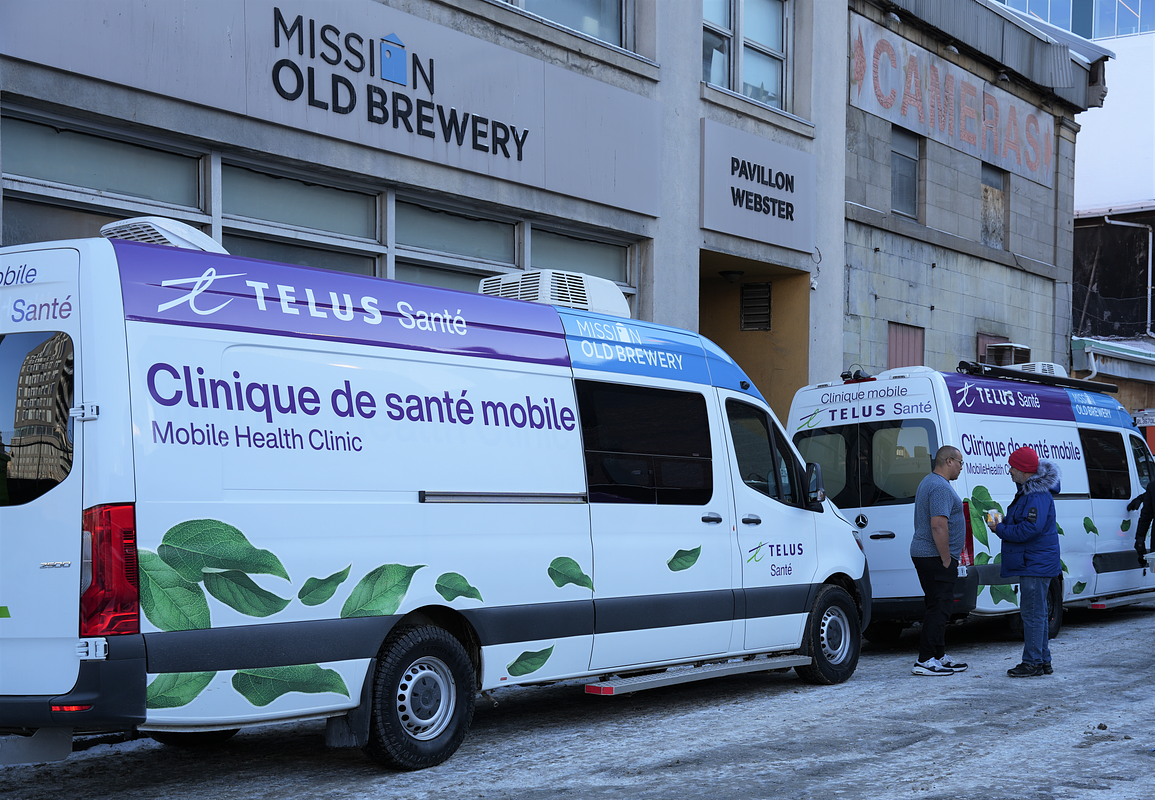
Montreal's Mobile Health Fleet: A New Strategy for Urban Stability
MONTREAL, QC – December 09, 2025 – In a direct response to a burgeoning social crisis, the Old Brewery Mission and TELUS Health have launched a second mobile health clinic on the streets of Montreal. While the vehicle itself is a tangible symbol of aid, its deployment represents something far more significant: a strategic shift in how public-private partnerships can leverage technology to address deep-seated urban vulnerabilities. As Quebec grapples with a record 10,000 people experiencing homelessness, this expansion moves beyond traditional charity, offering a data-driven, integrated model aimed at fostering long-term social stability.
The initiative, which saw its first clinic deliver over 20,000 patient visits since April 2023, is a critical intervention. This second clinic effectively doubles the operational capacity of a program that has become a vital lifeline, demonstrating a scalable strategy that other urban centers may look to for confronting similar challenges. It is an exploration of how corporate technological infrastructure and non-profit expertise can merge to create a new kind of social safety net.
The Escalating Crisis on Montreal's Streets
The urgency behind this expansion cannot be overstated. The backdrop is a rapidly deteriorating situation across Quebec, with Montreal at its epicenter. The province has seen a 15% surge in its homeless population in just the last 18 months. Of the nearly 10,000 individuals identified as visibly homeless in a 2022 count, almost half - 4,690 people - resided in Montreal. This represents a dramatic increase from the 5,789 counted province-wide in 2018, illustrating an accelerating trend.
Further data paints an even starker picture of housing precarity. A July 2024 survey revealed that a staggering 15% of Montreal tenants reported having experienced homelessness at some point, a 50% jump from the 10% reported just a year prior. This suggests the crisis extends far beyond those visibly living on the streets, touching a growing segment of the population struggling with housing affordability and economic instability.
The drivers of this crisis are multifaceted, stemming from a perfect storm of a critical affordable housing shortage, rising costs of living, and systemic gaps in mental health and addiction services. For a population that is disproportionately composed of Indigenous peoples and a growing number of women, these systemic failures create immense barriers to stability. It is within this complex environment that the mobile clinic strategy finds its purpose: to directly engage with and support individuals who have fallen through the cracks of conventional systems.
Deploying Technology as a Strategic Asset
The partnership between the Old Brewery Mission, an institution founded in 1889, and TELUS, a global communications technology company, is a case study in leveraging modern tools for social good. The new, custom-built mobile clinic is more than just a vehicle with medical supplies; it is a networked node of care, powered by TELUS Wi-Fi and, most critically, its Electronic Medical Record (EMR) solution.
For a population that is inherently transient and often lacks official identification or a documented medical history, the EMR system is a strategic game-changer. It allows the clinic's staff - which includes nurses and outreach workers - to create and maintain a consistent health record for each individual they treat. This seemingly simple function is transformative. It enables continuity of care, tracks conditions and treatments over time, and builds a legitimate medical history that can be used to integrate patients into the broader provincial healthcare network, managed by partners like the CIUSSS Centre-Sud.
"The first mobile clinic has supported 20,000 patient visits in just over two years – proof of what's possible when we combine leading-edge technology with human compassion," noted Benoit Simard, Vice-President at TELUS. This sentiment captures the core of the strategy: using technology not as a cold, automated solution, but as an enabler of more effective, dignified, and consistent human-to-human care. By bringing the technology to the people, the program dismantles the primary barriers - lack of address, transportation, or trust in institutions - that prevent access to healthcare.
An Integrated System for Long-Term Reaffiliation
Perhaps the most forward-thinking aspect of this initiative is its holistic definition of 'healthcare.' The services provided on board extend far beyond treating physical ailments. The clinic operates as a multi-service hub designed to address the root causes that perpetuate the cycle of homelessness. This includes providing harm reduction services, including life-saving Narcan for opioid overdoses, and offering a crucial entry point for addiction and mental health support.
Crucially, the team provides administrative and logistical support that is fundamental to social reaffiliation. Since its launch, the initial clinic helped 78 people obtain provincial health insurance cards (RAMQ) and assisted 221 individuals with filing income tax returns. These are not minor bureaucratic tasks; they are essential prerequisites for accessing social assistance, applying for subsidized housing, and securing employment. By integrating this support directly into the healthcare outreach, the program creates a direct pathway from street-level intervention to long-term stability.
"With this second mobile clinic, we are strengthening our capacity to meet the most vulnerable people where they are, and to offer them personal and practical support," said James Hughes, CEO of the Old Brewery Mission. "We can now further connect with this population and work to find solutions that preserve dignity." This approach acknowledges that rehousing is not simply about providing a roof, but about rebuilding an individual's connection to the social and administrative systems they have been excluded from.
The Architecture of Social Investment and Future Sustainability
The mobile clinic program is a prime example of what TELUS refers to as "social capitalism," where corporate assets are deployed to generate positive social outcomes alongside economic returns. TELUS is investing $18M in its Health for Good program across Canada through 2028, providing the private funding necessary to operate these clinics, with the first vehicle's annual operational cost pegged at approximately $300,000.
This private investment, however, operates within a larger ecosystem of public funding. The federal government recently committed nearly $50 million over two years for Quebec communities to address unsheltered homelessness. This is part of Quebec's own $400 million inter-ministerial action plan, which runs from 2021 to 2026. This convergence of private innovation and public funding is powerful, but it also carries inherent risks.
Advocacy groups are already sounding the alarm that Quebec's provincial action plan (PAII) is set to expire in March 2026. Without a renewed commitment, the community organizations that form the backbone of the response could face a devastating funding cliff, amplifying the crisis. This reality underscores the importance of sustainable, efficient, and proven models like the mobile clinics. By demonstrating a high return on investment in terms of social impact, these public-private partnerships make a compelling case for continued and expanded government support.
This initiative serves as a powerful template for a new kind of urban strategy. It proves that by combining technological infrastructure with deep community expertise, it is possible to build resilient, responsive systems that not only manage crises but actively work to resolve them. As cities worldwide face growing challenges related to inequality and social displacement, the lessons being learned on the streets of Montreal offer a blueprint for a more stable and compassionate future.