
- 70%: Mobileye's estimated share of the ADAS market, highlighting its dominant position.
- 176 TOPS: Processing power of Mobileye's EyeQ Ultra chip, designed for Level 4 autonomy.
- $10.47: Mobileye's 52-week low stock price in mid-December 2025, reflecting market challenges.
Experts view Mobileye's 'Physical AI' initiative and strategic Volkswagen partnership as critical steps to regain momentum in the competitive autonomous vehicle sector, though financial and technological challenges remain significant.
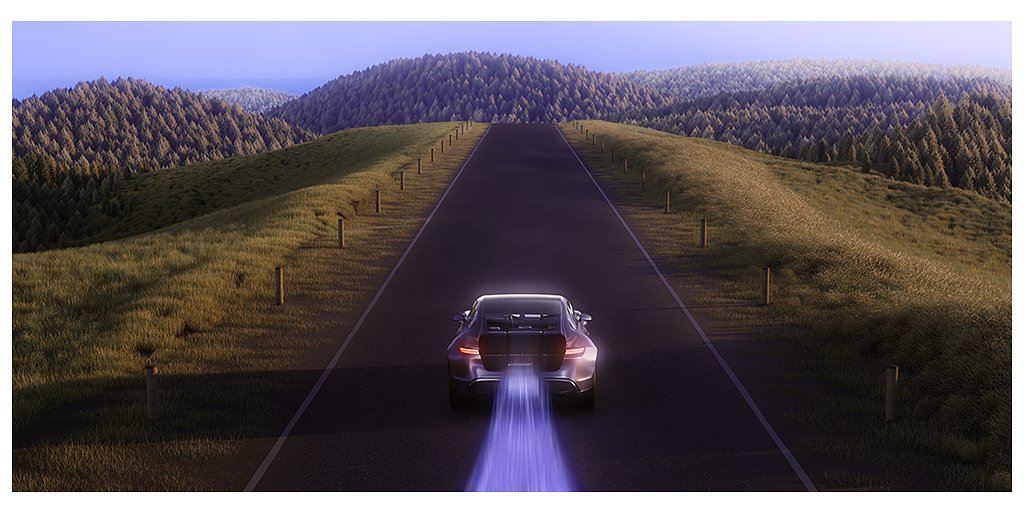
Mobileye Bets on 'Physical AI' at CES 2026 to Regain Momentum
JERUSALEM – December 18, 2025 – Mobileye is setting the stage for a pivotal CES 2026, announcing it will unveil its vision for the “next frontier of physical AI” in a bid to reassert its dominance in the autonomous vehicle technology sector. The Jerusalem-based company, a majority-owned subsidiary of Intel, will host its annual address on January 6, where President and CEO Prof. Amnon Shashua is expected to detail a new product roadmap, progress in autonomous driving, and provide a first look at its next-generation chip architecture.
In a move underscoring the importance of strategic alliances, the presentation will also feature a discussion with Christian Senger, CEO of Volkswagen Autonomous Mobility, focusing on the two companies' joint efforts to achieve autonomous driving at scale. The announcement comes as Mobileye navigates significant market headwinds and intense competition, making its Las Vegas showcase a critical test of its long-term strategy and technological prowess.
The Dawn of 'Physical AI'
At the heart of Mobileye's upcoming presentation is the concept of “physical AI,” a term that signals a deeper integration of artificial intelligence with the real-world complexities of driving. While the company has kept specific details under wraps, Prof. Shashua’s past keynotes provide a clear trajectory. The focus will likely be on how advanced AI models can move beyond simple object recognition to achieve a more profound understanding of driving scenarios, enabling vehicles to make nuanced, human-like decisions with superior reliability.
This builds on concepts previously discussed by the company, such as “ViDAR” (Visual Lidar) and the use of advanced neural networks to interpret the drivable path in complex environments. The goal is to solve the “generalization problem,” ensuring an autonomous system can perform safely and predictably not just in tested areas, but across the vast, chaotic diversity of global roads. Physical AI represents the translation of these sophisticated algorithms into tangible, reliable actions by a vehicle, bridging the gap between digital intelligence and physical reality.
Underpinning this AI evolution is the promise of a “next-generation chip architecture.” Mobileye has a long history of developing its own purpose-built EyeQ system-on-chips (SoCs), which have become ubiquitous in the advanced driver-assistance systems (ADAS) market. The company’s EyeQ Ultra chip, announced at CES 2022 and slated for full production in 2025, was designed for Level 4 autonomy, boasting 176 trillion operations per second (TOPS) on an efficient 5-nanometer process. The upcoming architecture is expected to leapfrog these capabilities, offering greater processing power and energy efficiency to handle the immense computational load required by more sophisticated physical AI models, all while maintaining the company's strategic focus on a compelling cost-to-performance ratio.
Strengthening the Volkswagen Alliance
The joint appearance with Volkswagen’s Christian Senger is more than symbolic; it highlights a cornerstone of Mobileye’s strategy for achieving mass-market deployment. In March 2024, the two companies formalized a major cooperation agreement centered on developing and supplying a Level 4 self-driving system (SDS) for a specialized version of the all-electric Volkswagen ID. Buzz van. This project aims to deliver one of the first fully autonomous large-scale production vehicles for commercial mobility and transport services in Europe and the United States.
The hardware stack for the ID. Buzz AD is formidable, comprising two independent high-performance computers powered by Mobileye technology, alongside a sensor suite of 13 cameras, nine lidar units, and five radar units. This system is designed for 360-degree perception and relies on a constant online connection for map updates and swarm data from other vehicles.
Beyond this flagship L4 project, the partnership extends deep into the Volkswagen Group's portfolio. Mobileye is providing its SuperVision and Chauffeur platforms to enable advanced driver assistance (Level 2+) and highly automated driving (Level 3) features across premium brands including Audi, Bentley, Lamborghini, and Porsche. These systems will power functions like automated overtaking on highways and navigating urban intersections, demonstrating a scalable approach that leverages a common technological foundation across different levels of autonomy. As Senger previously noted, strong partners are essential for bringing autonomous vehicles to market in large quantities, and this collaboration positions Mobileye's “digital driver” at the core of VW's ambitious plans.
Navigating a Crowded Competitive Landscape
While Mobileye has long been the dominant force in the ADAS market, holding an estimated 70% share, the race toward full autonomy is fiercely contested. The company faces a formidable array of competitors, each with a distinct strategy. Nvidia has emerged as a major rival with its end-to-end Drive platforms, while Qualcomm’s Snapdragon Ride platform is gaining traction with its focus on scalability and power efficiency. These chip giants are vying for the same OEM contracts that have been Mobileye's bread and butter.
Meanwhile, different philosophical approaches to autonomy are being tested on public roads. Waymo, a pioneer in the field, continues to operate its Level 4 robotaxi services using a sensor-heavy approach that relies on lidar and extensive pre-mapping, a method that has faced questions about cost and scalability. At the other end of the spectrum, Tesla champions a vision-only system powered by a single neural network, a scalable but controversial strategy that has drawn scrutiny over its safety claims. Mobileye's 'vision-first' approach, which uses cameras as the primary sensor but fuses their data with radar and lidar for redundancy, represents a strategic middle ground aimed at achieving both safety and scalability.
This competitive pressure is particularly acute in key markets like China, where local technology companies are offering increasingly sophisticated and cost-effective self-driving solutions, challenging Mobileye's market share. The company's ability to demonstrate clear performance and cost advantages with its new physical AI and chip platform at CES will be crucial to defending its leadership position.
High Stakes Amidst Market Headwinds
The technological showcase at CES 2026 comes at a critical juncture for Mobileye from a financial perspective. The company's stock (MBLY) has had a difficult year, hitting a new 52-week low of $10.47 in mid-December after a steep decline. This bearish sentiment has been fueled by several factors, including slowing demand from China, a 5% staff layoff announced earlier in the year, and the market overhang from a large sale of Mobileye shares by its parent, Intel.
Investor confidence was also reportedly shaken by a perceived lack of major updates at CES 2025 and disappointing revenue guidance. Although Mobileye raised its full-year 2025 revenue guidance in its last quarterly report, and analysts predict a return to profitability, the stock performance reflects deep-seated concerns. Analyst ratings remain mixed, with a consensus hovering between “Hold” and “Moderate Buy,” and several investment banks have recently lowered their price targets.
Against this backdrop, Mobileye's presentation in Las Vegas is not just a technical demonstration but a high-stakes appeal to investors and the industry at large. A compelling and tangible vision for physical AI, coupled with concrete details on a next-generation chip and positive updates on the Volkswagen partnership, could be the catalyst needed to reverse the negative market narrative. The event will be closely watched as a measure of whether Mobileye's long-term strategy of scalable innovation can overcome near-term pressures and power the next phase of the mobility revolution.