
- 67% reduction in concept-to-approval time for early adopters
- Under 10-second processing for complex visuals
- Native 2K generation with intelligent 4K upscaling
Experts would likely conclude that Mixboard's integration of Google DeepMind's Gemini 3 Pro model represents a significant advancement in creative workflow efficiency, potentially setting a new industry standard for unified collaboration platforms.
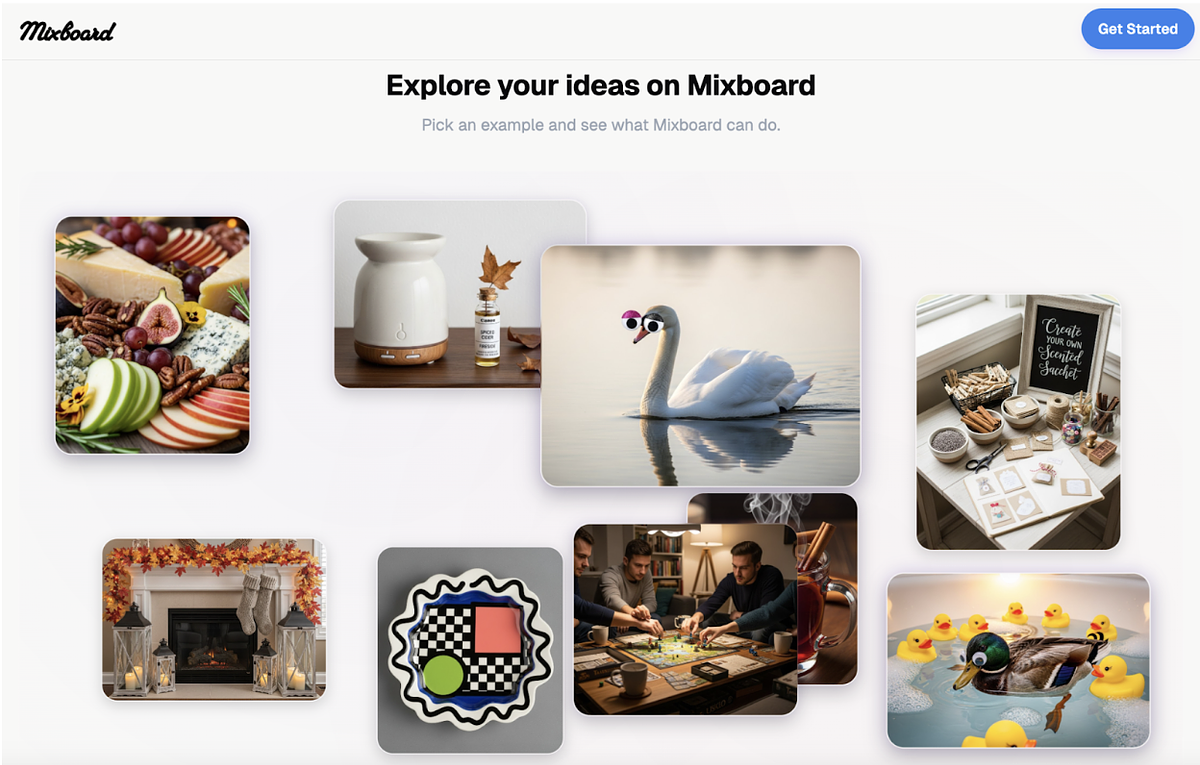
Mixboard's AI Leap: The End of App-Swapping in Creative Workflows
SAN FRANCISCO, CA – November 23, 2025 – For years, the digital shuffle has been a silent tax on creativity. Marketing teams, designers, and product managers have grudgingly accepted a workflow defined by constant app-swapping: ideate in one tool, generate visuals in another, upscale in a third, and finally, import into a collaborative space for feedback. This disjointed process, estimated to consume nearly a quarter of a creative professional's time, has long been a source of friction and inefficiency. Now, a strategic integration by collaborative workspace platform Mixboard.cc aims to demolish that paradigm entirely.
The company's announcement of a native integration with 'Nano Banana Pro'—the codename for Google DeepMind's powerful Gemini 3 Pro image generation model—is more than a simple feature update. It represents a fundamental rethinking of the creative software stack, embedding enterprise-grade AI visual generation directly at the point of collaboration. By doing so, Mixboard is placing a significant bet that the future of creative work isn't about having more tools, but about having a single, smarter workspace where ideas are born, visualized, and approved without ever leaving the platform.
The High Cost of the Creative Commute
The core problem Mixboard is targeting is the 'creative commute'—the time and energy lost transferring assets between disparate applications. This workflow isn't just tedious; it's a drag on momentum and a barrier to agile iteration. When a team has to pause a brainstorming session to wait for a designer to mock up a concept in an external AI generator, the creative spark can fizzle. The subsequent steps of downloading, uploading, and managing versions across different platforms only add to the operational overhead.
Mixboard's integration addresses this head-on. By bringing the AI generator inside the collaborative canvas, it transforms the workflow. The initial results, as highlighted by the company, are dramatic. Sarah Mitchell, Marketing Director at the startup Velocity, reported a staggering 67% reduction in their concept-to-approval time within the first week. "We're presenting finished visuals during planning calls, not rough sketches," Mitchell stated in the press release, underscoring the shift from hypothetical discussion to tangible review. This capability is particularly transformative for distributed teams, where seamless, real-time collaboration is paramount. With a centralized platform, version control is automated, and feedback is attached directly to the AI-generated asset, eliminating the confusion of scattered email chains and Slack messages.
Under the Hood: A 'Reasoning Image Engine'
What makes this integration so potent is the technology powering it. 'Nano Banana Pro' is not just another text-to-image model; it's Google's sophisticated Gemini 3 Pro, described as a "reasoning image engine." This distinction is critical. Unlike earlier generation models that often struggled with complex instructions, Gemini 3 Pro is designed to plan a scene before rendering it. This allows for a higher degree of control and accuracy, producing images with physics-accurate lighting, coherent compositions, and, most notably, flawless text—a long-standing challenge for AI image generators.
The technical specifications promise a significant leap in quality and speed. With native 2K generation and intelligent 4K upscaling, teams can produce print-ready assets directly from Mixboard, eliminating the need for external enhancement tools. Processing times for complex visuals are reportedly under 10 seconds, enabling true real-time iteration during meetings. Perhaps most importantly for businesses, the model excels at maintaining character and feature consistency across an unlimited number of generations. This solves a major pain point for brand managers, ensuring that a character created for a campaign remains visually coherent across social media posts, website banners, and cinematic video layouts, all generated within the same ecosystem.
A New Front in the SaaS Arms Race
Mixboard's move is a calculated shot across the bow in the hyper-competitive B2B SaaS market. By integrating a best-in-class AI model, the company is directly challenging established giants like Adobe, whose Creative Cloud is deeply integrated with its own Firefly AI, and Canva, which has found immense success with its user-friendly Magic Studio suite. This announcement signals that generative AI is no longer a nice-to-have feature but a table-stakes requirement for any platform in the creative and collaborative space.
This integration highlights a crucial strategic crossroads for SaaS companies: build, buy, or license. While Adobe has the resources to build its proprietary models, Mixboard's approach demonstrates the power of strategic licensing. By leveraging Google's cutting-edge technology, it can offer enterprise-grade capabilities without the massive R&D investment, allowing it to compete on workflow integration and user experience. Mixboard's claim to be the "first collaborative platform delivering enterprise-grade AI visual generation without external dependencies" is a direct challenge to competitors, framing deep integration as the key differentiator. This pressures other platforms, including design-centric tools like Figma, to deepen their own AI offerings or risk being perceived as a less efficient, fragmented solution.
Redefining Value Across the Organization
The impact of this integrated AI extends far beyond the marketing department. As noted in the announcement, product teams are finding unexpected benefits, using the tool to generate high-fidelity UI mockups and production-ready demo screenshots in seconds. This accelerates development cycles and improves stakeholder communication. Even executive-level functions are impacted, with visually polished investor presentations being created in-house, reducing the cost and time associated with hiring external design contractors.
By making these powerful tools available to its Professional and Enterprise subscribers, Mixboard is clearly positioning this as a premium, business-critical function. The focus is not on casual creation but on driving measurable business outcomes: speed, efficiency, and brand consistency. As AI becomes further embedded in our daily software, the distinction between a collaboration tool and a creation tool is rapidly disappearing. The new benchmark for enterprise software is a unified environment where strategy, creativity, and execution converge, and the once-ubiquitous 'Save As' and 'Import' dialogues become relics of a less efficient era.