
- Hundreds of fans descended on a McDonald's in Auckland for the McMullet promotional event.
- The campaign turned a social media meme into a limited-time, tangible product.
- The event included on-site barbers offering free mullet haircuts to participants.
Experts would likely conclude that McDonald's New Zealand's McMullet campaign successfully demonstrated the power of agile, culturally responsive marketing by embracing a viral trend and turning it into a highly engaging, locally relevant promotion.
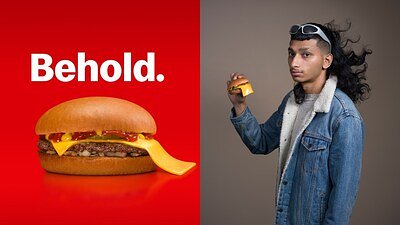
McMullet Mania: How McDonald's Turned a Meme into a Marketing Win
AUCKLAND, New Zealand – May 01, 2026 – What started as a joke circulating on social media has become New Zealand’s latest, if unofficial, national dish: the McMullet. In a savvy display of cultural agility, McDonald's New Zealand, in partnership with agency McCann NZ, has taken a user-generated trend and transformed it into a tangible, wildly popular marketing phenomenon. The concept is deceptively simple: a standard cheeseburger with an extra slice of American cheese left hanging out the back, perfectly mimicking the iconic “business in the front, party in the back” hairstyle.
This move from digital gag to physical product culminated in a major promotional event that saw hundreds of mullet-adorned fans descend on a McDonald's in Auckland, proving that the most effective modern marketing often involves listening to, rather than just talking at, your audience.
From Social Feed to Fast Food
The McMullet wasn't born in a corporate boardroom. Its origins trace back to the creative, often chaotic world of social media, where users on platforms like TikTok and Reddit began sharing their DIY burger “hacks.” The idea of a cheeseburger with its own cheesy mullet struck a chord, quickly gaining traction as an inside joke among fast-food lovers and meme connoisseurs. The concept existed organically for weeks, with users creating and sharing their own versions long before the brand officially stepped in.
Recognizing the growing buzz, McDonald's and McCann made a crucial decision: instead of ignoring the trend or issuing a cease-and-desist, they embraced it. This pivot from passive observation to active participation is what set the campaign apart. They legitimized the fan-made creation, turning an internet joke into a limited-time reality.
"When we saw the reactions to videos on social, we thought, why not?" said Luke Rive, McDonald's New Zealand Director of Marketing. "It's a bit of fun and it's also a way to bring fresh ideas to life and see how people respond in the real world." This reactive strategy allowed the brand to tap into an existing conversation, ensuring authenticity and immediate engagement from a tuned-in audience.
A Bold Play for Gen-Z Hearts
The campaign represents a masterclass in connecting with Generation Z, a demographic famously skeptical of traditional advertising. By leaning into humor, self-awareness, and cultural participation, McDonald's positioned itself not as a monolithic corporation, but as a brand that gets the joke. This approach is critical for winning over younger consumers who value authenticity and shared experiences over polished corporate messaging.
The strategy was brought to life with an immersive activation at the Penrose McDonald's in Auckland. The restaurant was completely transformed into a mullet-themed shrine, complete with custom signage featuring the golden arches with an extra bit of “shag at the back.” The event drew hundreds of fans, many sporting impressive mullets, who lined up for a free McMullet. For those not yet initiated into the lifestyle, on-site barbers were available to provide the iconic haircut on the spot, turning passive consumers into active brand participants.
The celebration peaked with the crowning of the event's best mullet. Auckland's Wesley Welsford took home the title, earning him a year's supply of cheeseburgers and free mullet maintenance for 12 months. "My mates sent me the link and said we should come down," Welsford said. "We didn't care about winning, we just thought it was a fun idea, I'm buzzing to take it out." This human element grounded the campaign, showcasing real fans enjoying a moment created just for them.
Celebrating a Kiwi Cultural Comeback
The success of the McMullet is deeply intertwined with the cultural resurgence of its namesake hairstyle in New Zealand. The mullet holds a “proud history” in the country, long associated with subcultures like bikers, metalheads, and the working-class “bogan.” While it became an object of ridicule in the 90s and 2000s, recent years have seen a powerful comeback.
Fueled in part by the DIY haircut experiments of pandemic lockdowns and a generational penchant for ironic nostalgia, the mullet has been reclaimed by sports stars, actors, and especially Gen-Z as a symbol of playful defiance and self-expression. It has shed its unfashionable stigma to become a genuine trend once more.
By launching the McMullet, McDonald's wasn't just selling a burger; it was celebrating a distinct piece of Kiwi identity. The campaign resonated so strongly because it felt local and genuine. It acknowledged a cultural phenomenon that was already happening and gave it a place of honor under the golden arches. As Rive noted, the burger is "the perfect match for any mullet, whether it's a perm, a buzz cut or a classic Westie." This localized approach made a global brand feel like a neighborhood friend who is in on the joke.
The New Playbook for Brand Relevance
The McMullet campaign serves as a powerful case study for the future of marketing, where agility and social listening are paramount. It exemplifies a growing trend of “meme-to-menu” innovations, where brands are increasingly turning viral online content into limited-time products to generate buzz and earned media. This strategy disrupts the slow, traditional product development cycle in favor of rapid, culturally-timed activations.
This approach of real-time response is not isolated to McDonald's. Other brands have shown similar agility, such as when In-N-Out Burger subtly altered its ticketing system to manage a viral meme that was disrupting its restaurants. These actions demonstrate a new playbook where brand stewardship involves actively managing and participating in the unpredictable currents of internet culture.
The buzz around the McMullet quickly spilled over New Zealand's borders, with fans in other countries demanding a taste and sharing their own DIY versions. This international ripple effect underscores how a well-executed, hyper-local campaign can achieve global reach. By transforming a simple slice of cheese into a cultural statement, McDonald's New Zealand has provided a lesson for brands everywhere on how to stay relevant in a fast-moving world. "Who knows where it will pop up next?" Rive adds, leaving the door open for more playful innovations to come.