
- $2.1 million in funding awarded to 13 awardees in Maryland's tech and health sectors
- $300,000 each granted to two startups from Johns Hopkins University
- $500 million annual market potential for Aletira Therapeutics' gene therapy
Experts view Maryland's $2.1M investment as a strategic move to bridge the 'valley of death' between academic research and commercial viability, fostering economic growth and global innovation.
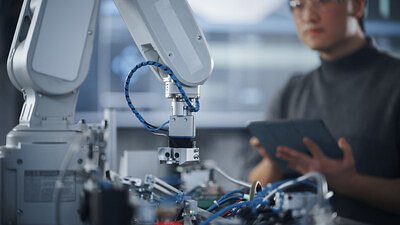
Maryland Bets Big on Innovation with $2.1M Tech and Health Boost
COLUMBIA, Md. – April 15, 2026 – Maryland is injecting over $2.1 million into its burgeoning technology and life sciences sectors, funding a new wave of companies and research projects born from its world-class universities. The Maryland Technology Development Corporation (TEDCO) announced the latest awards through its Maryland Innovation Initiative (MII), a program designed to transform promising academic discoveries into viable commercial enterprises.
Thirteen awardees will share the funding, which is divided between two critical stages of development: early-stage Company Formation and foundational Technology Assessment. The investment underscores the state's strategy to leverage its deep academic research base to fuel economic growth and solve pressing global challenges.
"We are excited to announce over $2.1 million to 13 awardees who are advancing technology to improve lives and livelihoods for Marylanders," said Abi Kulshreshtha, executive director of TEDCO's MII. "Each of these awards represent innovation derived from Maryland's deep base of research and talent that will impact communities, businesses, and patients around the world."
From Lab to Market: Bridging the 'Valley of Death'
The MII program acts as a crucial bridge across the so-called 'valley of death'—the perilous gap between academic research and commercial viability where many promising innovations falter due to a lack of funding. By providing targeted capital at this early stage, TEDCO aims to de-risk these technologies, making them more attractive for future private investment and accelerating their path to market.
This round's funding is split into two distinct pathways. The Company Formation award provides substantial capital to help launch new startups built around university-licensed technology. Two companies, both originating from Johns Hopkins University, received $300,000 each to formalize their operations and advance their products.
The second pathway, the Technology Assessment award, provides seed funding for nine-month projects intended to build a strong foundation of data. This demonstrates a technology's utility for specific commercial applications beyond basic research. Eleven projects from Johns Hopkins University, the University of Maryland, College Park, the University of Maryland, Baltimore, and the University of Maryland, Baltimore County received awards ranging from $130,000 to $180,000. These projects represent the first step in a long journey, validating concepts that could become the next generation of Maryland-based companies.
The Future of Health and Tech on Display
The latest cohort of MII awardees showcases a remarkable breadth of innovation, with a strong emphasis on healthcare and deep technology.
Among the newly formed companies is Aletira Therapeutics, Inc., which is developing a next-generation gene therapy to prevent the most common form of hereditary hearing loss. Leveraging a proprietary platform technology called SELEXON™, which originated in the lab of Professor Jonathan Ling at the Johns Hopkins School of Medicine, Aletira aims to precisely control gene expression. This could allow therapies to target only specific cells, minimizing side effects and increasing potency. With a potential market for a curative therapy estimated at over $500 million annually, Aletira is entering a dynamic field with the potential for life-changing impact.
The other company formation award went to Nuquantic, LLC, for its eDNA'S CRABS system. This technology provides a novel method for concentrating and recovering environmental DNA from aquatic samples, a critical challenge in fields like ecological monitoring, invasive species detection, and biodiversity assessment.
The Technology Assessment awards highlight a diverse portfolio of early-stage breakthroughs. One project from the University of Maryland, Baltimore County, led by YuHuang Wang, is developing an AI-augmented quantum diagnostic platform for ovarian cancer, aiming to improve early detection for a disease with a notoriously low survival rate when found late. At Johns Hopkins, researcher Kenneth Witwer is engineering extracellular vesicles to treat Crohn's Disease, a novel approach to modulating the immune system. Another Johns Hopkins project, led by Brijen Joshi, is developing the "Bronchosleeve," an integrated airway device designed to make lung isolation procedures safer, faster, and more cost-effective.
Other funded projects include new methods for treating pancreatic cancer metastases, AI-driven modeling of RNA for new therapeutics, and advanced microelectronic patterning, demonstrating the wide-ranging potential of the research emerging from Maryland's universities.
Fueling Maryland's Innovation Engine
This funding round is a testament to the strength and strategic importance of the collaboration between the State of Maryland and its five core research institutions: Johns Hopkins University, Morgan State University, and the University of Maryland campuses in Baltimore, Baltimore County, and College Park. This partnership forms the backbone of the MII program, creating a powerful pipeline of intellectual property and entrepreneurial talent.
The success of this model is evident in the track record of its participants. Johns Hopkins Tech Ventures, the university's tech transfer office, has helped its startups raise over $4 billion in venture funding since 2014. Similarly, UM Ventures, a joint initiative of the University of Maryland, Baltimore, and College Park, actively supports a robust portfolio of startups, guiding them from patent filing to venture funding.
"With world class universities, a community of innovators, and even the number one biomedical engineering program, Maryland is the place for researchers and students to grow," said TEDCO CEO Troy LeMaile-Stovall. "The state really is a perfect place to build a company, and we are excited to continue investing in the entrepreneurial ecosystem to support the creation of more knowledge-based companies in the state."
Recognizing the need for broader participation, the MII program has recently expanded its reach to include comprehensive universities and has supported the creation of the Baltimore Innovation Initiative (BII). These efforts are designed to foster a more equitable and geographically diverse innovation ecosystem, ensuring that the economic and social benefits of technological advancement are shared across Maryland. By nurturing these seeds of innovation, Maryland is not only building companies but also cultivating a more resilient and prosperous future for all its residents.
Topics & Related
Diagnostics
AI & Machine Learning
Artificial Intelligence
Machine Learning
AI & Software Platforms
Related Company Pulse