
- 65% of Malaysia's medical tourism revenue comes from Indonesian patients (US$526 million in 2023).
- US$505 million in 2024 revenue for Malaysia's medical tourism sector, rebounding from US$286 million in 2022.
- 1,665 healthcare leads targeted at MHX Medan 2026, up from 1,514 in 2022.
Experts agree that Malaysia's strategic combination of accessibility, affordability, and high-quality JCI-accredited healthcare has solidified its dominance in Indonesia's medical tourism market, making it a trusted and preferred destination for specialized care.
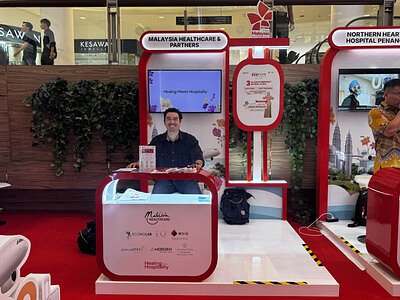
Malaysia's Golden Corridor: Winning Indonesia's Medical Trust
MEDAN, Indonesia – April 24, 2026 – As a delegation of Malaysia’s top hospitals returns to Medan for the first time since 2022, the event signifies more than just a marketing outreach. It represents a deliberate strengthening of a multi-billion-dollar healthcare relationship that has turned the narrow Straits of Malacca into a superhighway for medical travel. The Malaysia Healthcare Expo (MHX) Medan 2026, which opens this week, underscores Malaysia’s deepening grip on the lucrative Indonesian medical tourism market, a dominance built on trust, accessibility, and a highly coordinated national strategy.
For years, Indonesian patients, particularly from Sumatra, have looked to Malaysian hospitals as a benchmark for quality, especially for complex diagnoses and second opinions. This patient flow has solidified Malaysia's position as a regional healthcare powerhouse, with Indonesian travellers now accounting for a staggering 65 percent of the country's total medical tourism revenue, a figure that translated to over US$526 million in 2023.
The Medan-Penang Healthcare Superhighway
The cornerstone of this success is the highly efficient Medan–Penang healthcare corridor. Separated by just 160 kilometres of sea, the two cities are connected by approximately 56 weekly flights, turning a cross-border journey into a simple 45-minute commute. This unparalleled accessibility serves a population catchment of over 15 million in North Sumatra and surrounding areas like Aceh and Pekanbaru, making Malaysian hospitals a more convenient option for many than even domestic facilities in Jakarta.
This logistical advantage has fueled a thriving industry. Malaysia’s medical tourism sector has seen explosive post-pandemic growth, rebounding from a 2022 revenue of US$286 million to an estimated US$505 million in 2024. The economic benefits extend far beyond hospital bills. The industry boasts a significant multiplier effect, with every dollar spent on healthcare generating an estimated four dollars in related sectors like hospitality, transport, and retail. In 2023 alone, the sector's broader economic contribution was estimated at a robust RM9.6 billion (approx. US$2.2 billion), underscoring its importance to the national economy.
The Malaysian government is not resting on its laurels. The Malaysia Healthcare Travel Council (MHTC) has set an ambitious target to attract US$2.7 billion from medical tourists over the next five years, aiming to nearly quadruple revenues by 2030. Events like MHX Medan 2026 are a critical component of this strategy, aiming to surpass the 1,514 patient enquiries from the 2022 event with a new target of at least 1,665 healthcare leads.
A Quest for Trust and Quality
While proximity and cost are powerful drivers, the exodus of Indonesian patients—estimated at two million annually, spending around US$9 billion abroad—is fundamentally rooted in a quest for trust and specialized care. Perceived gaps in the domestic healthcare system, including a lower physician-to-patient ratio, have led many to seek what they consider more reliable and timely treatment across the strait.
Malaysia has successfully positioned itself as the answer. Its healthcare system is recognized for internationally accredited facilities, many holding the coveted Joint Commission International (JCI) accreditation, a global gold standard for patient safety and quality. This clinical confidence is a major draw for patients seeking treatment in high-stakes fields. Key areas of demand include cardiology, with institutions like the Institut Jantung Negara (IJN) being a top choice; oncology, orthopaedics, and advanced fertility treatments. Comprehensive health screenings also serve as a popular entry point, often converting first-time visitors into long-term patients.
The appeal is enhanced by deep cultural and linguistic similarities. The shared language and cultural nuances create a comfortable and less intimidating environment for Indonesian patients and their families, removing communication barriers that can be a significant source of stress during medical treatment abroad. This combination of world-class expertise and cultural familiarity has proven to be a winning formula.
A National Strategy of 'Healing Meets Hospitality'
Malaysia's dominance in the medical tourism sphere is no accident. It is the result of a deliberate, long-term national strategy spearheaded by the MHTC. Under the banner of "Healing Meets Hospitality," the country has meticulously crafted a holistic patient experience that begins long before a patient enters a hospital. This ecosystem includes seamless support for visa processing, travel arrangements, and accommodation, ensuring the entire journey is as stress-free as possible.
This patient-centric approach is the core of the "Malaysia Year of Medical Tourism 2026" (MYMT 2026), a nationwide initiative designed to cement the country's status as a premier global healthcare destination. Linked to the broader "Visit Malaysia 2026" campaign, MYMT 2026 aims to showcase a unique fusion of advanced medical care with tourism and wellness opportunities, further differentiating Malaysia from its regional competitors.
The delegation in Medan features 19 of Malaysia's most prestigious healthcare institutions, including the award-winning Island Hospital Penang, Subang Jaya Medical Centre, and multiple Gleneagles and Sunway Medical Centre branches. Their presence allows potential patients to engage directly with specialists, explore treatment plans, and gain the trusted second opinions they seek, all under one roof.
The Competitive Edge in a Crowded Market
In the competitive Southeast Asian landscape, Malaysia has carved out a distinct and highly effective niche. While Thailand has built a reputation for wellness and cosmetic procedures and Singapore is known for cutting-edge but high-cost treatments, Malaysia strategically positions itself as the leader in value-for-quality. Patients can access treatments at costs up to 80% lower than in the United States and significantly cheaper than in neighbouring Singapore, without compromising on clinical excellence.
A key differentiator is Malaysia’s policy of charging international patients the same rates as locals, a practice that builds goodwill and encourages further spending in the broader economy. This contrasts with competitors who often have separate, higher pricing tiers for foreign patients.
By combining affordability, JCI-accredited quality, unparalleled accessibility from its key market, and a welcoming, culturally aligned environment, Malaysia has created a powerful and sustainable medical tourism model. The MHX Medan 2026 event is the latest move in this calculated effort, reinforcing the deep-seated trust that continues to draw hundreds of thousands of Indonesian patients to its shores for care they can depend on.