
- 30 hybrid straddle carriers ordered by Maher Terminals for greener port operations
- Up to 40% reduction in fuel consumption and 50 tons of CO2 emissions cut annually per machine with hybrid technology
- $400 million federal grant secured by PANYNJ for zero-emission equipment transition
Experts would likely conclude that Maher Terminals' investment in hybrid technology is a strategic and proactive step towards achieving net-zero emissions, setting a competitive benchmark for sustainability in global port operations.
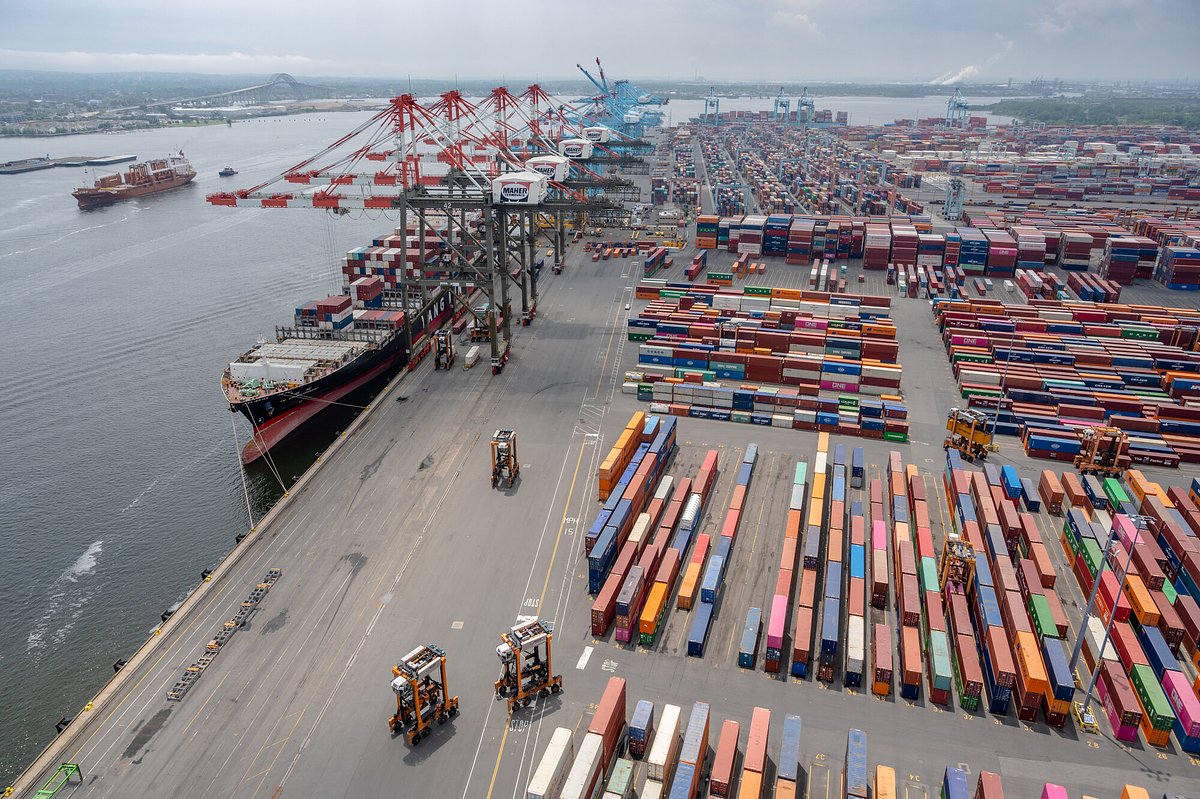
Maher Bets Big on Hybrid Tech for Greener Port of NY/NJ Operations
NEW YORK, NY – February 13, 2026 – In a decisive move that underscores a deep commitment to sustainable port operations, Maher Terminals LLC has placed a major order for 30 advanced hybrid straddle carriers from long-term partner Kalmar. The new machines are destined for Maher's sprawling marine container terminal in the Port of New York and New Jersey, North America's largest and one of the world's most critical logistics hubs.
This significant investment, booked in the fourth quarter of 2025 with delivery scheduled for late 2026, is a key component of Maher's ongoing fleet renewal program. The acquisition will maintain the company's formidable fleet of Kalmar straddle carriers at over 270 units, reinforcing a partnership that has spanned four decades. More importantly, it represents a tangible step in the green transformation sweeping through the global shipping and logistics industry.
A Strategic Leap Towards a Greener Port
The timing of this order is intrinsically linked to Maher Terminals' ambitious long-term strategy and the broader environmental objectives of the region. In a landmark deal, Maher recently secured a 33-year lease extension with the Port Authority of New York & New Jersey (PANYNJ), cementing its operational presence through 2063. This agreement is not merely about securing real estate; it's a foundational element of PANYNJ's Port Master Plan 2050, which anticipates a potential tripling of cargo volumes by mid-century.
Crucially, the lease extension includes explicit sustainability commitments, aligning Maher's future with the Port Authority's goal of achieving net-zero greenhouse gas emissions by 2050. The PANYNJ has been a proactive force in this arena, becoming the first U.S. transportation agency to embrace the Paris Climate Accords and recently securing a federal grant of over $400 million from the EPA's Clean Ports Program to accelerate the transition to zero-emission equipment. Maher’s investment in hybrid technology is a direct fulfillment of its pledge to work towards net-zero emissions, demonstrating a proactive approach rather than waiting for regulatory mandates.
“Over four decades of working with Kalmar we have built a rock-solid partnership based on openness and transparency,” said Lou Allora, Chief Engineer at Maher Terminals. “Continually refreshing our fleet with Kalmar’s newest hybrid straddle carrier technology was a logical next step to continue our path toward net zero.”
The Power and Promise of Hybrid Technology
At the heart of this deal is Kalmar's state-of-the-art hybrid technology, which offers substantial improvements in efficiency and environmental performance over conventional diesel models. The hybrid straddle carriers are engineered to reduce fuel consumption by up to 40%. This efficiency gain is achieved through a sophisticated regenerative energy system that captures kinetic energy during deceleration and spreader lowering, converting it into electrical power stored in lithium-ion batteries. An intelligent start-stop system then balances engine and battery power, minimizing idle time and engine wear.
The direct environmental impact is significant. Each hybrid machine is projected to cut CO2 emissions by as much as 50 tons annually compared to its diesel counterpart. When multiplied across a fleet, the cumulative effect represents a major reduction in the terminal's carbon footprint. Furthermore, these machines are compatible with hydrotreated vegetable oil (HVO) fuel, which can lower emissions by up to 90%, offering an even cleaner operational pathway.
“We are delighted to continue our long-standing relationship with Maher Terminals with this major order,” stated Troy Thompson, Head of Sales, Horizontal Transportation, Kalmar Americas. “Our hybrid straddle carrier technology supports their commitment to modernising their equipment fleet with safe, efficient and environmentally friendly equipment.”
While Kalmar is a dominant force, the move towards hybrid solutions reflects a broader industry trend. Competitor Konecranes is also supplying hybrid straddle carriers to other terminals within the port complex, signaling a competitive and rapidly evolving market for green port technologies. Maher's substantial and continued investment in Kalmar's platform, however, highlights the strength and success of their specific collaborative approach.
Enhancing Safety and the Operator Experience
Beyond environmental benefits, the new fleet promises a safer and more comfortable work environment for the International Longshoremen's Association (ILA) operators who are the backbone of port productivity. A key feature of the new carriers is the Kalmar Collision Warning System. Maher Terminals was a crucial partner in the development of this system, beginning trials in 2022 with the intention of retrofitting its entire fleet in the coming years. The system uses audible and visual alarms to alert operators to potential collision risks, a critical safety enhancement in a busy terminal environment.
Operator well-being is further addressed through significant noise reduction. The hybrid models are up to 6 decibels quieter externally and reduce in-cabin noise by a remarkable 50%, creating what many describe as a much more pleasant and less stressful working atmosphere. The redesigned cabins also feature improved ergonomics and visibility, contributing to both safety and operator comfort during long shifts.
Mr. Allora of Maher Terminals emphasized this dual benefit, noting, “The hybrid machines will help us to reduce fuel consumption and local emissions in addition to improving safety and comfort for our ILA operators.” This focus on the human element is crucial as the port industry adopts more advanced technologies, requiring a skilled workforce trained to operate and maintain the next generation of equipment.
A Blueprint for Future Port Operations
Maher Terminals’ investment is more than just an equipment upgrade; it is a strategic blueprint for the future of port logistics. By integrating cutting-edge hybrid technology with advanced safety systems co-developed with their supplier, Maher is building a resilient, efficient, and responsible operation prepared for the demands of the 21st-century supply chain.
This initiative demonstrates how large-scale terminal operators can proactively address environmental responsibilities while simultaneously enhancing operational capacity and safety. As Maher handles approximately 35% of the port's container traffic, its modernization efforts have a ripple effect, improving air quality for nearby communities and setting a competitive benchmark for sustainability in North America.
As Troy Thompson of Kalmar noted, “Maher’s continual investment in its fleet of container handling equipment, including one of the largest and youngest fleets of Kalmar straddle carriers, is why Maher maintains its reputation as the premier marine container terminal in North America.” This latest order solidifies that reputation, positioning the terminal not just as a leader in cargo volume, but as a pioneer in the sustainable evolution of global trade.
Topics & Related
Net Zero
Financial Services
Technology
Related Company Pulse