
- 60 milliseconds: The refresh rate of LumiMind's non-invasive BCI, claimed to be fast enough for competitive gaming. - 7 dry EEG electrodes: The number of sensors in the LumiSleep headband for monitoring brain activity. - First half of 2026: The expected launch window for LumiSleep.
Experts view LumiMind's technology as a significant step toward bridging the gap between invasive medical BCIs and non-invasive consumer devices, with potential to redefine wellness and entertainment through real-time neural guidance.
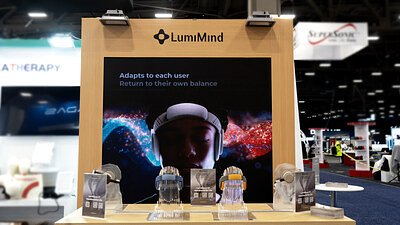
LumiMind Unveils Tech to Guide Your Brain, From Sleep to Gaming
LAS VEGAS, NV – January 08, 2026 – The line between science fiction and consumer electronics is blurring at CES 2026, as neurotechnology firm LumiMind unveils a non-invasive brain-computer interface (BCI) that promises to move advanced neural control from research labs into the living room. The company is showcasing its technology with a live, real-time video game demonstration and the announcement of its first consumer product: LumiSleep, a device designed to actively guide the brain into sleep.
The announcement signals a potential paradigm shift for consumer technology, moving beyond passive tracking of biometrics to active, real-time neural guidance. LumiMind, in collaboration with the research-focused INSIDE Institute for NeuroAI, aims to establish a new product category that could redefine wellness, entertainment, and our very interaction with the digital world.
The Brain's New Frontier: BCI for the Masses
At the heart of LumiMind's CES presence is a bold demonstration: a live gameplay session controlled not by hands, but by thought. Developed by the INSIDE Institute for NeuroAI, the demo is intended as a "capability proof," showcasing what the company calls the "performance ceiling" of its non-invasive BCI. This isn't a simple "look left, move left" display; the institute claims its technology enables "full-instruction set control" with a refresh rate of just 60 milliseconds, a speed it asserts is fast enough for competitive gaming and can even outperform some invasive BCI solutions in specific tasks like virtual navigation.
"This demonstration shows what's possible when you truly understand the brain's signals in real time," said LumiMind CEO Fang Zhao in a statement.
This move is significant in a field long dominated by two distinct camps. On one side are invasive BCIs from companies like Neuralink and Blackrock Neurotech, which involve surgical implants to achieve high-fidelity brain signal reading, primarily for medical applications like restoring movement to paralyzed individuals. On the other are non-invasive consumer devices from companies like Emotiv and Muse, which use external EEG sensors for wellness applications like meditation feedback and focus tracking, but with generally lower resolution and speed.
LumiMind and the INSIDE Institute aim to bridge that gap, offering near-medical-grade performance without the need for surgery. Their technology, which underpins both the gaming demo and their sleep device, relies on a sophisticated "Neural Signal Foundation Model" to decode the brain's complex electrical activity with unprecedented speed and accuracy. If the CES demo lives up to its billing, it could represent a major leap forward, paving the way for a new generation of consumer devices controlled directly by the mind.
Beyond Sleep Trackers: The Science of Neural Guidance
While the gaming demo grabs headlines, LumiMind's first commercial venture, LumiSleep, targets a more universal human experience: the struggle to fall asleep. Expected to launch in the first half of 2026, the device is a headband equipped with seven dry EEG electrodes that monitor brain activity from the prefrontal cortex.
Unlike popular sleep trackers from brands like Oura and Fitbit that infer sleep stages from secondary metrics like heart rate and movement, LumiSleep claims to directly interact with the brain. It listens for the preliminary signs of slumber and then uses personalized, real-time acoustic guidance—a closed-loop system of gentle sounds—to help the brain transition into what the company has termed the "Sleep Onset Pattern™."
"LumiSleep represents the future of sleep technology, seamlessly integrating cutting-edge neuroscience into everyday life," Zhao stated.
The scientific concept is not without precedent. Independent research has long explored the use of EEG-based neurofeedback and acoustic stimulation to treat sleep-onset insomnia. Studies have shown that guiding brainwaves, such as enhancing theta rhythms or sensorimotor rhythms (SMR), can decrease the time it takes to fall asleep and improve overall sleep quality. This body of research suggests that a device capable of accurately reading brainwaves and providing immediate, responsive feedback could indeed offer a non-pharmaceutical solution for those struggling with sleep.
LumiMind's approach differentiates itself from static solutions like white noise machines or meditation apps by being dynamic. The device's onboard chip processes brain signals locally, adjusting the acoustic feedback on a millisecond scale without relying on a phone or cloud connection. This creates a personalized biofeedback loop designed to gently nudge the brain toward a state conducive to sleep, rather than simply masking external noise or providing a pre-recorded guided meditation.
The Ethical Awakening: Privacy in the Age of Neurotech
The prospect of accessible, powerful BCI technology raises profound questions that extend far beyond sleep quality and gaming high scores. As LumiMind aims to create a new category of "at-home neural guidance," it enters a fraught territory of ethics, privacy, and control.
Neural data is arguably the most intimate data a person can generate, potentially revealing not just conscious thoughts but also subconscious biases, emotional states, and cognitive health. The emergence of consumer devices capable of reading and interpreting this data on a massive scale creates unprecedented privacy challenges. While LumiSleep processes data locally, the broader trend of cloud-connected wellness devices raises concerns about how this sensitive information will be stored, used, and protected from misuse.
The regulatory framework is struggling to keep pace. While medical-grade BCIs are subject to rigorous oversight by bodies like the FDA, consumer wellness gadgets often exist in a gray area with far fewer protections. Independent neuroethicists have noted that many non-invasive tools operate without robust regulation or data protection standards, a gap that becomes more alarming as the technology's capabilities grow.
In response, a movement for "neuro-rights" is gaining traction globally. Lawmakers in jurisdictions like Colorado and Chile have already passed legislation to explicitly protect neural data as a fundamental human right, safeguarding concepts like mental privacy and cognitive liberty. These efforts highlight a growing societal awareness that the ability to "modulate neural signals," as LumiMind's technology purports to do, carries immense responsibility.
The central ethical dilemma is one of autonomy. While a device that helps you fall asleep seems benign, the underlying technology could be applied in ways that influence decision-making, shape preferences, or even manipulate emotional responses. As these technologies become more integrated into our daily lives, ensuring user control, transparency, and the ability to opt-out will be paramount. LumiMind's debut at CES is not just a product launch; it is a catalyst for a critical public conversation about the future we want to build with technologies that can read and write to the human brain.