
- 80% faster asset onboarding with Asset Snap feature
- 10-15 hours saved per week with Resource Planning tool
- 1.9 million manufacturing jobs shortfall projected by 2030 due to skills gaps
Experts would likely conclude that Limble's AI tools represent a practical, efficiency-driven approach to addressing critical maintenance challenges, particularly in data accuracy and workforce optimization, while positioning the platform as a strategic asset management solution.
Limble's AI Tools Target Maintenance Woes and Labor Shortages
LEHI, Utah – January 15, 2026 – Maintenance and asset management platform Limble today announced its Winter Release, introducing a trio of artificial intelligence capabilities aimed at tackling some of the most persistent challenges in industrial operations: unreliable data, inefficient scheduling, and the growing skilled labor gap. The release introduces tools designed not to replace technicians, but to augment their capabilities, streamline workflows, and transform siloed maintenance data into a strategic enterprise asset.
In an industry grappling with rising operational costs and a projected shortfall of nearly 1.9 million manufacturing jobs by 2030 due to skills gaps, the push for greater efficiency has never been more urgent. Limble's new features—Asset Snap, Resource Planning, and the Model Context Protocol (MCP)—represent a targeted application of AI to automate tedious tasks and provide data-driven insights, allowing human teams to focus on more complex, high-value work.
Automating the Foundation of Asset Management
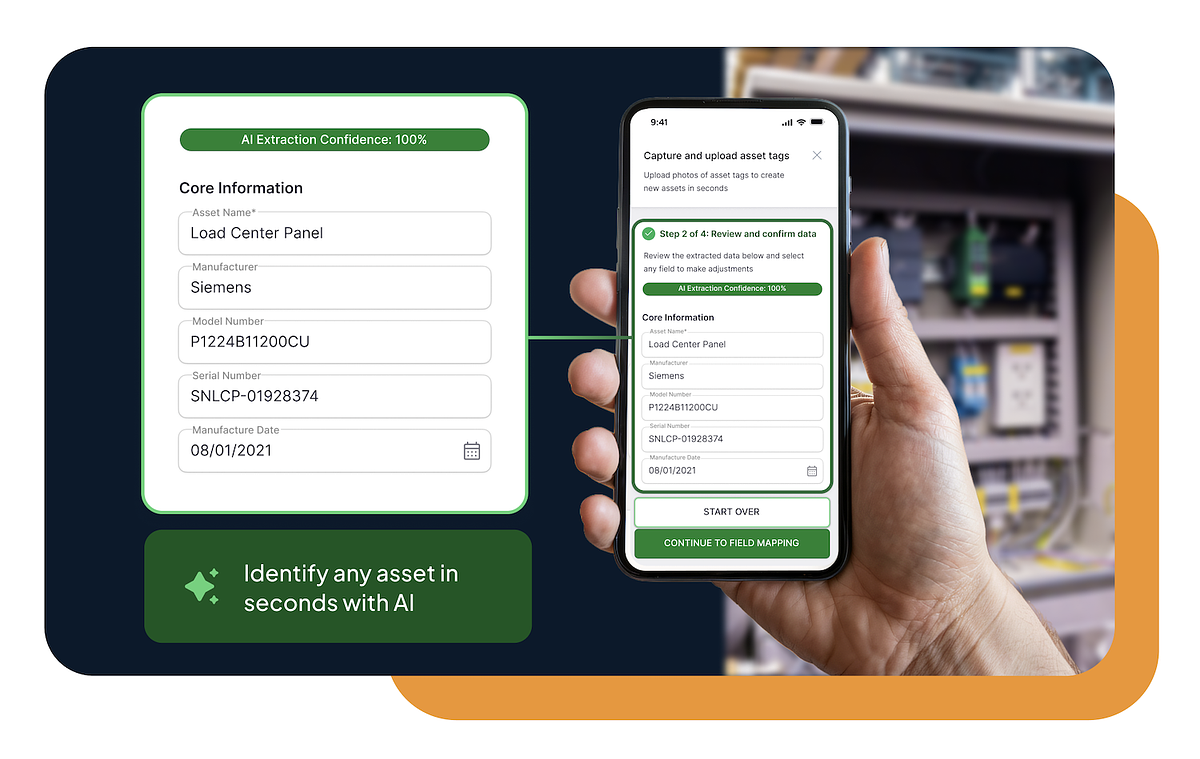
A core challenge in any maintenance program is the quality of its foundational data. Inaccurate or incomplete asset records can undermine everything from preventive maintenance schedules to capital planning. Limble's new Asset Snap feature confronts this problem head-on by automating one of the most error-prone manual processes: asset onboarding.
Using AI-powered image and text recognition, Asset Snap allows technicians to simply take a photograph of a machine's nameplate. The system then automatically extracts, standardizes, and structures key details like manufacturer, model, and serial number into a validated record within the Limble platform. The company claims this can accelerate the onboarding of new and legacy equipment by up to 80 percent. More importantly, it promises to drastically reduce the manual entry errors that corrupt databases and lead to costly downstream mistakes. By building a clean, trustworthy asset database from the point of capture, organizations can lay a more reliable groundwork for accurate reporting, compliance audits, and effective proactive maintenance strategies.
"We have always prioritized solving the real, day-to-day problems that leaders and their teams face across operations and asset management," said Michael Scappa, SVP of Product and Technology at Limble, in the company's announcement. "Our customers consistently say that AI is only important if it is saving them and their teams time... This release applies AI where it matters most: lowering the burden on maintenance and operations teams while creating clean, reliable data and insights that extend the lifecycle of assets."
Optimizing the Human Element
Beyond data entry, the new release targets the complex logistical puzzle of workforce management. The Resource Planning tool introduces AI-powered recommendations for workload balancing and scheduling. It provides maintenance leaders with a unified, real-time dashboard of both planned maintenance and unscheduled, on-demand work. By analyzing priorities, technician availability, and job requirements, the system suggests optimal schedules, with internal tests indicating it could save managers 10 to 15 hours per week.
This capability directly addresses the skilled labor crisis by functioning as a 'workforce multiplier.' With AI handling the time-consuming task of scheduling, managers can focus on strategic oversight, mentorship, and addressing critical risks. For technicians, optimized schedules can lead to more balanced workloads and clearer priorities. This approach aligns with broader industry analysis suggesting that AI's greatest immediate impact will be in augmenting, rather than replacing, the human workforce. By codifying institutional knowledge and simplifying complex decisions, such tools can empower less-experienced technicians and enable existing teams to operate with greater efficiency and less administrative friction.
Unlocking Strategic Intelligence with Secure AI
The most forward-looking component of the release may be the Model Context Protocol (MCP). This feature acts as a secure, standardized bridge connecting Limble's granular maintenance data with broader enterprise systems and external AI tools, including Large Language Models (LLMs). Instead of relying on fragmented, custom-built API connections, MCP provides a universal protocol for authentication, governance, and data exchange.
For developers and data scientists, this accelerates the process of integrating maintenance data into custom reports and AI applications. For reliability engineers and C-suite executives, it unlocks the ability to ask complex, strategic questions directly to AI models that have secure access to trusted operational data. For example, a leader could query an LLM to identify which class of assets consistently drives the highest maintenance costs or where technician capacity is most constrained across the enterprise.
Crucially, this protocol is built with security and governance at its core. Limble, which holds a SOC-II Type II certification and adheres to GDPR and CCPA privacy regulations, designed MCP to enforce access policies and ensure data is shared securely. This transforms maintenance data from a siloed operational record into a governed, enterprise-wide resource for driving deeper business intelligence and making more informed capital decisions.
Navigating a Competitive AI Landscape
Limble's announcement comes as the entire Enterprise Asset Management (EAM) and Computerized Maintenance Management System (CMMS) market pivots toward AI. Established giants like IBM Maximo and SAP EAM have been integrating AI for predictive analytics and visual inspections, with IBM even deploying an LLM-powered assistant. Competitors like UpKeep and Fiix have also rolled out AI features focused on automated scheduling and predictive insights through their own platforms.
Within this competitive field, Limble appears to be differentiating itself with a focus on practical, quantifiable efficiency gains and a unique vision for data integration. While competitors offer broad predictive capabilities, Limble's claims of an 80% faster asset onboarding with Asset Snap and 10-15 hours saved per week with Resource Planning are tangible metrics that resonate with overburdened operations managers. Furthermore, the Model Context Protocol (MCP) represents a strategic bet on an open, interconnected AI ecosystem, positioning Limble not just as a standalone application but as a foundational data source for an organization's entire intelligence stack.
The new features are available to Limble customers in the United States immediately, with a global rollout planned for completion by the summer of 2026. As these tools are deployed, the industry will be watching to see if the promised efficiency gains materialize, further solidifying AI's role in empowering the human experts who keep the world's essential assets running.
Topics & Related
Artificial Intelligence
Generative AI
Large Language Models
Automation
Regulation & Compliance
Revenue
Software & SaaS
AI & Machine Learning
Related Company Pulse