
- $1.58 billion: After-tax Net Present Value (NPV) of the Kabanga Nickel Project
- 23.3%: Internal Rate of Return (IRR) projected for the project
- $3.36/lb: All-in sustaining cost (AISC) for nickel, placing Kabanga in the first quartile of the global cost curve
Experts view Lifezone's Kabanga Nickel Project as a strategically critical asset for the green economy, offering high-grade, low-cost nickel essential for EV battery production, with strong financial backing and geopolitical support.
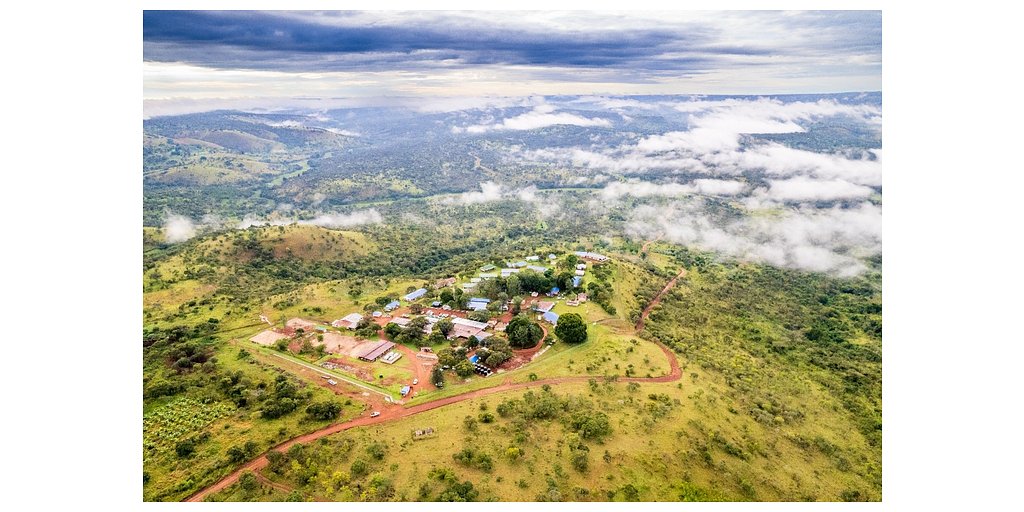
Lifezone's Kabanga Nickel: A Strategic Play in the New Green Economy
NEW YORK, NY – December 11, 2025 – In the high-stakes world of critical minerals, progress is measured not just in geological surveys but in secured capital, government backing, and meticulous execution. Lifezone Metals (NYSE: LZM) delivered on all three fronts this week, announcing significant advancements at its Kabanga Nickel Project in Tanzania. The company confirmed it is firmly on track for a pivotal Final Investment Decision (FID) in 2026, a milestone that could unlock one of the world’s most important new sources of battery-grade nickel.
Following a landmark Feasibility Study in July 2025 and the successful raising of $75 million in the latter half of the year, Lifezone has moved from planning to pre-execution. This transition signals more than just another step in a mining project's lifecycle; it represents a calculated de-risking of a multi-billion-dollar venture at the very heart of the global energy transition. For investors navigating the crosscurrents of industrial policy and green technology, the story unfolding in northwestern Tanzania is a masterclass in strategic resource development.
From Blueprint to Reality: De-Risking a Tier-One Asset
The foundation for Kabanga’s current momentum was laid by its July 2025 Feasibility Study, which validated the project's world-class potential. The study outlined exceptionally robust economics, projecting an after-tax Net Present Value (NPV) of $1.58 billion and an Internal Rate of Return (IRR) of 23.3%. These figures are underpinned by the sheer quality of the deposit, which is recognized as one of the largest and highest-grade undeveloped nickel sulfide resources globally.
Critically for financial analysts, the study projects an all-in sustaining cost (AISC) of just $3.36 per pound of nickel, net of by-product credits for copper and cobalt. According to analysis by CRU Group, this places Kabanga squarely in the first quartile of the global nickel cost curve, ensuring its resilience across commodity cycles. This low-cost profile is a powerful draw for capital, promising healthy margins even in a volatile market.
With $75 million in fresh capital secured, Lifezone is translating these financial models into tangible progress on the ground. Early works, including essential geotechnical drilling and site preparations, are underway. The project camp is being upgraded to accommodate 300 personnel, a clear indicator of escalating activity. This isn’t speculative exploration; it is the deliberate and fully funded groundwork for full-scale construction post-FID. Further cementing its strategic control, Lifezone also consolidated its ownership to 84% by acquiring BHP’s former stake, a decisive move that gives the company clear command over the project’s development and future offtake agreements.
The Global Capital Stack Takes Shape
Perhaps the most compelling aspect for investors is the sophisticated, multi-track financing strategy Lifezone is pursuing. The company is in advanced discussions with a diverse group of major strategic investors, potential off-takers, Export Credit Agencies (ECAs), and commercial banks across Europe, Asia, Africa, and the United States. This is not a simple debt-and-equity play; it is the assembly of a global coalition of capital partners who recognize Kabanga's strategic value.
The project benefits from powerful political tailwinds. In a recent high-level meeting, Tanzanian President Samia Suluhu Hassan and the U.S. Ambassador discussed finalizing investment agreements for Kabanga, signaling top-tier government commitment. This is complemented by the active due diligence process being conducted by the U.S. International Development Finance Council (DFC), which underscores the project's geopolitical importance to Western nations seeking to diversify critical mineral supply chains.
Lender confidence appears high. A bankability review of the Feasibility Study has been completed, confirming that the high-grade nature of the deposit supports an 'above market debt capacity.' With technical, environmental, and social advisors for the lenders already appointed and due diligence in motion, the path to a multi-source funding package in mid-2026 is becoming increasingly clear.
A Strategic Hedge in a Bifurcated Nickel Market
Kabanga’s advance comes at a fascinating inflection point for the global nickel market. While headlines have focused on a near-term surplus driven by a flood of lower-grade nickel pig iron (NPI) and intermediate products from Indonesia, a more nuanced reality is emerging. The market is bifurcating between this stainless-steel-grade material and the high-purity, low-carbon nickel sulfide concentrate required by the electric vehicle (EV) battery industry. A supply deficit for this premium nickel is widely projected to emerge around 2027 and widen significantly thereafter.
Kabanga is positioned as a direct answer to this impending deficit. Its sulfide ore is ideally suited for producing the Class 1 nickel that battery makers demand. Furthermore, Lifezone’s plan to utilize its proprietary Hydromet Technology offers a distinct competitive advantage. This hydrometallurgical process promises lower energy consumption and emissions compared to traditional smelting and avoids the significant environmental challenges associated with the High-Pressure Acid Leaching (HPAL) technology used on Indonesian laterite ores. For automakers and battery manufacturers under intense pressure to decarbonize their supply chains, a source like Kabanga offers a compelling ESG proposition.
Forging a New Model of In-Country Partnership
Beyond the financial and technological merits, Lifezone is cultivating a strong social license to operate by embedding the project within Tanzania's economic development goals. The government’s 16% free-carried interest transforms it from a regulator into a true partner, with a direct stake in the project's success. Over the life of the mine, Tanzania stands to gain an estimated $1.2 billion in royalties and $2.4 billion in corporate income taxes.
This partnership extends to the local level. Lifezone’s subsidiary, Tembo Nickel, already boasts a workforce that is 97% Tanzanian nationals and recently won a Compliance Excellence Award for its environmental performance. Tangible community investments, such as the completed classroom upgrades at Mukubu Primary School, demonstrate a commitment that goes beyond regulatory requirements. Critically, the project’s resettlement and livelihood restoration plans are being designed to align with stringent international standards, including those of the International Finance Corporation (IFC).
The ultimate goal is full in-country beneficiation. By planning a hydrometallurgical refinery within Tanzania, Lifezone aims to upgrade concentrate into high-value, battery-grade metals domestically. This strategy not only captures more economic value for the nation but also aligns perfectly with the government's industrialization policy, creating a powerful model for resource development that builds lasting prosperity.
With geotechnical drills mobilizing in early 2026 and procurement for critical path items advancing, the coming months will be crucial. The targeted mid-2026 Final Investment Decision and financial close represent the final gateways to unlocking this transformative project. For investors, Kabanga is no longer a distant prospect but a meticulously orchestrated venture at the confluence of global finance, green technology, and supply chain security—a defining story in the new industrial economy.