
- $3.1 million judgment against CARD in a lawsuit with BNSF Railway
- 80 times the national average mortality rates from asbestosis in Libby
- 5-year federal grant secured by CARD in August 2024
Experts would likely conclude that CARD's new operational model, while necessary to mitigate legal risks, underscores the critical need for continued federal support to sustain essential asbestos-related healthcare in Libby.
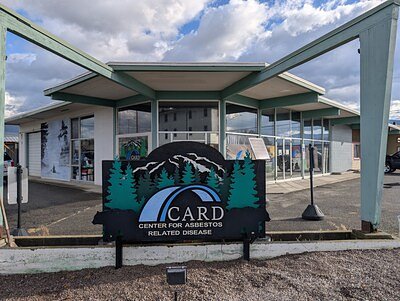
Libby's Lifeline: Asbestos Clinic Rebuilds After Legal Storm
LIBBY, Mont. – February 18, 2026 – One year after a celebratory ribbon-cutting marked its reopening, the Center for Asbestos Related Disease (CARD) continues its vital mission in this small Montana town, but under a profoundly altered landscape. The open house in February 2025 was presented as a fresh start in a new building, but it symbolized something far more significant: the survival of an essential institution that had been pushed to the brink of collapse by a multi-million dollar lawsuit and a forced closure that shook the community to its core.
For the residents of Libby, a town forever scarred by one of the worst man-made environmental disasters in American history, CARD is more than just a clinic; it is a lifeline. Now, operating with a new service model born from crisis, the organization is navigating a path forward, balancing its critical public health duties with the harsh realities of its recent legal battles.
A Lifeline Tested by Crisis
The cheerful open house of last year belied the turmoil of the preceding months. In May 2025, the clinic's doors were shuttered, and its assets seized by the Lincoln County Sheriff's Office. This was not a planned relocation but the culmination of a fierce legal battle with BNSF Railway. A jury had sided with the railway giant in a 2023 lawsuit, finding CARD liable for what BNSF claimed were false diagnoses intended to help individuals secure benefits. The resulting $3.1 million judgment was a potentially fatal blow.
The temporary closure sent a wave of fear through the community. For decades, Libby residents have relied on specialized screening for the deadly diseases that can lay dormant for years after asbestos exposure. The sudden absence of the clinic created a vacuum of uncertainty and anxiety for the thousands who depend on its services for early detection and monitoring.
The situation was so dire that the federal government intervened. Lawyers for the U.S. government argued that many of the seized assets, purchased with federal grant money, were government property. This intervention highlighted the deep partnership between CARD and its federal funders, and underscored the national significance of the services provided in this remote corner of Montana. Eventually, CARD filed for bankruptcy protection to halt the asset seizure and chart a course to remain open.
The Scars of Asbestos: A Town's Unending Battle
To understand the panic over CARD’s potential demise is to understand Libby’s tragic history. For most of the 20th century, a vermiculite mine operated near the town, producing a product contaminated with a uniquely toxic form of asbestos known as Libby Amphibole Asbestos. For decades, this dust settled over the town, coating homes, schools, and playgrounds. Mine workers brought it home on their clothes, unknowingly exposing their families.
The devastating health consequences unfolded in slow motion. Hundreds of residents have died, and thousands more have been diagnosed with asbestos-related diseases like asbestosis, lung cancer, and the particularly aggressive cancer mesothelioma. Mortality rates from asbestosis in Libby have been recorded at up to 80 times the national average. In 2009, the Environmental Protection Agency (EPA) took the unprecedented step of declaring a Public Health Emergency for the town, a designation that remains unique to Libby.
It was out of this crisis that CARD was born. Evolving from initial federal screening efforts in the early 2000s, the nonprofit clinic became the central hub for specialized care, offering free health screenings, lung cancer checks, and expertise unavailable in most medical facilities. Its mission is not just medical but educational, helping a community navigate the long-term consequences of an environmental disaster.
A New Model for a New Chapter
The crucible of the lawsuit forced a fundamental change in how CARD operates. To mitigate future legal risks and rebuild trust, the clinic has shifted away from providing in-house diagnoses. The organization now focuses its expertise on what it calls "comprehensive screening." After a patient undergoes screening, CARD provides the detailed results and refers them to a physician of their own choosing for the official diagnostic evaluation and ongoing medical care.
"We want the community to know that we are open and continuing our mission," said Tracy McNew, Executive Director of CARD, in a statement surrounding last year's reopening. "This approach ensures individuals can continue receiving care in a way that best meets their personal medical needs."
Critically, the costs associated with these external diagnostic evaluations and subsequent care are covered by CARD's federal grant. This financial safety net is crucial for patients, ensuring the new model does not create a barrier to care. The change effectively firewalls CARD from diagnostic liability while still serving its core function as the entry point for specialized asbestos-related healthcare in the region. The open house last year served as a key platform to communicate this new, more resilient operational structure to the public and introduce its new healthcare provider.
Federal Backing and Continued Vigilance
The survival and continued operation of CARD are inextricably linked to federal support. The clinic is primarily funded by an Asbestos Health Screening grant from the Centers for Disease Control and Prevention (CDC) and its Agency for Toxic Substances and Disease Registry (ATSDR). In August 2024, just months before its near-collapse, CARD secured a new five-year grant, a testament to its essential role.
Representatives from ATSDR were present at the reopening event, signaling the federal government's continued commitment. This partnership provides the financial lifeblood that allows CARD to offer its screening services for free and cover the costs of its new referral system.
A year after cutting the ribbon on its new facility, CARD stands as a symbol of resilience, not just for an organization, but for the entire Libby community. The clinic has weathered a legal and financial storm that would have destroyed most nonprofits. Its mission, forged in the dust of the old vermiculite mine, continues—adapted, transformed, but unbroken. The focus remains on early detection and connecting those affected by asbestos with the life-saving resources they need, ensuring that even as the town continues to heal, its most vulnerable are not forgotten.