
- 90% of North American manufacturing supply chain: SMEs make up the vast majority of the sector.
- 70% reduction in return costs from defects: Achieved at a battery plant using Factova.
- 20% productivity jump: Reported at an electronics facility after Factova implementation.
Experts would likely conclude that LG CNS's AI-powered smart factory solutions, particularly Factova, offer a promising pathway for North American SMEs to bridge the digital divide in manufacturing, though successful adoption will depend on navigating regulatory and ethical challenges.
LG CNS Targets North American SMEs with Enterprise-Grade Factory AI
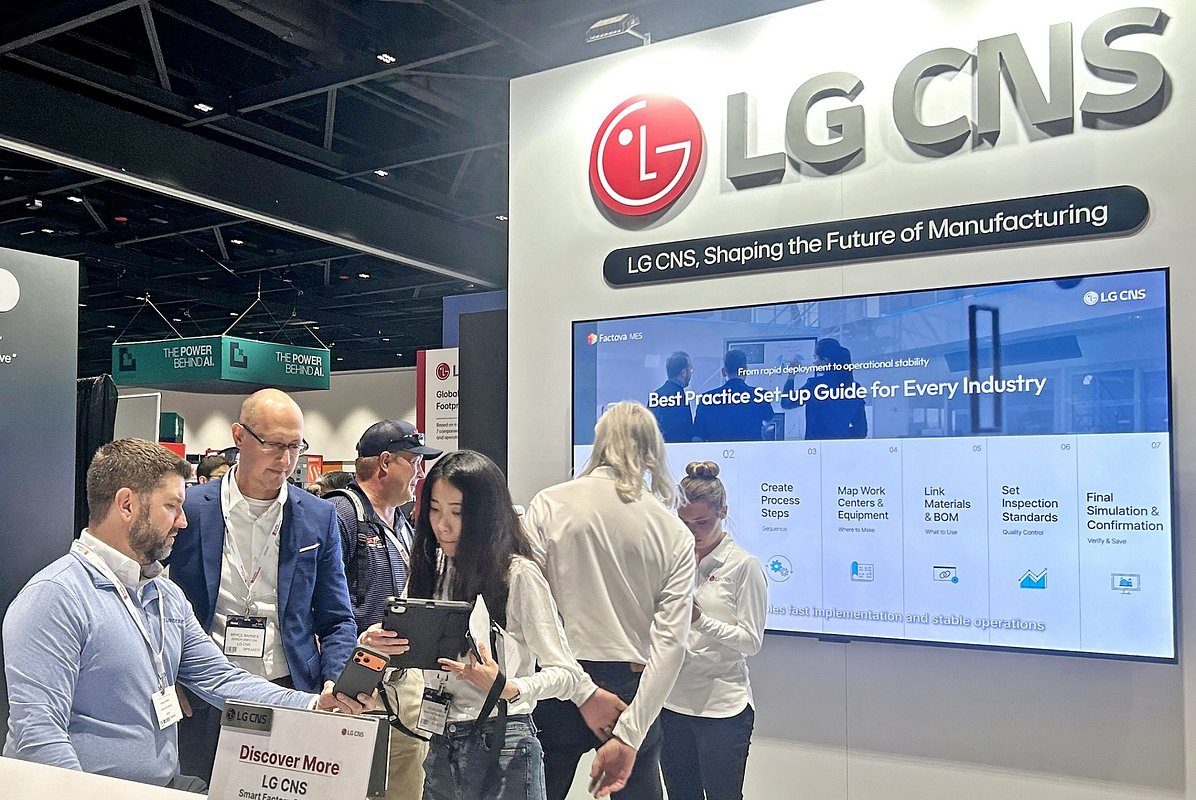
SAN JOSE, CA – May 20, 2026 – South Korean technology giant LG CNS is making an aggressive push into the North American manufacturing sector, aiming to equip small and medium-sized enterprises (SMEs) with advanced artificial intelligence capabilities previously reserved for industrial titans. Showcasing its AI-powered smart factory solution, Factova, at the recent IoT Tech Expo 2026, the company signaled a clear strategy: democratize the digital factory and reshape the competitive landscape for industrial automation.
As the sole Korea-based exhibitor at the San Jose event, LG CNS stood alongside global heavyweights like IBM, SAP, and Deloitte, unveiling a suite of tools designed to drive what it calls the manufacturing "AI transformation" (AX). The move comes as North American SMEs, which constitute over 90% of the manufacturing supply chain, grapple with a perfect storm of workforce shortages, rising costs, and intense pressure to modernize legacy systems.
Bridging the Digital Divide for Smaller Manufacturers
For years, the promise of Industry 4.0—fully automated, data-driven "smart factories"—has been a tantalizing but often out-of-reach goal for smaller manufacturers. High costs, a lack of in-house technical expertise, and the complexity of integrating new systems have created a significant digital divide. LG CNS aims to bridge this gap with Factova, an integrated platform drawing on over two decades of the company's operational know-how from large-scale manufacturing projects, including those within the LG conglomerate.
The flagship offering, Factova MES (Manufacturing Execution System), is designed to be the central nervous system of a factory. It uses AI to collect and analyze real-time data from the shop floor, identifying inefficiencies and optimizing end-to-end production workflows. Crucially for the SME market, the system is modular. Customers can start with core functions and add more sophisticated features as their digital maturity grows, avoiding a massive upfront investment.
Complementing the MES is Factova Control, which tackles the common challenge of managing a diverse array of machinery from different vendors. The solution standardizes data from various equipment—currently deployed on over 100,000 machines worldwide—and enables centralized control and AI-driven predictive maintenance. By analyzing real-time data like motor currents and vibrations, it can predict equipment failures before they happen, shifting maintenance from a reactive, manual process to a proactive, intelligent one.
A Strategic Play in a Crowded Market
LG CNS enters a fiercely competitive North American market dominated by industrial automation giants like Siemens and Rockwell Automation, alongside powerful software providers such as SAP and Schneider Electric. These incumbents offer comprehensive platforms like Siemens' MindSphere and Rockwell's Plex Smart Manufacturing Platform. To carve out its niche, LG CNS is leveraging a "Factory First" strategy, emphasizing its deep, hands-on experience in building and operating factories as a key differentiator from more software-centric competitors.
The company is bolstering this strategy with a series of powerful alliances. A recent partnership with industrial automation leader Honeywell aims to co-develop manufacturing AX solutions for the US market, combining LG CNS's AI integration capabilities with Honeywell's vast customer network and process control expertise. Another strategic collaboration with data analytics firm Palantir will bring Palantir's powerful enterprise AI platforms to manufacturing clients, initially within the LG Group's own North American facilities to establish a proven track record. This phased approach—perfecting solutions within its own ecosystem before expanding to external clients—is a cornerstone of its market entry plan.
"We are accelerating our expansion into the North American market by leveraging our deep smart factory build-and-operation experience gained from large-scale manufacturing sites and our advanced AX technology capabilities," said Jun-ho Lee, CEO of LG CNS America, in a statement. "We will continue to leverage our diverse smart factory solutions to help small and mid-sized manufacturers achieve their vision for AI-based intelligent factories."
The company's reported results from deployments in Korea offer a glimpse of the potential impact. At one battery plant, Factova reportedly helped conforming product rates exceed 90% within a month and cut return costs from defects by 70%. Another electronics facility saw a 20% jump in productivity. While these figures are compelling, they underscore the high expectations the company is setting as it seeks to win over a skeptical SME market.
Redefining Precision, Safety, and the Future of Work
Beyond general factory optimization, LG CNS is also targeting high-stakes industries that demand extreme precision. The company showcased solutions for semiconductor, aerospace, and medical device manufacturing that use AI to predict process defects, maximizing production yield in environments where errors are extraordinarily costly.
Perhaps most forward-looking was the demonstration of its Gen AI Safety Management service. This tool allows shop-floor workers to report safety incidents by simply taking a photo and recording a voice memo on a mobile app. Generative AI then analyzes the input, logs the incident, and provides immediate response guidelines based on historical data. This attracted significant attention at the expo, as environmental, health, and safety (EHS) management becomes an increasingly critical focus for manufacturers.
However, the deployment of such AI tools in the workplace is not without complexity. LG CNS is entering a regulatory environment in North America that is rapidly evolving. While there is no single federal AI law in the U.S., states like Colorado and California are enacting their own rules, and voluntary standards like the NIST AI Risk Management Framework are becoming de facto requirements. These frameworks emphasize the need for transparency, fairness, and human oversight. The use of AI for EHS, while promising, also walks a fine line between enhancing worker safety and creating a culture of surveillance, raising ethical questions about data privacy and worker dignity that companies must carefully navigate. As AI becomes more integrated into the factory floor, ensuring it augments human expertise rather than simply replacing it will be critical for its successful and ethical adoption.