
- 10-minute PCR test: The LEX VELO system delivers highly sensitive PCR results for Influenza A, Influenza B, and COVID-19 in just 6-10 minutes.
- $30 million investment: QuidelOrtho invested $20 million in 2023 and an additional $10 million in 2024, with an option to acquire LEX Diagnostics for $100 million.
- CLIA waiver: The system is approved for use in non-traditional laboratory settings, expanding testing to physician offices, urgent care centers, and pharmacies.
Experts believe the LEX VELO system's combination of speed, accuracy, and accessibility could redefine point-of-care respiratory testing, enhancing clinical workflows and public health preparedness, provided proper training and quality control are maintained.
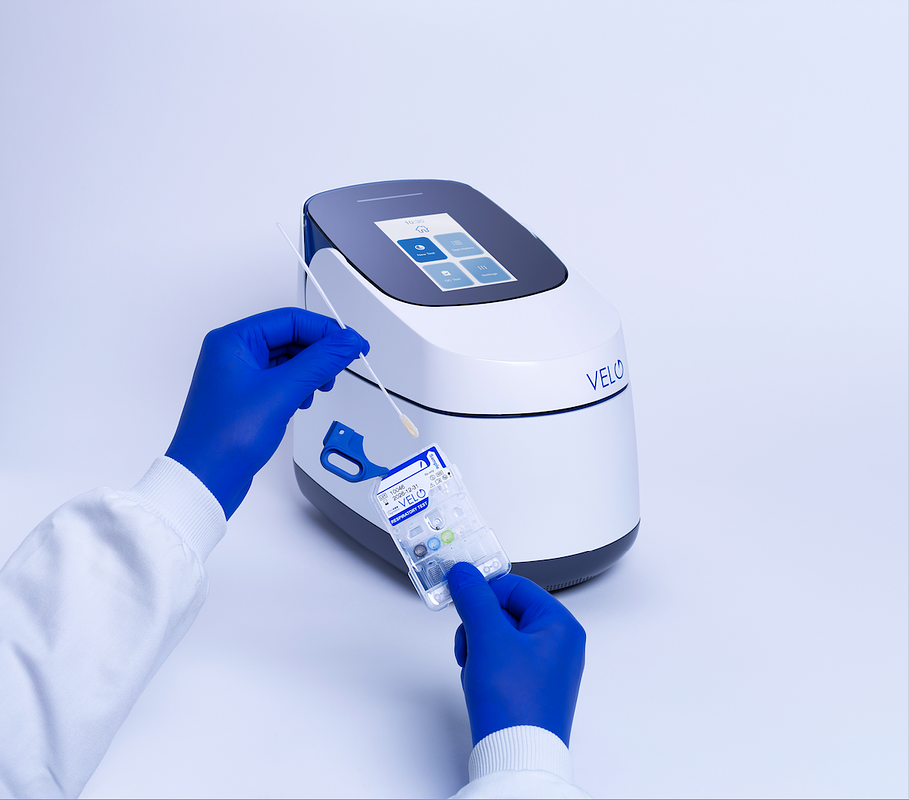
LEX VELO Cleared: 10-Minute PCR Test to Transform Respiratory Care
CAMBRIDGE, United Kingdom – February 16, 2026 – The landscape of infectious disease diagnostics is poised for a significant shift as UK-based LEX Diagnostics announced it has received U.S. Food and Drug Administration (FDA) 510(k) clearance and a Clinical Laboratory Improvement Amendments (CLIA) waiver for its VELO system. This dual regulatory milestone paves the way for an ultra-fast molecular testing platform that can deliver highly sensitive PCR results for Influenza A, Influenza B, and COVID-19 in six to ten minutes directly from a patient swab.
The clearance marks a critical achievement for the company, a spin-out of the TTP Group, and signals the impending U.S. commercial launch of a technology designed to bring the gold-standard accuracy of PCR testing to the point of care with unprecedented speed. The system's performance could fundamentally alter clinical workflows in a variety of healthcare settings, from primary care offices to pharmacies and urgent care clinics.
A New Standard in Speed and Accessibility
For years, healthcare providers have faced a trade-off between speed and accuracy in respiratory testing. Rapid antigen tests offer quick results but can lack the sensitivity of laboratory-based PCR tests, potentially leading to false negatives. The LEX VELO system aims to eliminate this compromise by leveraging proprietary ultra-fast thermal cycling technology.
"This groundbreaking achievement is a result of several years of innovation, problem solving, and dedication to our mission to make molecular diagnostics faster, simpler, and more accessible,” said Ed Farrell, Chief Executive Officer of LEX Diagnostics, in a statement. “We believe our VELO system will redefine point-of-care testing by equipping healthcare providers with lab-quality results in a few minutes."
The system is engineered for simplicity. Its cartridge-based design requires no external liquid handling or complex preparation steps, a feature intended to promote ease of use and reliability for healthcare professionals who may not have specialized laboratory training. This streamlined process, which was validated in U.S. clinical studies during the 2024/2025 respiratory season, is crucial for seamless integration into busy point-of-care environments.
Navigating a Competitive Diagnostics Market
The entry of the VELO system into the U.S. market, anticipated to begin in 2026, will place it in a competitive field of established rapid diagnostic platforms. Major players like Abbott with its ID NOW platform and bioMérieux with its BioFire FilmArray panels have already captured significant market share. Abbott’s ID NOW, for instance, provides molecular results for COVID-19 in under 13 minutes, while BioFire’s syndromic panels test for a broad array of pathogens in about 45 minutes.
LEX Diagnostics is betting that VELO's exceptional speed—delivering PCR-quality results in under 10 minutes—will be a powerful differentiator. The company also suggests its platform will have a lower cost per test compared to other molecular offerings, a factor that could be decisive for cost-conscious clinics and healthcare systems.
Fueling its market entry is a strong strategic partnership. In 2023, diagnostics giant QuidelOrtho invested $20 million in LEX Diagnostics, later adding another $10 million in 2024. This investment included an exclusive option to acquire the company, which reports from mid-2025 indicated QuidelOrtho intended to exercise for $100 million following U.S. regulatory approval. This backing not only provides significant financial stability but also offers a clear path to commercialization through QuidelOrtho's extensive distribution network and market presence in the United States.
The Transformative Power of a CLIA Waiver
Perhaps as significant as the technological innovation is the CLIA waiver. This designation means the VELO system is considered simple enough and has a low enough risk of erroneous results to be performed in non-traditional laboratory settings. This dramatically expands the locations where testing can occur, moving it from centralized labs into the community.
With a CLIA waiver, physician offices, urgent care centers, pharmacies, and other decentralized acute care settings can perform the test on-site. This allows patients to receive a definitive diagnosis and begin appropriate treatment—or be reassured of a negative result—within a single visit. The ability to quickly differentiate between bacterial and viral infections can also support antimicrobial stewardship efforts by reducing the unnecessary prescription of antibiotics.
While the expansion of testing is a major public health benefit, experts caution that successful implementation depends on proper training and quality control. Even for simple tests, procedural errors can occur when performed by personnel without formal laboratory experience. Adherence to the manufacturer's instructions and robust internal quality assurance processes will be essential to realizing the full potential of this decentralized testing model.
Bolstering Public Health and Pandemic Preparedness
The broader implications of technology like the VELO system extend to national health security. The COVID-19 pandemic underscored the critical need for a robust, decentralized testing infrastructure capable of rapid scaling during a public health crisis. Ultra-fast, accessible molecular platforms are a key component of that infrastructure.
By empowering community-level healthcare providers with the ability to perform rapid, accurate diagnostics, such systems enable faster identification of outbreaks, more effective contact tracing, and quicker implementation of public health measures. This capability is not only crucial for future pandemic preparedness but also for managing seasonal respiratory disease burdens that strain healthcare systems annually.
The introduction of the LEX VELO system represents a convergence of speed, accuracy, and accessibility in diagnostics. As LEX Diagnostics and its partners prepare for the 2026 commercial launch, the healthcare industry will be watching closely to see if the 10-minute PCR test can truly redefine the front lines of respiratory disease management.