
- 6 tons (12,000 pounds) of lo mein noodles donated by Leeann Chin to Second Harvest Heartland
- One in five Minnesota households is food insecure (2024 study)
- 9 million visits to food shelves in Minnesota in 2024 (2.5x pre-pandemic levels)
Experts emphasize that corporate donations and partnerships are critical in addressing Minnesota's worsening hunger crisis, requiring a collective community effort to achieve food security goals.
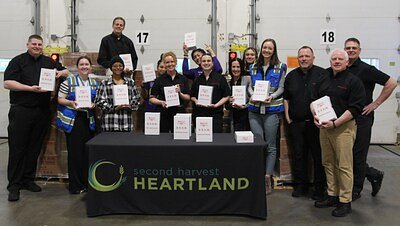
Leeann Chin Donates 6 Tons of Noodles Amidst Minnesota's Hunger Crisis
MINNEAPOLIS, MN – March 25, 2026 – As Minnesota grapples with an unprecedented rise in food insecurity, local restaurant chain Leeann Chin has stepped forward with a significant donation, providing nearly 12,000 pounds of lo mein noodles to Second Harvest Heartland. The contribution, equivalent to six tons of food, aims to support thousands of families across a state where hunger is becoming a more visible and urgent crisis.
The donation, comprising 396 cases of product, was delivered to Second Harvest Heartland, one of the nation's largest food banks. It represents a tangible effort by the Minnesota-born brand to address the needs of its home community. Beyond the food itself, team members from Leeann Chin also volunteered their time at the food bank's Northeast Minneapolis facility, assisting with packing and distributing meals.
"Minnesota is home for Leeann Chin, so being able to give back in a meaningful way is incredibly important to us," said Liz Grzechowiak, Executive Vice President of Operations at Leeann Chin, in a statement. "We're grateful for the chance to support local families alongside Second Harvest Heartland."
This partnership arrives at a critical juncture for the state, highlighting the growing role of corporate aid in bridging the gap between available resources and escalating need.
A State Grappling with Record Hunger
Leeann Chin's donation is not just a gesture of goodwill; it is a direct response to a deepening crisis. Recent data paints a stark picture of food insecurity across Minnesota. A 2024 study from Second Harvest Heartland and Wilder Research revealed a startling statistic: one in five Minnesota households is now food insecure, struggling to afford the food they need. This represents a significant increase that has pushed community resources to their limits.
Food shelves across the state registered a record-breaking 9 million visits in 2024, a staggering 2.5 times the number seen before the pandemic in 2019. This surge is fueled by a confluence of economic pressures. The cost of food has risen 28% since 2019, while housing and other living expenses continue to climb. Compounding the issue, the end of pandemic-era emergency allotments for the Supplemental Nutrition Assistance Program (SNAP) in March 2023 left the average recipient with about $100 less per month for groceries.
The impact is not felt equally. The data shows that 26% of households with children under 18 are food insecure, and the disparity is even greater among communities of color, where 40% of households report food insecurity compared to the overall rate of 20%. With one in seven children in the state facing hunger, the need for consistent, nutritious food is more acute than ever.
The Scale of the Fight and the Power of Partnership
For an organization like Second Harvest Heartland, which serves 57 counties in Minnesota and Western Wisconsin, corporate donations are a vital lifeline. The food bank is a logistical powerhouse, having distributed over 145 million meals in 2024 through its network of more than 1,000 food shelf partners and local programs. In this context, the 12,000-pound donation of lo mein noodles from Leeann Chin provides a valuable infusion of shelf-stable, culturally relevant food that can be quickly distributed to families.
While a single donation represents a fraction of the tens of millions of pounds of food Second Harvest Heartland handles annually, its importance cannot be overstated. Officials from the food bank have repeatedly noted that 2024 was expected to be the "hungriest year on record, for the third year in a row," making every contribution count. They have stressed that a "total community effort" is required to meet their ambitious goal of making 90% of Minnesota households food-secure by 2030.
Partnerships with businesses like Leeann Chin are a cornerstone of this strategy. They not only provide essential food resources but also raise public awareness and encourage a broader culture of giving and volunteerism. The sight of Leeann Chin employees working alongside food bank staff underscores a hands-on approach to corporate citizenship that extends beyond a simple financial transaction.
A Recipe for Responsibility in the Food Industry
The initiative also places Leeann Chin at the forefront of a growing trend within the restaurant industry: tackling the dual challenges of food waste and hunger. Food businesses are uniquely positioned to be part of the solution, converting potential surplus into sustenance for those in need. This model of redirecting edible food from landfills to hungry people is a key strategy championed by food recovery organizations nationwide.
Leeann Chin's action reflects an understanding that its mission can extend "beyond restaurant walls," as noted in its press release. By donating a core product like lo mein noodles, the company ensures that its contribution is both practical and aligned with its brand. This type of targeted giving is increasingly seen as a hallmark of effective corporate social responsibility (CSR).
While the full scope of Leeann Chin's long-term CSR strategy is not extensively publicized, this high-profile partnership with a major hunger-relief organization demonstrates a clear commitment to its home state. As businesses face growing expectations from consumers to operate ethically and sustainably, actions that address pressing local issues like food insecurity serve to strengthen community ties and build brand loyalty. The donation serves as a powerful example of how a regional brand can leverage its resources to make a meaningful difference, turning its pantry staples into a source of hope for struggling neighbors.