
- 4.2 million children lack access to formal childcare nationwide (Bipartisan Policy Center).
- 52% of early childhood education costs are borne by families, creating unsustainable financial strain.
- Tulsa's universal pre-K program has shown lasting academic gains for participants, closing achievement gaps.
Experts agree that investing in high-quality early childhood education yields long-term economic and developmental benefits, and systemic reforms—including increased public funding, workforce support, and expanded access—are critical to addressing the current crisis.
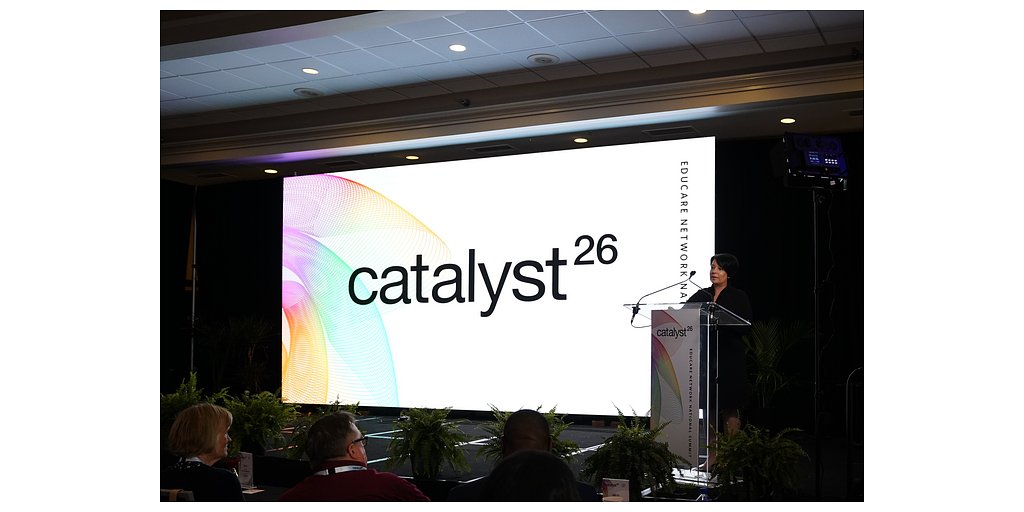
Leaders Convene in Tulsa to Tackle Early Childhood Education Crisis
TULSA, OK – May 15, 2026 – As the nation’s early childhood education systems face unprecedented strain, more than 300 leaders from education, research, policy, and philanthropy gathered in Tulsa this week for Catalyst 26. Hosted by the Educare Network, the three-day national summit aimed to move beyond conversation and forge actionable strategies to support the country's youngest learners, their families, and the educators who serve them.
The convening took place against a backdrop of a deepening crisis. Providers are struggling with financial instability, parents cannot find or afford care, and a beleaguered workforce is exiting the field in droves. The summit’s focus was clear: to build a more resilient, equitable, and effective system by breaking down silos and uniting diverse sectors around a common goal.
A System Under Strain: The National Childcare Crisis
The “growing strain” mentioned in the summit’s opening remarks is a stark reality for millions. The expiration of federal pandemic-era stabilization funds in late 2023 has pushed an already fragile sector to the brink. Early childhood education in the U.S. is supported by a fragmented funding model where families bear the majority of the cost—an average of 52%—a burden that has become unsustainable.
This financial precarity has fueled a severe workforce crisis. A January 2024 survey from the National Association for the Education of Young Children (NAEYC) found that persistent staff shortages, driven by uncompetitive wages and high levels of burnout, continue to plague the industry. With median pay significantly lower than that of K-12 teachers, retaining qualified professionals has become a primary operational challenge.
For families, the consequences are dire. Nearly half of all Americans live in “childcare deserts,” areas with an insufficient supply of licensed providers, according to NAEYC. The Bipartisan Policy Center quantifies this gap, reporting that approximately 4.2 million children nationwide lack access to a formal care slot. Even where spots are available, the cost is often prohibitive, forcing parents—predominantly women—to reduce work hours or leave the workforce altogether, impacting both household income and national economic productivity.
The Economic and Developmental Case for Investment
Summit organizers and speakers argued that addressing this crisis is not just a social imperative, but an economic one. A central theme was the immense return on investment that high-quality early learning provides.
This case was powerfully articulated by keynote speaker Raj Chetty, a Professor of Public Economics at Harvard University and Director of Opportunity Insights. Chetty’s research, which uses large-scale data to track economic mobility, has provided definitive proof of the long-term benefits of early childhood interventions. His work demonstrates that children from disadvantaged backgrounds who attend high-quality early learning programs have significantly better long-term outcomes, including higher earnings, improved health, and greater educational attainment in adulthood.
“Talent is universal, but opportunity is not,” Chetty stated during his address. “What I see in the broad thesis of the work you are doing is trying to improve that environment. The research is clear that early childhood environments matter greatly in shaping long-term outcomes and economic opportunity.”
Complementing the economic argument, other experts like Stephanie M. Jones, a professor at the Harvard Graduate School of Education, highlighted the importance of holistic development. Jones’s research on social-emotional learning (SEL) emphasizes that skills like self-regulation, empathy, and problem-solving are foundational for lifelong success. Her work informs the design of programs that support the whole child, building resilience and mitigating the impacts of adversity and poverty.
Tulsa: A Blueprint for Community-Driven Success
Tulsa served as a fitting host city, offering a tangible example of what sustained, collaborative investment in early childhood education can achieve. For decades, the city has been a national leader in the field, a status largely credited to a powerful public-private partnership anchored by the George Kaiser Family Foundation (GKFF).
“Tulsa is proud to welcome leaders from across the country who understand that early childhood education is foundational to the future of our communities,” said Monroe Nichols, Mayor of Tulsa. “The conversations taking place at Catalyst 26 reflect the kind of collaboration, innovation, and shared responsibility needed to expand opportunity for children and families nationwide.”
Tulsa’s model is multifaceted. It includes a renowned universal pre-kindergarten program, delivered through a mixed system of public schools and private providers, that offers free, high-quality education to all four-year-olds. Furthermore, the city is home to four Educare schools—more than any other city in the country. These schools provide intensive, full-day, year-round education and comprehensive support services for children from birth to age five from low-income families.
Longitudinal studies of Tulsa's programs have documented significant and lasting positive effects. Children who participate show marked gains in school readiness, and these academic advantages have been shown to persist through elementary school, helping to close achievement gaps.
Forging a Unified Path Forward
The ultimate goal of Catalyst 26 was to harness the expertise of its diverse attendees to create a unified strategy for systemic change. The Educare Network itself, with 25 schools across the country, functions as a national learning laboratory, using a data-driven, research-based model to demonstrate what is possible in early learning and to inform public policy.
Discussions throughout the summit crystalized around several key policy pillars that advocates say are essential for building a functional system. These include a dramatic increase in stable, public investment at both the federal and state levels; policies that ensure living wages and professional support for the ECE workforce; and strategies to expand access and affordability for all families, particularly those in underserved communities.
“This week reminded us that meaningful change happens when research, practice, policy, and community work not in silos, but in partnership around a shared vision for children and families,” said Kara H. Ahmed, President & CEO of the Educare Network. “At a time of increasing pressure on early childhood systems nationwide, Catalyst 26 challenged us to move beyond conversation toward the leadership, alignment, and long-term investment required for children, families, and educators to truly thrive.”
The momentum from the summit aligns with a growing bipartisan recognition in Washington and in state capitals that childcare is critical infrastructure. While states like Vermont and Virginia are advancing their own innovative solutions, the call from leaders in Tulsa was for a cohesive and ambitious national strategy to ensure that every child has the opportunity to reach their full potential.