
- KRW 49 Trillion Investment: Kia plans to invest KRW 49 trillion (approx. $34 billion USD) by 2030 to drive electrification, autonomous driving, and robotics.
- 2030 Sales Target: The company aims to sell 4.13 million vehicles globally by 2030, capturing 4.5% of the global market.
- EV & HEV Expansion: Kia will expand its BEV lineup to 14 models and HEV lineup to 13 models, targeting 1 million BEV and 1.1 million HEV sales annually by 2030.
Experts would likely conclude that Kia's ambitious KRW 49 trillion investment plan reflects a high-stakes but strategic bet on electrification, autonomous driving, and robotics, positioning the company to compete as a leader in sustainable mobility—though success hinges on navigating market volatility and intense global competition.
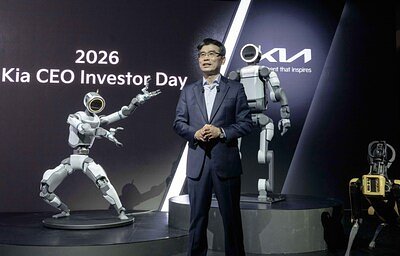
Kia Bets KRW 49 Trillion on EV, Hybrid & Tech Dominance by 2030
SEOUL, South Korea – April 09, 2026 – Kia Corporation has charted an audacious course for the remainder of the decade, unveiling a sweeping mid-to-long-term strategy at its annual CEO Investor Day that hinges on a massive KRW 49 trillion (approx. $34 billion USD) investment, a blitz of new electrified models, and a deep dive into autonomous and robotic technologies. The automaker is targeting exponential growth, aiming to sell 4.13 million vehicles globally by 2030 and capture a 4.5 percent share of the global market.
The plan represents a dramatic acceleration of the 'Total Transformation' initiative the company embarked upon in 2021. Building on a period of record profitability and rising brand value, Kia is now betting heavily that it can evolve from a traditional car manufacturer into a dominant force in sustainable mobility. "EVs, HEVs, autonomous driving, and robotics will serve as key drivers for Kia's fastest growth to date," stated President and CEO Ho Sung Song, underscoring the multi-faceted nature of the company's ambitions.
A Multi-Pronged Electrified Product Offensive
At the heart of Kia’s strategy is a formidable expansion of its vehicle portfolio, designed to cater to a diverse global market that is embracing electrification at varying speeds. The company is not placing all its chips on a single technology; instead, it is pursuing a dual-pronged approach with significant investment in both hybrid electric vehicles (HEVs) and battery electric vehicles (BEVs).
By 2030, Kia plans to expand its HEV lineup to 13 distinct models, targeting annual sales of 1.1 million units. This move leverages the company’s recent success, particularly in markets like the United States, where hybrid sales for Kia and its affiliate Hyundai surged by nearly 50% in 2025. The plan also includes the introduction of a rugged body-on-frame pickup truck, which will be offered with hybrid and extended-range electric (EREV) powertrains, signaling Kia’s intent to challenge established players in lucrative new segments.
Simultaneously, the push into full electrification will be even more aggressive. The BEV lineup is set to grow to 14 models, with a goal of selling one million units annually by the end of the decade. This expansion will be supported by a next-generation EV platform and a strategic focus on affordability, beginning with the launch of the mass-market EV2 in 2026. To support this growth, Kia will optimize its global production footprint, with its EVO Plants in Korea serving as dedicated EV hubs and regional facilities in Europe and the U.S. producing key models like the EV4 and EV9 locally.
Perhaps the most novel part of its product strategy is the major push into Purpose-Built Vehicles (PBVs). Kia is creating a dedicated lineup—the PV5, PV7, and PV9—set for sequential launches starting in 2025. These modular, specialized vehicles are aimed at the burgeoning market for commercial logistics, ride-hailing, and mobile services, with a sales target of 232,000 units by 2030. This positions Kia to become a key player in the future of urban mobility and logistics, moving beyond personal car ownership.
Beyond the Wheel: A Transformation into a Tech Innovator
Kia's 2030 vision extends far beyond sheet metal and powertrains. The company is fundamentally re-engineering its vehicles and factories to become a technology-driven mobility provider. A cornerstone of this effort is the transition to Software-Defined Vehicles (SDVs), with the first such model's development scheduled for completion by late 2027. This shift will allow for continuous vehicle improvement through over-the-air updates and the creation of new digital services, transforming the car into an evolving connected device.
Hand-in-hand with this software focus is an ambitious autonomous driving roadmap. Leveraging a strategic partnership with tech giant NVIDIA, Kia aims to roll out urban Level 2++ autonomous driving capabilities by early 2029. This advanced system promises hands-free driving in a wider range of conditions, including complex city environments, and relies on a "Data Flywheel" approach to continuously improve its AI models.
The innovation extends to the factory floor. Kia will begin deploying 'Atlas', an advanced robotics system, at the Hyundai Motor Group Metaplant America (HMGMA) in 2028, followed by its own Kia AutoLand Georgia plant in 2029. This move into next-generation smart manufacturing is expected to enhance production efficiency and flexibility. Furthermore, Kia envisions integrating robotics into its service ecosystem, exploring last-mile delivery solutions where autonomous robots work in tandem with its PBV lineup, creating a seamless logistics chain.
The High Stakes of a KRW 49 Trillion Bet
Underpinning this entire transformation is a staggering financial commitment. The planned KRW 49 trillion investment over the next five years represents a dramatic increase in capital expenditure for the company. Of this total, KRW 21 trillion is earmarked specifically for future business ventures, including electrification, autonomous driving, and PBVs, highlighting a decisive pivot in resource allocation.
This spending is aimed at achieving equally ambitious financial targets. By 2030, Kia is projecting annual revenue of KRW 170 trillion (approx. $118 billion USD) and an operating profit of KRW 17 trillion, maintaining a robust 10% operating profit margin. While Kia has recently enjoyed industry-leading profitability, reaching a margin of 11.8% in 2024, the path forward is not without challenges. In 2025, the company's operating profit saw a significant decline despite record revenue, a downturn attributed largely to the impact of U.S. tariffs and increased sales incentives.
This recent experience underscores the volatility of the global automotive market and the significant risks associated with Kia's plan. The success of this massive investment will depend on the company's ability to navigate fierce competition, shifting consumer preferences, and complex regulatory landscapes across its key regions in the U.S., Europe, and emerging markets. The strategy is a bold declaration of intent to not just participate in the future of mobility, but to actively shape and lead it.