
- 15+ countries: Karpowership's footprint with social and environmental initiatives.
- 58,000 students: Benefited from educational support and scholarships.
- 76% local jobs: Claimed in Brazil project, aligning with community development.
Experts view Karpowership's initiatives as a strategic blend of corporate social responsibility and business expansion, but emphasize the need for reconciliation between its philanthropic efforts and the environmental impact of its fossil fuel-dependent power solutions.
Karpowership's Dual Impact: Powering Nations, Sparking Debate
ISTANBUL, Turkey – April 22, 2026 – As Karpowership celebrates the third anniversary of its One World Karadeniz Foundation, the global energy company is highlighting a significant expansion of its social and environmental initiatives. With a footprint in over 15 countries, the foundation reports it has reached tens of thousands of people, championing everything from reforestation in Brazil to advanced technical training in Guyana. Yet, as the company polishes its philanthropic credentials, it continues to navigate a storm of criticism surrounding the environmental impact of its core business: a fleet of floating power plants reliant on fossil fuels.
This dual narrative places the Turkish energy giant at the center of a complex global debate, balancing the urgent need for electricity in developing nations against the long-term imperatives of climate action and environmental stewardship.
A Global Mission for Social Progress
Launched three years ago to formalize the company's long-standing community projects, the One World Karadeniz Foundation operates on four core pillars: education, women's empowerment, community development, and environmental sustainability. The results, according to the company, are substantial. More than 58,000 students have received educational support and scholarships through programs like the "Girl Power" initiative and partnerships with the Girl Move Academy.
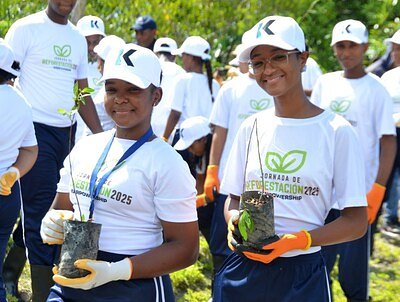
In South America, the foundation's efforts are tailored to local needs. Recent projects include a new AutoCAD Technology Laboratory at the Government Technical Institute in Guyana, projected to serve nearly 1,000 students annually and bolster digital literacy for industrial jobs. In the Dominican Republic and Brazil, reforestation programs are underway, with the latter also including support for local fishing communities to promote sustainable practices. Meanwhile, in Ecuador, the focus has been on child welfare, including orphanage support and the development of STEM education programs.
"Since our establishment, contributing to the communities where we operate has always been at the core of our approach," said Zeynep Harezi Yilmaz, Vice Chair of the One World Karadeniz Foundation, in a statement marking the anniversary. "We brought together our initiatives under a more structured organisation... aiming to develop initiatives that transform social benefit into lasting impact."
This mission is presented as a natural extension of Karpowership's primary role. By providing rapid and reliable power through its unique Powership fleet, the company positions itself as a key player in ending energy poverty, with the foundation's work empowering the same communities it helps to electrify.
The Strategic Spark Behind Corporate Goodwill
Beyond altruism, Karpowership's significant investment in Corporate Social Responsibility (CSR) is deeply intertwined with its business strategy. For any company deploying large-scale infrastructure, particularly in the energy sector, securing a "social license to operate" is paramount. Goodwill generated through community investment, local job creation—which the company claims is 76% local in its Brazil project—and environmental projects can smooth the path for market entry and regulatory approval.
In an era of heightened focus on Environmental, Social, and Governance (ESG) metrics, a robust philanthropic arm like the One World Karadeniz Foundation is a valuable asset. It helps the company build a positive reputation, attract and retain talent, and appeal to investors who increasingly weigh ethical considerations. The foundation's work, which aligns with several of the United Nations' Sustainable Development Goals, including gender equality and quality education, allows Karpowership to frame its presence not just as a commercial venture, but as a partnership in national development.
This strategic alignment is clear in the company's ambitions. With plans to significantly expand its global activities, tripling its social impact is a stated parallel goal, demonstrating that for Karpowership, business growth and social outreach are two sides of the same coin.
An Uncomfortable Nexus: Philanthropy and Fossil Fuels
While the foundation plants trees and builds labs, the Powerships that generate the company's revenue burn natural gas or fuel oil. This uncomfortable nexus is where the company faces its fiercest criticism and accusations of "social washing"—using positive social initiatives to distract from a controversial core business.
Nowhere has this tension been more apparent than in South Africa. The company's bid to supply over 1,200 megawatts of power via three Powerships has been mired in controversy and legal battles for years. Environmental groups and local communities have mounted a powerful opposition, citing grave concerns. South Africa's Department of Forestry, Fisheries and the Environment (DFFE) repeatedly refused to grant environmental authorization for the projects, citing inadequate public consultation and flawed environmental impact assessments (EIAs).
Critics, including organizations like the Centre for Environmental Rights and Green Connection, argue that the 20-year contracts would lock the country into fossil fuel dependency, produce millions of tons of greenhouse gas emissions, and pose a threat to marine ecosystems and the livelihoods of small-scale fishing communities. Similar environmental concerns have been echoed by activist groups in Mozambique, who have flagged risks of air pollution and faulty impact assessments for projects there.
These protracted struggles stand in stark contrast to the positive press releases celebrating community engagement elsewhere. While one arm of the company is lauded for supporting fishermen in Brazil, another stands accused of threatening their counterparts in South Africa, creating a jarring dissonance in its corporate identity.
Balancing Today’s Power with Tomorrow’s Climate
Karpowership consistently defends its model, positioning its gas-powered ships as a crucial "transitional solution." The company argues that its technology provides a faster, more flexible, and cleaner alternative to aging coal or diesel plants, thereby reducing overall emissions and stabilizing national grids to allow for the integration of intermittent renewables like wind and solar. To bolster its green credentials, the company points to investments like its new solar plant in Itaguaí, Brazil, and its commitment to reducing its carbon footprint.
This places developing nations in a difficult position. Many face crippling energy deficits that stifle economic growth and impact daily life. The promise of rapid, reliable power from a Powership arriving in a matter of months is often more politically and economically attractive than the slower, more complex, and capital-intensive process of building out large-scale renewable infrastructure.
As Karpowership continues its global expansion, it will increasingly be judged not just on the schools it supports or the trees it plants, but on its ability to reconcile its philanthropic mission with the environmental cost of its primary product. The company's story is a microcosm of the world's own energy dilemma: how to power progress for billions today without compromising the climate for generations to come.