
- 70,000+ machines in Kalmar's global installed base
- 1,500 service technicians supporting the network
- 2-3x higher margins in aftermarket services compared to new equipment sales
Experts would likely conclude that Kalmar's AI-powered aftermarket strategy is a critical move to enhance operational efficiency, customer uptime, and long-term profitability in a competitive global market.
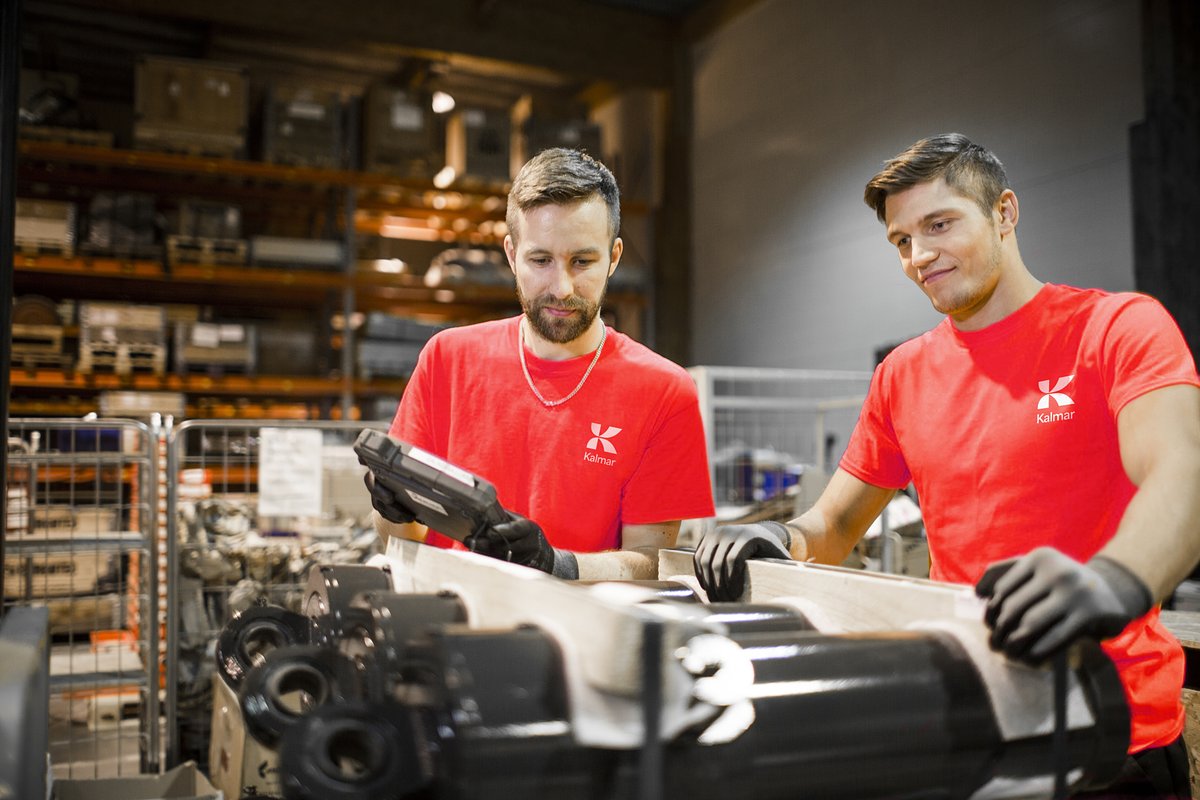
Kalmar Bets on AI-Powered Aftermarket to Fortify Global Service Dominance
HELSINKI, FINLAND – June 09, 2026
Kalmar, a global leader in heavy material handling equipment, has announced a significant strategic partnership with Syncron to overhaul its global parts planning infrastructure. The move, which will see Kalmar replace its legacy systems with Syncron's cloud-based, AI-driven platform, is a decisive step in the company's ambition to dominate the aftermarket services space. The new system, slated to go live in October 2026, is designed to enhance parts availability, streamline dealer network operations, and ultimately, maximize equipment uptime for customers in the world's most demanding logistics environments.
While the announcement centers on a technology upgrade, its implications run far deeper. This partnership is not merely an IT project; it is a foundational element of Kalmar's long-term strategy, directly supporting its crucial 'Growing Services' pillar. By investing in a smarter, more responsive aftermarket, Kalmar is positioning itself to capture greater lifecycle value from its vast installed base and build a more resilient business in an increasingly volatile global market.
The Strategic Imperative of 'Growing Services'
For industrial giants like Kalmar, the initial sale of a machine is just the beginning of the customer relationship. The real, long-term value is often found in the aftermarket—the ecosystem of spare parts, maintenance, and service contracts that keep equipment running. This segment typically boasts operating margins two to three times higher than new equipment sales, providing a stable, recurring revenue stream that can buffer against the cyclical nature of capital expenditures.
Kalmar has explicitly identified this opportunity as one of its three core strategic pillars: 'Growing Services'. With a global installed base of over 70,000 machines and a network of 1,500 service technicians, the potential is enormous. However, capitalizing on it requires world-class operational execution. Recent company reports have hinted at "operational headwinds in our Services segment," suggesting that despite strong overall performance, the efficiency of its aftermarket operations was an area ripe for improvement.
This partnership with Syncron is a direct response to those headwinds. By modernizing its parts planning capabilities, Kalmar aims to increase its capture rate for spare parts, make its service contracts more attractive, and shift towards more predictive maintenance models. "Parts availability and service performance are fundamental to how our customers experience our brand, and to how we grow our service business," stated Fredrik Fogelklou, VP of Parts & Logistics Solutions at Kalmar. This statement underscores the dual objective: enhancing the customer experience to drive loyalty while simultaneously fueling a high-margin growth engine for the company. The initiative is about transforming the aftermarket from a reactive necessity into a proactive, strategic advantage.
A Digital Leap for Parts Planning
At the heart of this transformation is the move away from a legacy parts planning system. While details of the old system are not public, the industry-wide challenges with such platforms are well-documented. They often operate in data silos, rely on outdated forecasting models that struggle with the erratic demand for spare parts, and require significant manual intervention from planners. This can lead to a costly paradox: excess inventory of some parts tying up capital, while critical components are out of stock, causing crippling equipment downtime.
Syncron's platform represents a fundamental shift. As a cloud-based, AI-powered solution, it is designed to tackle the inherent complexity of the aftermarket head-on. The system uses machine learning algorithms to analyze vast datasets and predict demand patterns with far greater accuracy. Its multi-echelon inventory optimization (MEIO) capabilities allow Kalmar to strategically position parts across its entire global network—from central warehouses to regional depots and dealer locations—ensuring the right part is in the right place at the right time, at the lowest possible cost.
This level of intelligence automates routine tasks, freeing up planners to focus on managing exceptions and high-value strategic decisions. For Kalmar, this means moving from a system of educated guesses to one of data-driven precision. "With Syncron, we have a partner that understands the realities of our aftermarket and can help us make better decisions across our network—starting with planning, and building from there," Fogelklou added. This isn't just about installing new software; it's about embedding a new, more intelligent operating model into the DNA of its service business.
Uptime is Everything: The Customer and Dealer Payoff
For Kalmar's customers operating in ports, terminals, and distribution centers, the ultimate currency is uptime. Every minute a straddle carrier or terminal tractor is out of commission translates to lost productivity, logistical bottlenecks, and financial penalties. As Josh Weiss, CEO at Syncron, noted, "Kalmar operates in an environment where there’s little margin for error when it comes to parts availability."
This partnership is engineered to directly address that critical customer pain point. By optimizing parts availability, Kalmar can significantly improve its first-time fix rate and reduce the time equipment spends waiting for service. The goal is to make maintenance and repairs faster, more predictable, and less disruptive to customer operations. This enhanced service responsiveness is a powerful differentiator in a competitive market, fostering deep customer loyalty that extends far beyond the initial equipment purchase.
The benefits also cascade down to Kalmar's extensive global dealer network. The partnership aims to increase "dealer network effectiveness" and includes future plans for "enhanced dealer collaboration." A more intelligent central parts planning system means dealers will experience fewer emergency orders, reduced freight costs, and more reliable stock replenishment. As the system evolves to include dealer-level inventory management, it will empower dealers to optimize their own stock, freeing up capital and improving their own profitability. Ultimately, a more efficient and collaborative network ensures that the end customer receives a seamless, high-quality service experience, regardless of their location.
Building a Resilient Aftermarket in a Volatile World
Kalmar's investment in its aftermarket infrastructure is also a savvy response to the broader economic landscape. The past several years have exposed the fragility of global supply chains, forcing companies to rethink their lean inventory strategies. Building resilience now involves a combination of strategic inventory buffers, enhanced visibility, and greater agility—all capabilities that a modern parts planning system is designed to provide.
By creating a more intelligent and responsive aftermarket supply chain, Kalmar is not only improving its day-to-day efficiency but also building a shock absorber against future disruptions. This move aligns with a wider industry trend of manufacturers shifting their focus towards service-driven business models. As equipment becomes more connected and data-rich—Kalmar itself has a fleet of over 13,000 connected machines—the opportunity to offer sophisticated, data-driven services grows exponentially.
This partnership lays the digital foundation for those future services. "This partnership starts with building a strong planning foundation, but it’s really about where that leads," Weiss explained. Where it leads is toward a future of predictive maintenance, where IoT data from machines can trigger proactive parts orders before a component even fails. It leads to a more deeply integrated ecosystem with dealers and suppliers, and a service model that delivers maximum lifecycle value. In essence, Kalmar is not just buying software; it is investing in the future architecture of its service business, ensuring it remains a leader in a world where progress is measured in uptime.