
- Global K-beauty industry valued at $17 billion in 2024, projected to reach $38 billion by 2033
- South Korea overtook France as the top exporter of cosmetics to the U.S. in 2024, with $1.7 billion in exports
- Online retail accounts for over half of all K-beauty sales
Experts agree that K-beauty's success stems from a combination of innovative R&D, cultural influence, and strategic global marketing, making it a dominant force in the cosmetics industry.
K-Beauty's Global Reign: More Than Skin Deep
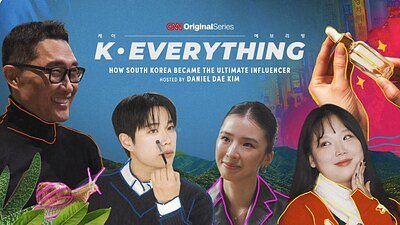
HONG KONG – May 29, 2026 – The glow of South Korean culture has captivated the world, and nowhere is this more visible than on the faces of millions. The global phenomenon known as K-beauty has transcended mere skincare trends to become a multi-billion-dollar economic powerhouse, reshaping beauty standards from Seoul to San Francisco. Now, a new CNN Original Series, K-Everything, hosted by actor Daniel Dae Kim, promises to pull back the curtain on this radiant empire, exploring not just the innovative products, but the deep-seated cultural forces that drive its phenomenal success.
In an upcoming episode focusing on K-beauty, Kim, a Korean-American actor with deep roots in the culture, navigates the intricate landscape of an industry that is as much about societal identity as it is about serums and sheet masks. The series delves into a world where appearance is currency, innovation is relentless, and global influence is the ultimate prize.
From Ancient Rituals to an Economic Juggernaut
The story of K-beauty is one of astonishing growth, rooted in ancient traditions. As the CNN episode highlights, the lineage of Korean skincare can be traced back to the Joseon era, when women sought luminous skin using natural ingredients like rice water. Today, that simple pursuit has evolved into a global industry valued at approximately $17 billion in 2024, with some analysts projecting it to soar past $38 billion by 2033.
This explosive growth is backed by hard numbers. In a landmark shift, South Korea officially overtook France as the top exporter of cosmetics to the United States in 2024, shipping $1.7 billion worth of products. This surge helped elevate South Korea to the world's second-largest cosmetic exporter in 2025, with its beauty trade surplus crossing the $10 billion mark for the first time. This economic triumph is no accident; it is the result of a national obsession with research and development. The series takes viewers inside this engine of innovation, with Kim visiting a biopharmaceutical company that produces one of K-beauty's most talked-about ingredients: snail mucin. This focus on novel, effective components is a cornerstone of the industry, keeping it steps ahead of international competitors.
Retail giants like Olive Young, featured in the series, serve as glittering showcases for the latest trends, where consumers can find everything from bubble masks to ampoules, demonstrating the industry's fast-paced, consumer-driven nature. The dominance of online retail, which accounts for over half of all K-beauty sales, has further democratized access and fueled its worldwide expansion.
The Unspoken Pressures of Perfection
Beyond the impressive market data lies a more complex social narrative. K-Everything aims to dig beneath the surface, exploring why the pursuit of an ideal appearance is so deeply ingrained in modern Korean society. The episode connects this to the country's rapid modernization and political shifts, which fostered a hyper-competitive environment where physical appearance, or "lookism," became intrinsically linked to social and professional success.
In a nation with the highest rate of cosmetic procedures per capita, investing in one's appearance is often viewed not as vanity, but as a form of self-improvement and a necessary strategy for navigating a competitive job market. Daniel Dae Kim tours the clinic-lined streets of Seoul's affluent Gangnam district, a global hub for plastic surgery, to understand this normalization. The series addresses how procedures like double-eyelid surgery are so common they are sometimes given as graduation gifts, reflecting a societal pressure to conform to specific beauty standards heavily influenced by K-pop idols and drama stars.
To understand the weight of these expectations, Kim sits down with top model and influencer Irene Kim, who provides an insider's perspective on what the idea of K-beauty means for those constantly in the public eye. Her insights shed light on the delicate balance between personal expression and the immense pressure to project a flawless image.
Redefining Masculinity, One Face Mask at a Time
A significant driver of K-beauty's continued expansion is its successful appeal to the male consumer. The episode explores how South Korean men are increasingly embracing sophisticated skincare routines, cosmetics, and grooming, challenging traditional notions of masculinity. This trend is largely fueled by the polished, androgynous aesthetics of male K-pop idols, who have become powerful beauty icons in their own right.
Kim's journey into this evolving landscape is multifaceted. He visits Seoul's oldest barbershop to learn about a not-so-distant past where long hair on men was illegal, providing a stark contrast to the expressive freedom of today. In a nod to the present, Kim also gets a full makeover from LeoJ, one of Korea's leading male beauty influencers, demonstrating the artistry and acceptance of makeup for men in mainstream culture. This segment underscores the industry's savvy in creating gender-neutral products and marketing that captures a previously untapped demographic, further cementing its market dominance.
A New Era of Brand Storytelling
The production of K-Everything itself is a story about modern media and branding. The series, exclusively sponsored by Hyundai Motor Company, represents a strategic partnership that highlights a new frontier in marketing. For CNN, it continues a successful strategy of producing high-quality, host-led documentary series like those helmed by Anthony Bourdain and Stanley Tucci, which use culture as a lens to explore the human experience.
For Hyundai, the sponsorship is a deliberate move to align its brand with the story of Korean innovation and global cultural impact. By backing a series about the Korean Wave, the automotive giant is moving beyond traditional advertising, instead investing in cultural storytelling that builds an emotional connection with a global audience. This collaboration illustrates the immense soft power of K-culture; its influence is now so profound that major international brands are leveraging its narrative to define their own global identity. The series, therefore, is not just a documentary about K-beauty; it is a testament to the power of cultural exports in an interconnected world, where a nation's story can become its most valuable brand.