
- 100% acute procedural success rate with OMNYPULSE catheter in early study
- 90% of patients arrhythmia-free at 12 months with OMNYPULSE
- 0.22% neurovascular event rate with VARIPULSE after workflow improvements
Experts view Johnson & Johnson's new PFA data as a significant advancement in AFib treatment, demonstrating strong safety and efficacy that could redefine standards of care.
J&J's Pulse: New Data Aims to Redefine AFib Treatment Landscape
BOSTON, MA – February 06, 2026 – In a significant move to solidify its leadership in the rapidly evolving cardiac care market, Johnson & Johnson today presented compelling new clinical data for its portfolio of pulsed field ablation (PFA) technologies at the 31st Annual AF Symposium. The announcements feature highly promising early results for its investigational OMNYPULSE Platform and a wealth of new safety data reinforcing confidence in its already-approved VARIPULSE Platform, signaling a dual-pronged strategy to capture a larger share of the multi-billion dollar atrial fibrillation (AFib) treatment market.
Atrial fibrillation, a common heart rhythm disorder that elevates the risk of stroke and heart failure, affects millions worldwide, with projections estimating over 12 million cases in the U.S. alone by 2030. This growing patient population has fueled intense innovation and competition among medical device giants to develop safer, faster, and more effective treatments. PFA has emerged as a disruptive technology, using non-thermal electrical pulses to ablate heart tissue and correct arrhythmias, promising fewer complications than traditional thermal methods like radiofrequency or cryoablation.
A Glimpse into the Future: OMNYPULSE's Promising Debut
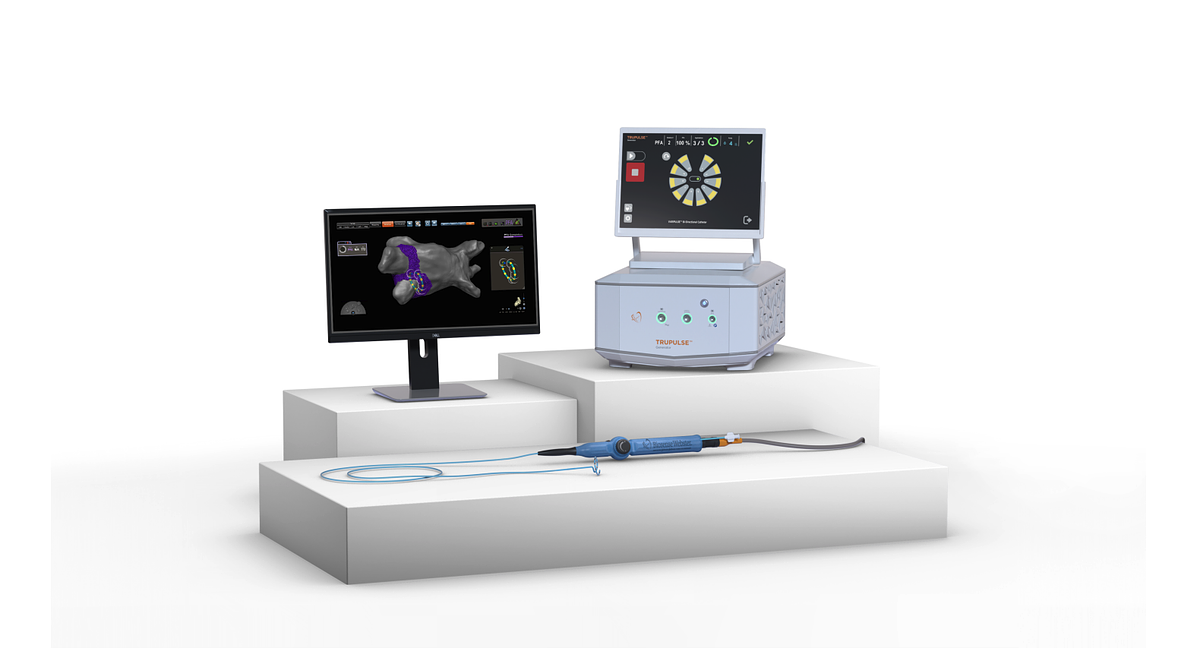
The highlight of Johnson & Johnson's presentation was the first look at 12-month outcomes from the pilot phase of the OMNY-AF study. The data, from a 30-patient cohort, showcased the potential of the investigational OMNYPULSE Platform, which pairs a large-tip focal catheter with the company's leading CARTO 3 Mapping System.
Investigators reported a 100% acute procedural success rate with the OMNYPULSE catheter, a remarkable achievement for an early-stage study. Even more critically, there were zero procedure-associated adverse events, a key metric for a technology whose primary value proposition is enhanced safety. The data also revealed that 90% of patients remained free from atrial arrhythmias at the 12-month mark, indicating strong long-term effectiveness. Furthermore, the platform's integration with advanced mapping allowed for 56.7% of the procedures to be performed without any fluoroscopy, reducing radiation exposure for both patients and clinicians.
“The 12-month data provide encouraging early evidence on the OMNY-AF study with promising safety outcomes – no procedure-related adverse events or MRI-detected cerebral lesions – across eight centers in the pilot phase,” said Dr. Dinesh Sharma, the study's presenting author and Section Head of Cardiac Electrophysiology at the Naples Heart Institute. He highlighted the value of the platform's “seamless integration of advanced mapping, ultrasound, and PF Index with contact force for precise and efficient pulsed field energy delivery.”
While the OMNYPULSE Platform is not yet approved in any region, with a U.S. pivotal trial and European CE Mark anticipated for 2026, these initial findings position it as a formidable future contender.
Reinforcing Confidence in an Approved Technology
While OMNYPULSE represents the future, Johnson & Johnson also focused heavily on bolstering the market's confidence in its currently available VARIPULSE Platform. The company has been navigating a competitive U.S. market since the platform's launch, which saw a brief voluntary pause early in 2025 to address safety concerns. The data presented in Boston appears directly aimed at demonstrating the platform's robust safety profile following workflow adjustments.
New findings presented from a study of 6,811 patients showed that after implementing workflow enhancements and an optimized irrigation flow rate, the VARIPULSE Platform sustained a very low neurovascular event rate of just 0.22%. This data, simultaneously published in JACC: Clinical Electrophysiology, provides crucial real-world evidence of the system's safety in a large patient population.
This was further supported by several other data sets:
- The VARISURE Survey: Early results from a physician survey covering 850 procedures using the VARIPULSE catheter showed a low primary adverse event rate of 1.9% and a neurovascular event incidence of 0.2%, with no reported deaths. Notably, 87.9% of patients were able to be discharged on the same day as their procedure.
- The REAL AF Registry: An analysis from this real-world registry demonstrated excellent acute safety outcomes, with an overall event rate of just 0.5% and no neurovascular events observed.
This collection of evidence underscores the safety and reliability of the VARIPULSE Platform, which is approved for use across the United States, Europe, Canada, and other key markets.
The High-Stakes Race for the PFA Market
Johnson & Johnson's announcements do not exist in a vacuum. The company is vying for position in a fiercely competitive PFA market, sometimes called a “competitive flashpoint” in medtech, that is projected to grow from under $2 billion in 2024 to over $7 billion by 2032. Early market dominance has been seized by Boston Scientific, whose FARAPULSE system captured an estimated 80% of PFA procedures in 2024. Medtronic and Abbott have also secured FDA approvals for their own PFA systems, creating a four-way race among medtech's heaviest hitters.
Johnson & Johnson's strategy appears to rely on its deep, established roots in electrophysiology. The company is the long-standing global market leader in the broader EP space, and its CARTO 3 System is the world's leading cardiac mapping platform. By designing both VARIPULSE and OMNYPULSE to integrate seamlessly with this familiar and trusted mapping system, the company provides a powerful incentive for the thousands of labs already using its ecosystem to adopt its PFA catheters.
“As a relatively new energy modality, pulse field ablation technologies should be individually evaluated for safety and reproducibility in atrial fibrillation ablation,” noted Dr. Gregory Michaud, Chief Medical and Scientific Officer for Electrophysiology at Johnson & Johnson MedTech. “As pulsed field ablation continues to evolve, rigorous evidence generation and transparent data sharing will be essential to advancing the science.”
Redefining the Standard of Care for Patients
Beyond the corporate strategy and market share battles, the rapid advancements in PFA technology promise a new era for AFib patients. The emphasis on tissue-selective, non-thermal ablation directly addresses the most feared complications of older techniques, such as damage to the esophagus or the phrenic nerve, which can lead to severe and lasting consequences.
For patients, this translates into the potential for procedures that are not only more effective in the long term but are also significantly safer and involve less recovery time. The high rate of same-day discharge reported in the VARISURE survey is a testament to this, reducing the burden on both patients and the healthcare system. As companies like Johnson & Johnson continue to push the boundaries of innovation, driven by intense competition, the ultimate beneficiary is the patient, who can look forward to more refined, personalized, and safer solutions for managing their heart rhythm disorders.
Topics & Related
Artificial Intelligence
ESG
Medical Devices
Related Company Pulse