
- 9,000-square-foot lounge: JetBlue's first-ever airport lounge, BlueHouse, spans two floors at JFK's Terminal 5.
- $800M–$900M incremental EBIT: JetBlue's 'JetForward' strategy aims to generate this amount from 2025 to 2027.
- 2026 first-class cabin: JetBlue plans to introduce a domestic first-class cabin to compete for corporate and high-spending leisure travelers.
Experts would likely conclude that JetBlue's BlueHouse lounge and 'JetForward' strategy represent a calculated shift toward premium travel, aiming to compete with legacy carriers by leveraging curated quality, loyalty incentives, and strategic investments in high-yield customer experiences.
JetBlue's Premium Play: Inside the Strategy Behind Its First Lounge
NEW YORK, NY – December 11, 2025 – When JetBlue opens the doors to BlueHouse, its first-ever airport lounge, at JFK's Terminal 5 next year, it will welcome more than just its most loyal travelers. It will usher in a new, decisive chapter for the airline itself. The announcement of the 9,000-square-foot, two-story space is far from a simple amenity upgrade; it represents a calculated and critical move in the company's broader 'JetForward' strategy, signaling a deliberate ascent from its roots as a value-focused disruptor to a formidable competitor in the lucrative premium travel market.
For years, JetBlue cultivated a brand built on offering more for less: more legroom, free Wi-Fi, and live television, all at a competitive price. Now, with BlueHouse, the airline is making a clear statement that its future growth lies in capturing a different, higher-yield customer. This is not just about adding a comfortable chair and free coffee; it's about fundamentally reshaping its value proposition and challenging the dominance of legacy carriers on their most profitable turf.
A New Blueprint for New York's Hometown Airline
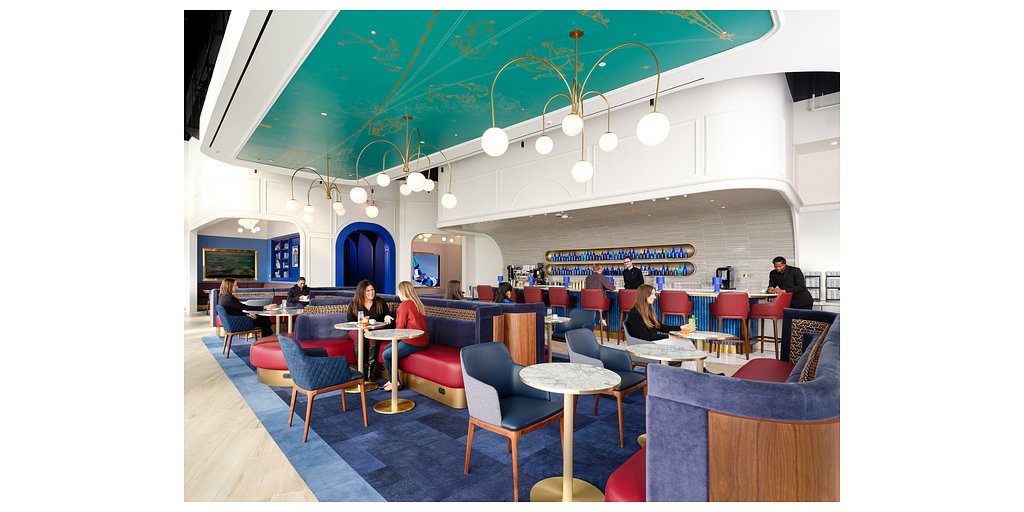
BlueHouse is meticulously designed to be an extension of JetBlue’s brand evolution. The lounge eschews the often sterile, corporate feel of traditional airport clubs for what the airline describes as an “NYC apartment–style aesthetic.” Spanning two floors, the space will feature Art Deco design elements, brass accents, and curated local art, aiming to create a residential warmth that feels both upscale and approachable.
“BlueHouse helps make our flagship terminal feel more like home,” said Marty St. George, president of JetBlue, in the company’s announcement. “It’s warm, comfortable, and elevated in a way that’s distinctly JetBlue.”
This elevation is most apparent in its partnerships. Food will be curated by the highly regarded Union Square Events, the catering and hospitality firm from Danny Meyer’s Union Square Hospitality Group, which already manages the elevated dining experience in Delta's flagship JFK lounge. The beverage program will feature local craft beers and cocktails from NYC hotspots The Greats of Craft and Please Don’t Tell, with coffee from Greenwich Village’s Joe Coffee. This focus on local, high-quality purveyors is a strategic choice to infuse the lounge with an authentic New York character, reinforcing the airline's identity as “New York’s Hometown Airline®” while simultaneously appealing to the sophisticated palates of premium travelers.
“We wanted customers to feel like they’re stepping into a warm and stylish New York City apartment filled with character,” noted Stephanie Evans Greene, senior vice president of marketing and brand. The space will also feature a game room, quiet zones, and a custom photo booth, blending productivity with playfulness in a way that feels uniquely on-brand for JetBlue.
Beyond the Lounge: Contextualizing the 'JetForward' Strategy
To understand the full significance of BlueHouse, one must view it through the wider lens of the airline's 'JetForward' plan. This multi-year strategy, designed to return the company to sustained profitability, is a comprehensive overhaul of its operations, network, and product offering. The lounge is a tangible, customer-facing symbol of a much deeper business transformation aimed at generating between $800 million and $900 million in incremental EBIT from 2025 to 2027.
This pivot includes aggressive network restructuring to exit unprofitable routes, a simplification of its fleet to prioritize the cost-efficient and premium-heavy Airbus A220, and a deferral of nearly $3 billion in capital expenditures for aircraft. These moves are creating the financial and operational runway for targeted investments in the premium sector. BlueHouse is just one piece of this puzzle.
It arrives in concert with a multi-year, top-to-bottom refresh of its home at JFK's Terminal 5, which will introduce over 40 new retailers and amenities. More significantly, JetBlue is set to roll out a true domestic first-class cabin in 2026 on routes not served by its popular Mint business class. This new cabin, combined with the lounge, creates a cohesive premium ground-to-air experience that was previously missing from its portfolio, allowing it to compete more directly for corporate accounts and high-spending leisure travelers.
The Battle for Premium Passengers at JFK
The lounge's debut in Terminal 5 places JetBlue directly into one of the most competitive airport lounge arenas in the world. JFK is home to lauded offerings like Delta's sprawling Sky Club, American's exclusive Flagship Lounge, the highly-rated American Express Centurion Lounge, and Capital One's new 13,000-square-foot flagship lounge. While BlueHouse is smaller than some of these behemoths, its strategy appears to be focused on curated quality over sheer scale.
By creating a distinct, boutique experience in Terminal 5—a terminal that previously lacked a premium lounge for its primary carrier—JetBlue is creating a powerful incentive for its loyalists to stay within its ecosystem. It provides a much-needed premium touchpoint at its most important hub, addressing a key gap in its service offering compared to its main rivals.
Loyalty as the New Currency
Perhaps the most telling aspect of the BlueHouse strategy is its strict access policy. Initially, complimentary entry is reserved for a select few: top-tier Mosaic 4 members, transatlantic Mint passengers, and holders of the new JetBlue Premier Card. This exclusivity is by design. The airline is explicitly positioning the lounge as a cornerstone benefit for its most valuable customers, aiming to avoid the overcrowding and long lines that plague many competing lounges.
“BlueHouse is one of the most significant enhancements we’ve ever made to our loyalty program,” explained Ed Pouthier, vice president of loyalty and personalization. This move dramatically increases the value proposition of achieving top-tier Mosaic status and makes the premium credit card a far more compelling product.
This focus on loyalty is being reinforced across the board. For 2026, JetBlue is enhancing its TrueBlue program with perks like more certificates to upgrade to Mint and a new “Family Tiles” initiative that helps families achieve status faster. By tying its most desirable new asset directly to its loyalty and co-brand credit card programs, JetBlue is not just building a lounge; it is building a more robust and defensible economic moat around its best customers.
With a second BlueHouse location already planned for Boston in 2026, it's clear this is a foundational element of JetBlue's future. The airline that once revolutionized air travel with a simple promise of value is now betting that its next act lies in mastering the complex art of premium hospitality. The success of BlueHouse will be a key indicator of whether JetBlue can successfully navigate this upmarket shift while retaining the unique spirit that made it a household name.