
- 5%: Women comprise only about 5% of the airline pilot population in the United States (as of late 2023).
- 3%: Women represent just 3% of the global workforce in aircraft maintenance technician roles.
- $2.7 million: The JetBlue Foundation has provided over $2.7 million in grants to STEM and aviation programs since 2013.
Experts agree that initiatives like JetBlue's 'Fly Like a Girl' are crucial for addressing aviation's gender gap by providing early exposure, role models, and hands-on STEM experiences to inspire young women to pursue careers in the industry.
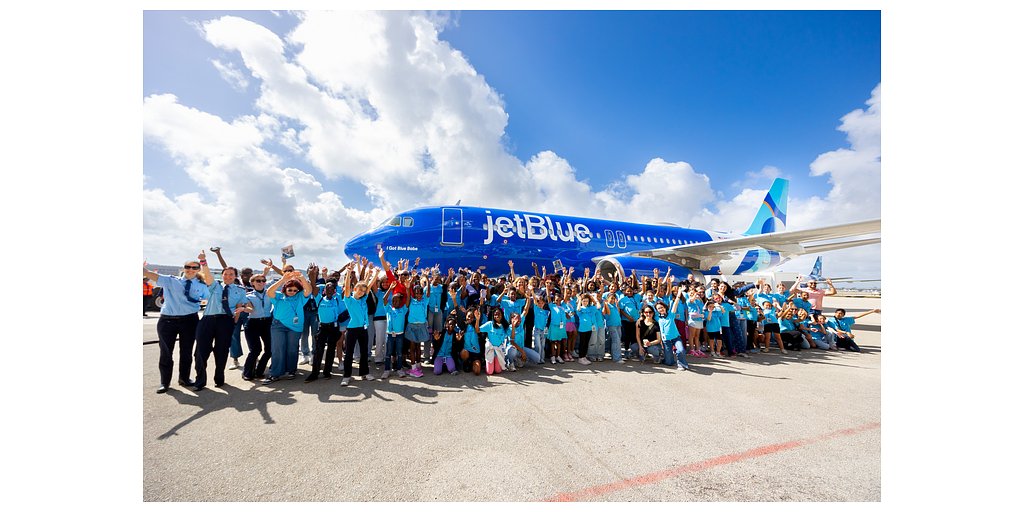
JetBlue's 'Fly Like a Girl' Tackles Aviation's Deep-Rooted Gender Gap
FORT LAUDERDALE, FL – March 09, 2026 – The roar of jet engines at Fort Lauderdale-Hollywood International Airport on Saturday was matched by the buzz of excitement from over 100 local girls, ages 10 to 14. They weren't just watching planes; they were exploring them, interacting with female pilots and technicians, and getting a hands-on look at the complex world of aviation. The occasion was JetBlue's 12th annual 'Fly Like a Girl' event, a cornerstone of the airline's effort to inspire the next generation and address one of the industry's most persistent challenges: its gender gap.
Held during Women's History Month, the event transformed a section of the airport into an interactive classroom. Through aircraft demonstrations, conversations with female crewmembers from every corner of the airline—including pilots, engineers, and technicians—and behind-the-scenes tours, the initiative aims to dismantle stereotypes and spark an early interest in science, technology, engineering, and mathematics (STEM) careers.
Tackling a Stubborn Imbalance
The need for such programs is starkly illustrated by industry statistics. Despite progress in many fields, aviation remains overwhelmingly male-dominated, particularly in technical and leadership roles. According to the Federal Aviation Administration, as of late 2023, women comprise only about 5% of the airline pilot population in the United States. Globally, the figure hovers around 4%. The numbers are even lower for aircraft maintenance technicians, where women represent just 3% of the workforce worldwide.
These figures highlight a systemic challenge that goes beyond simple recruitment. Barriers include a lack of visible role models, persistent cultural biases, and a pipeline that has historically failed to attract and retain female talent. Initiatives like 'Fly Like a Girl' are designed to intervene at a critical age, showing young women that careers in the cockpit, the control tower, or the maintenance hangar are not only possible but accessible.
U.S. Rep. Debbie Wasserman Schultz (FL-25), who attended the event, emphasized its importance in shifting perceptions. “Commercial air travel has a history of being male dominated, but programs like this open up new aviation horizons for Florida’s young women to explore,” she stated. By creating a space where girls can see and speak with successful women in aviation, the event provides powerful, tangible proof that these career paths are open to them.
More Than a Flyover: A Deep Community Investment
For JetBlue, hosting the event in Fort Lauderdale is a deliberate choice that underscores a relationship spanning more than a quarter-century. The city is not just another destination on its route map; it was a foundational part of the airline's network from its first day of operations over 26 years ago and now stands as its leading hub at Fort Lauderdale-Hollywood International Airport (FLL).
“Fort Lauderdale has been part of JetBlue’s story since day one with our first flights touching down right here over 26 years ago, and we’re proud to continue investing in the region and its people,” said Ursula Hurley, president of the JetBlue Foundation and the airline’s chief financial officer. “Bringing Fly Like a Girl back to South Florida reflects our continued commitment to the future of Fort Lauderdale as a critical part of our operation.”
This commitment is visible in both steel and community spirit. JetBlue employs thousands of crewmembers in the region and is a key driver of economic activity. The carrier is significantly expanding its footprint at FLL, with plans to operate up to 113 daily departures by the end of 2025. This expansion is supported by major infrastructure projects, including a new five-gate Terminal 5, being developed in partnership with Broward County, which is slated for completion in mid-2026. By anchoring its flagship community outreach event in a city so vital to its operations, JetBlue frames its corporate social responsibility not as a peripheral activity, but as an integral part of its local identity and long-term investment strategy.
Building the Pipeline for Tomorrow's Skies
The 'Fly Like a Girl' event is a key component of a broader strategy focused on building a sustainable and diverse talent pipeline for the entire aviation industry. This year’s event featured a partnership with the Museum of Discovery and Science (MODS), a local JetBlue Foundation grantee, which brought its 'STEMobile'—a mobile science lab—to the tarmac.
“Connecting people to inspiring science is our mission, and Fly Like a Girl does exactly that by turning aviation into a hands-on, confidence-building STEM experience,” said Joseph P. Cox, president and CEO of MODS. “Through STEMobile programs and our Aviation Academy, MODS helps students see themselves as future pilots, engineers and innovators.”
The collaboration highlights a crucial understanding: inspiring future aviators requires making STEM education tangible and exciting. Icema Gibbs, JetBlue’s vice president of corporate social responsibility and impact, noted the power of such experiences in helping children envision future career possibilities. This work is spearheaded by the JetBlue Foundation, the first airline foundation focused solely on championing aviation-focused education. Since its inception in 2013, the foundation has provided over $2.7 million in grants and support to nearly 100 STEM and aviation programs, with a specific focus on creating pathways for women and other underrepresented groups.
An Industry-Wide Push for Altitude
JetBlue's efforts are part of a growing, industry-wide movement to address gender disparity. Recognizing the need for a more diverse workforce, numerous airlines and aviation bodies have launched similar initiatives. The International Air Transport Association (IATA), a trade association for the world’s airlines, created the “25by2025” initiative, a voluntary commitment by member airlines to increase the number of women in senior and under-represented roles by 25%, or to a minimum of 25% by 2025.
Other carriers are also taking action. American Airlines runs an 'Aviation Career Pathways' program for students in underserved communities, while IndiGo, an Indian airline, now boasts that over 17% of its pilots are women—far exceeding the global average. Across the Atlantic, European carriers like Wizz Air are promoting programs such as 'She Can Fly' to recruit and train female pilots. These collective actions signal a paradigm shift, moving the conversation from merely acknowledging the problem to actively investing in solutions.
As the industry faces a looming demand for skilled pilots, technicians, and engineers in the coming decades, programs like 'Fly Like a Girl' are more than just good corporate citizenship; they are a strategic imperative. By planting the seeds of interest in a new generation, JetBlue and its partners are not just helping young women find their wings—they are investing in the future stability and innovation of the skies for everyone.