
- 50 eVTOL Aircraft: AirX orders up to 50 Eve eVTOL flying taxis, with a firm purchase of 2.
- 2029 Delivery: First aircraft scheduled for delivery in 2029, aligning with Japan's UAM roadmap.
- 2030s Commercial Operations: Japan aims for full-scale commercial eVTOL services by the 2030s.
Experts view this partnership as a significant step toward Japan's leadership in urban air mobility, validating the viability of eVTOLs in a competitive and regulated market.
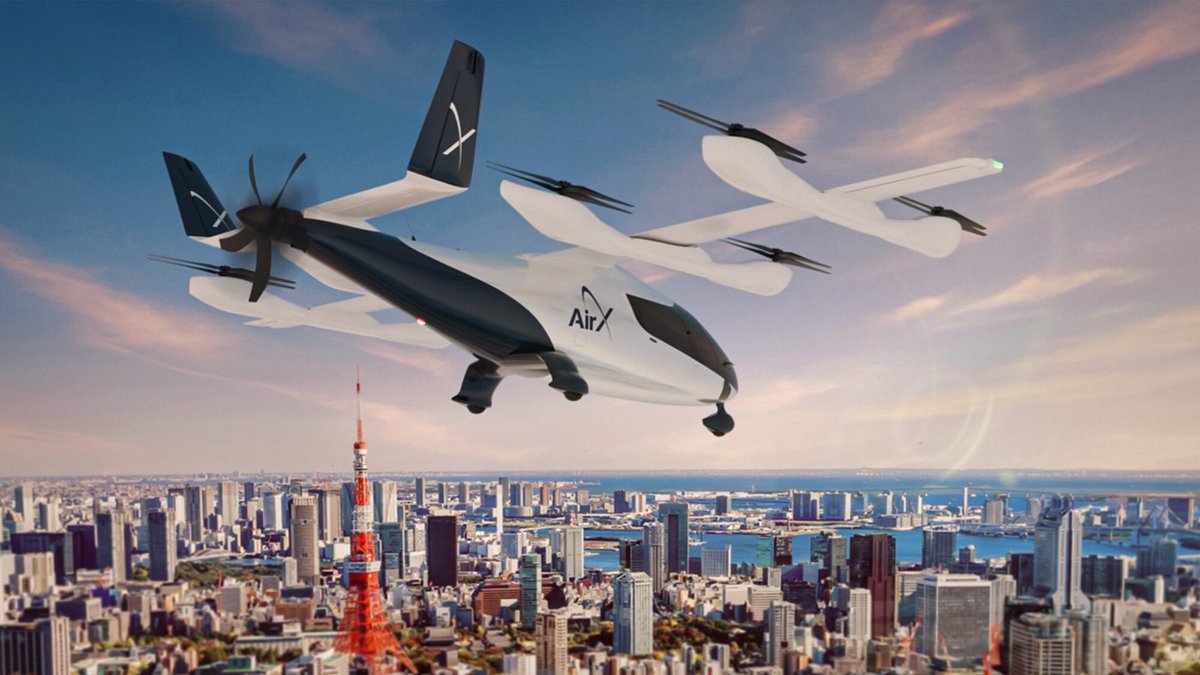
Japan's Sky-High Future: AirX Orders 50 Eve eVTOL Flying Taxis
By Matthew Richardson
SINGAPORE – February 03, 2026 – The vision of electric air taxis whisking passengers over the congested streets of Tokyo and Osaka took a significant leap toward reality today. Eve Air Mobility, a next-generation aviation firm backed by aerospace giant Embraer, announced a landmark agreement with leading Japanese air mobility provider AirX for up to 50 of its electric Vertical Take-Off and Landing (eVTOL) aircraft.
The deal, Eve's first binding order in the Asia-Pacific region, includes a firm purchase of two aircraft with options for an additional 48. This strategic partnership, unveiled ahead of the Singapore Airshow, signals a major acceleration of Japan's ambitions to become a global leader in the nascent Urban Air Mobility (UAM) market.
"Our first agreement in Asia-Pacific, achieved in partnership with AirX in Japan, is more than a milestone; it launches a new era that will redefine urban mobility," said Johann Bordais, chief executive officer at Eve Air Mobility. "This partnership is a bold step toward a cleaner, smarter future for generations to come."
Paving the Way for a New Mobility Ecosystem
This agreement is not merely a transaction; it's a cornerstone of Japan's meticulously planned strategy to integrate "flying cars" into its transportation network. The Japanese government, through its Ministry of Land, Infrastructure, Transport and Tourism (MLIT), has established a comprehensive four-phase roadmap for advanced air mobility. The goal is to move from initial demonstration flights, such as those showcased at the 2025 Osaka-Kansai Expo, to full-scale commercial operations in the 2030s.
AirX plans to deploy Eve's eVTOLs for sightseeing tours and crucial "last-mile" missions, connecting major transport hubs with final destinations in cities like Tokyo and Osaka. The initial two aircraft are scheduled for delivery in 2029, aligning with the government's timeline for social implementation.
"We are excited to partner with Eve Air Mobility to bring next-generation air transportation to Japan," stated Kiwamu Tezuka, founder and chief executive officer at AirX. "This collaboration reinforces our commitment to sustainability and innovation, and positions AirX at the forefront of the evolving air mobility market."
Japan's proactive approach extends to regulation and infrastructure. The Japan Civil Aviation Bureau (JCAB) has already established special conditions for certifying these novel aircraft, and the Tokyo Metropolitan Government has launched projects to validate business models and technical requirements for air taxi routes over the city. This government-led initiative is crucial for building the necessary ecosystem of vertiports and air traffic management systems needed to support a fleet of eVTOLs.
Eve's Strategic Leap into a Competitive Market
For Eve Air Mobility, the AirX deal represents a critical strategic victory. Securing a foothold in Japan, a technologically advanced and densely populated nation, provides immense validation for its eVTOL design and business model. Eve, which benefits from the 56-year aerospace legacy of its parent company Embraer, successfully flew its full-scale engineering prototype in late 2025 and is in the midst of a rigorous testing program.
The company is targeting certification and first deliveries by 2027, though the AirX timeline reflects the complex, region-specific preparations required for commercial launch. The zero-emission, low-noise profile of Eve's aircraft is a key selling point in a country focused on sustainability and quality of life.
"Japan is positioned to be one of the leaders in this region with its strategic focus on AAM to provide cleaner and accessible transportation solutions," said Megha Bhatia, chief commercial officer at Eve Air Mobility. "Eve's eVTOLs will be used to serve sightseeing routes and last mile missions in cities such as Tokyo and Osaka."
However, the skies over Japan are becoming crowded with competitors. Eve faces stiff competition from players like the Japanese manufacturer SkyDrive, which is also targeting commercial operations by 2028, and U.S.-based Joby Aviation and Archer Aviation, who have forged powerful partnerships with ANA and Japan Airlines, respectively. These companies are all working closely with Japanese regulators and planning their own demonstration flights, creating a high-stakes race to capture market share.
A Business Model in Transformation
This partnership marks a pivotal evolution for AirX. Founded in 2015, the company built its reputation by offering helicopter sightseeing and charter services through its digital platforms. The move into eVTOLs represents a bold bet on the future of aviation, transitioning from conventional rotorcraft to a next-generation, all-electric fleet. This pivot aligns with its mission to "liberate human potential" by creating smarter and more accessible modes of travel.
Interestingly, AirX's strategy involves acting as a broker, leasing the eVTOLs to certified operators rather than flying them directly. This asset-light approach allows the company to focus on building the platform and service network, mitigating the operational complexities of running an airline while still driving the adoption of the new technology.
The path to 2029 is still filled with challenges, from achieving final aircraft certification and scaling production to building out the physical vertiport infrastructure and ensuring robust air traffic management. Perhaps most importantly, operators and regulators must work together to build public trust and acceptance. The Japanese government's emphasis on transparency, safety, and resident communication will be paramount as these quiet, electric aircraft prepare to take their place in the nation's urban landscape.
Topics & Related
Decarbonization
ESG
Aviation
AI & Machine Learning
Medical Devices
Fintech
Related Company Pulse