
- 30-mile greenway connecting 14 historic neighborhoods
- $132 million earmark from city's local option gas tax
- 70% of urban core residents are low-income with high chronic illness rates
Experts view the Emerald Trail as a transformative model for urban revitalization, demonstrating how green infrastructure can address social inequity, economic stagnation, and environmental degradation through community-driven development.
Jacksonville's Emerald Blueprint: A Trail's Power to Remake a City
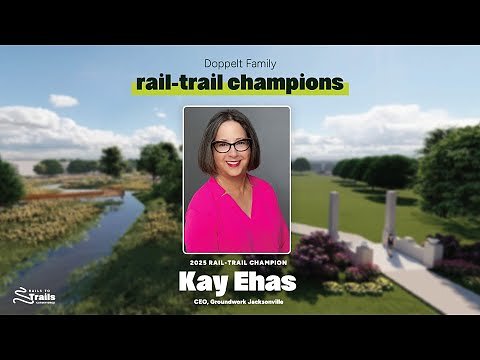
JACKSONVILLE, FL – December 11, 2025 – In a move that spotlights a growing trend in urban development, Rails to Trails Conservancy has named Kay Ehas, CEO of Groundwork Jacksonville, the 2025 Doppelt Family Rail-Trail Champion. The award recognizes her leadership in developing the Emerald Trail, a 30-mile greenway set to transform the city's urban core. But this honor signifies more than just a successful infrastructure project; it validates a powerful new blueprint for how cities can tackle social inequity, environmental degradation, and economic stagnation through the strategic development of green space.
The Emerald Trail is not merely a path for cyclists and pedestrians. It is an ambitious, multi-faceted initiative designed to be a catalyst for profound change. By weaving through 14 historic neighborhoods, the trail system aims to reconnect communities long divided by infrastructure and neglect, linking them to parks, schools, businesses, and each other. As the project unfolds, it offers a compelling case study in how investing in public greenways can yield dividends far beyond recreational value, creating a more resilient and equitable urban fabric.
A Community-Driven Foundation for Growth
At the heart of the Emerald Trail's success is a deliberate, community-first philosophy championed by Kay Ehas and Groundwork Jacksonville. Rather than imposing a top-down design, the organization has embedded itself within the neighborhoods the trail will serve. "The strategy to advance the trail network starts with an important question: As residents, what do we want the Emerald Trail to be?" Ehas stated. This approach has been critical in building trust and ensuring the project addresses the real needs of the community.
Many of these communities face significant challenges. Within Jacksonville’s urban core, 70% of residents are considered low-income and suffer from disproportionately high rates of chronic illness. These neighborhoods have historically been underserved, often bearing the environmental and social costs of urban expansion without reaping its benefits. The Emerald Trail project directly confronts this legacy by creating accessible green spaces and safe, non-motorized transportation routes that connect residents to essential services and recreational opportunities previously out of reach.
Groundwork Jacksonville’s methodology ensures that residents are not just passive recipients but active participants in the revitalization of their own neighborhoods. "We ensure residents have a seat at the table, a voice in shaping what the future of their neighborhood looks like, and a role in bringing that future to life," Ehas explained. This deep engagement builds what Rails to Trails Conservancy President Ryan Chao calls "social capital and civic participation that will endure long after this project is complete." This collaborative foundation is proving essential for creating a project with lasting social and economic impact.
The Economics of Green Infrastructure
While the social goals are paramount, the Emerald Trail is also a powerful engine for economic development, built on a sophisticated public-private partnership model. The project’s financial structure demonstrates a new way forward for funding large-scale urban renewal. A significant portion of the funding comes from a $132 million earmark from the city's local option gas tax, providing a stable, long-term revenue stream.
However, private investment has been equally crucial for accelerating progress and enhancing the project's scope. Corporate leaders and philanthropic organizations, including Baptist Health, VyStar Credit Union, and significant grants from the Delores Barr Weaver Legacy Funds and the J. Wayne Weaver Fund, have stepped up to fill funding gaps and champion the trail's vision. This hybrid model has been instrumental in keeping the project on track toward its 2030 completion goal.
The project's momentum recently faced a significant test. A $147 million federal grant, the largest in the city's history, was rescinded due to congressional action. While a major setback, city leaders are actively exploring alternative federal funding streams, demonstrating a resolute commitment to the trail's completion. This resilience underscores the broad-based support the project commands.
The economic impact is already becoming visible. "The vision of the Emerald Trail is about more than a trail. We see the trail as a catalyst to neighborhood revitalization and economic development," said Ehas. "We have already seen major private investment happening—even before the first mile was ever built." The opening of the 1.3-mile LaVilla Link in May 2024 served as a tangible proof of concept, and trail-oriented development is beginning to take root, promising new business opportunities and increased property values. To counter potential gentrification, Groundwork is also developing affordable housing strategies and a home repair program, ensuring that long-time residents benefit from the area's revitalization.
Restoring the Environment, Rebuilding Health
The Emerald Trail's ambition extends beneath the pavement to the very land and water it traverses. A core component of the project is the environmental remediation of former brownfields and the ecological restoration of McCoys Creek and Hogans Creek, two heavily polluted waterways that have plagued nearby neighborhoods with flooding for decades. The trail’s design integrates bioswales, native plantings, and new tree canopies to manage stormwater, create wildlife habitats, and improve air quality.
This environmental transformation is intrinsically linked to public health. By converting contaminated land into vibrant green corridors, the project directly addresses health disparities in communities that have lacked safe access to nature. The trail provides a venue for physical activity, which is critical in an area with high rates of chronic disease. For thousands of residents, it will offer a safe and appealing alternative to car travel, encouraging walking and biking for daily commutes and errands. The connection to 21 parks, 16 schools, and multiple healthcare facilities makes the trail a functional piece of public health infrastructure, not just a recreational amenity.
A National Model for Connectivity
While its impact is deeply local, the Emerald Trail’s vision is regional and national in scope. It is a key segment of the North Florida Transportation Planning Organization's regional trail master plan and a vital link in the 3,000-mile East Coast Greenway, which will stretch from Maine to Florida. This integration elevates the project from a local curiosity to a nationally significant piece of green infrastructure, promising to draw tourism and further investment into Jacksonville.
The groundbreaking for the second segment, the Hogan Street Link, in September 2025, and the ongoing design of the Riverside Link, funded by a landmark $1 million private grant, signal that the project's momentum is building. With a segment planned to be in some phase of development at all times, the vision of a connected, revitalized Jacksonville is steadily becoming a reality. Kay Ehas's award is a recognition of this progress, but more importantly, it is an endorsement of a comprehensive, replicable model that other cities can follow to build healthier, more equitable, and more prosperous communities from the ground up.