
- SNT Holdings owns over 20% of SMEC's shares
- SMEC acquired Hyundai WIA for 340 billion won (early 2025)
- AGM vote scheduled for March 31, 2026
Experts view ISS's endorsement of SMEC's management as a validation of its governance structure, while SNT's proposals lack sufficient justification and transparency.
ISS Backs SMEC Management in Heated Korean Corporate Proxy Battle
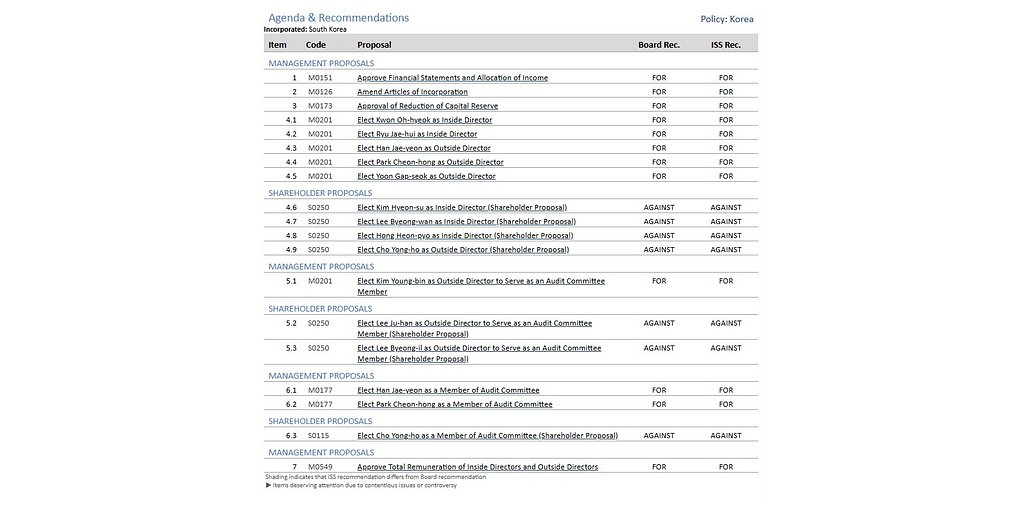
SEOUL, South Korea – March 20, 2026 – In a decisive move that could shape the future of machine tool manufacturer SMEC, influential proxy advisory firm Institutional Shareholder Services (ISS) has thrown its support behind the company's current management. In a report published March 19, ISS recommended that shareholders vote for all of SMEC's proposals and reject all nominations and proposals put forth by activist investor SNT Holdings at the upcoming annual general meeting on March 31.
The recommendation is a significant victory for SMEC's leadership, which has been locked in an increasingly acrimonious battle with SNT Holdings since mid-2025. The proxy contest has become a flashpoint for issues of corporate governance, shareholder rights, and strategic control in South Korea's rapidly evolving business landscape.
A Battle for Control Heats Up
The conflict began simmering in June 2025 when SNT Holdings, a diversified industrial conglomerate, began rapidly accumulating shares in SMEC. By July, SNT had become the largest shareholder, and by November, it had amassed a stake of over 20%, officially changing its investment purpose from “simple investment” to “influencing management rights.”
SMEC’s management immediately framed the move as a hostile takeover attempt. In response, SMEC CEO Choi Young-seop bolstered his own holdings and strategically sold treasury shares to friendly parties in a defensive maneuver designed to consolidate support and fend off SNT’s advance.
SNT Holdings, for its part, has been a vocal critic of SMEC’s performance and governance. The activist investor has pointed to SMEC’s financial decline in 2024, which saw the company slide into a net loss, as evidence of mismanagement. SNT has also launched a public campaign questioning SMEC's transparency and has threatened “extraordinary measures,” alleging that SMEC’s management has actively obstructed its attempts to exercise its shareholder rights ahead of the AGM.
The ISS Verdict and Its Implications
ISS, whose recommendations are a critical reference for institutional investors globally, provided a strong endorsement of SMEC's current direction. The advisory firm’s report noted that it found “no material concerns” regarding the qualifications or independence of SMEC’s board and audit committee nominees. This suggests that, under its rigorous evaluation criteria, SMEC's governance structure is considered sound.
Conversely, ISS recommended shareholders vote against all director candidates nominated by SNT Holdings. The report cited the activist’s “failure to provide timely disclosure” related to its shareholder proposals as a key factor. It also highlighted SMEC’s position that electing SNT-affiliated directors could introduce significant conflicts of interest.
“SMEC views ISS’s opposition to the SNT proposals not merely as reflecting insufficient justification, but as a clear indication that a board reshuffle led by SNT-affiliated nominees at this stage could undermine corporate value and adversely affect shareholder interest,” the company stated in a press release.
This backing from a globally respected proxy advisor provides SMEC's management with powerful ammunition just days before the shareholder vote. It lends credibility to their defense strategy and could persuade undecided institutional and retail investors to side with the incumbent board.
At the Heart of the Dispute: A Strategic Asset
Beneath the surface of the boardroom battle lies a strategic prize: the Hyundai WIA machine tools business. SMEC completed its acquisition of the unit for 340 billion won in early 2025, a landmark deal that propelled the company to become the second-largest player in the South Korean machine tools industry. The business, previously part of the powerful Hyundai Motor Group, is renowned for its advanced technology and strong global market position.
SMEC alleges that SNT's ultimate goal is not to improve SMEC's governance but to seize control of this valuable asset for its own strategic purposes. SMEC’s management has argued that SNT’s control would prioritize the interests of the SNT Group over SMEC’s own long-term growth, potentially siphoning value and crippling its competitiveness.
SNT Holdings has countered with sharp criticisms of the acquisition itself. It has raised alarms about the deal's financing, alleging a “structurally designed transfer of financial burden” onto SMEC. According to SNT, the deal structure allows a private equity co-investor to maintain majority board control while SMEC shoulders significant financial risk tied to high-yield returns. SNT claims SMEC has failed to provide adequate information about these liabilities, further fueling its campaign for greater transparency and a change in leadership.
A New Era for Korean Corporate Governance
The showdown between SMEC and SNT is emblematic of a broader shift in South Korea, where shareholder activism is on a dramatic rise. Spurred by government initiatives like the “Corporate Value-up Program,” which aims to improve the valuation of Korean companies, activists are increasingly challenging management at traditionally conservative firms.
The number of Korean companies targeted by activists has surged in recent years, turning annual general meetings into highly contested events. In this new environment, the role of independent arbiters like ISS has become more critical than ever.
With its recommendation, ISS has not only influenced a specific corporate election but has also weighed in on a key debate in Korean business: the line between legitimate shareholder activism and hostile opportunism. The firm’s support for SMEC’s proposed governance enhancements, such as the establishment of new remuneration and nominating committees, signals an approval of proactive, management-led reforms as a defense against activist pressure. As the March 31 meeting approaches, shareholders are now left to weigh the arguments and decide whether to endorse the stability offered by current management or gamble on the radical change proposed by SNT.