
- 40 million American women have dense breast tissue, making traditional mammography less effective.
- ATUSA™ captures 3D breast ultrasound data in ~2 minutes per breast, 10x faster than manual handheld ultrasound.
- iSono Health has raised $14.7 million in equity funding to date, with a Series A round now open.
Experts agree that wearable, operator-independent ultrasound technologies like ATUSA™ have the potential to dramatically improve access, speed, and accuracy of breast cancer screening, particularly for women with dense breasts.
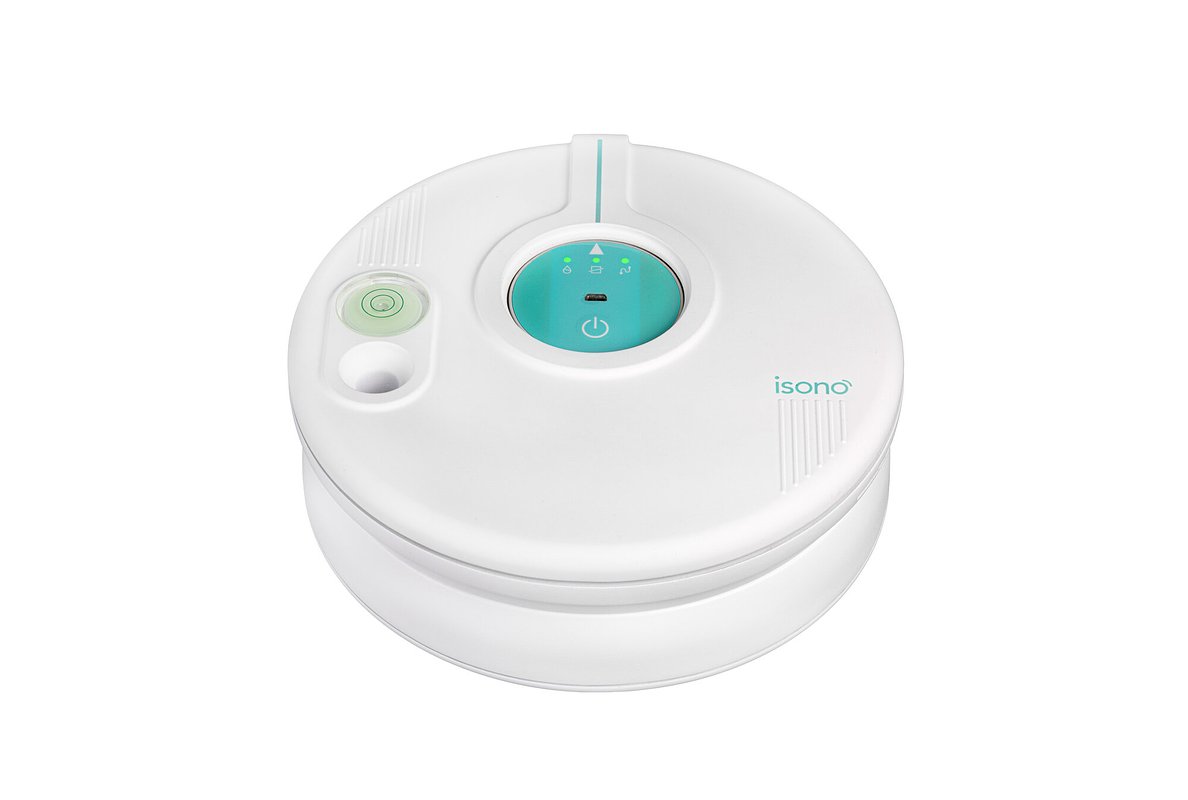
iSono Health Launches Wearable Ultrasound to Remake Breast Screening
SAN FRANCISCO, CA – January 14, 2026 – Medical technology firm iSono Health has initiated the commercial launch of ATUSA™, the world's first FDA-cleared wearable and automated 3D breast ultrasound platform. The move signals a potential paradigm shift in women's healthcare, aiming to bring high-quality, accessible imaging out of specialized radiology suites and into local point-of-care clinics.
By combining a portable, hands-free device with a cloud-based platform, the company seeks to address critical gaps in breast cancer screening, particularly for the 40 million American women with dense breast tissue for whom traditional mammography can be less effective. The launch is accompanied by the opening of a Series A funding round, intended to fuel global deployment and advance an ambitious artificial intelligence roadmap.
Addressing a Critical Gap in Women's Health
For decades, mammography has been the standard for breast cancer screening, but its limitations are well-documented. The procedure can be painful and involves exposure to X-ray radiation, a concern for many women, especially those of reproductive age. Its most significant challenge, however, lies in screening women with dense breasts. Dense tissue appears white on a mammogram, the same color as potential tumors, creating a masking effect that can obscure cancers and lead to delayed diagnoses.
This diagnostic gap leaves millions of women in a state of uncertainty. While supplemental imaging like handheld ultrasound can improve detection in dense breasts, it is highly dependent on the skill of a specially trained sonographer, a profession facing significant shortages. This reliance creates bottlenecks, increases wait times, and limits access, especially in underserved communities.
ATUSA™ is designed to directly confront these challenges. As a radiation-free ultrasound system, it offers a painless alternative that can be performed without the constraints associated with mammography. Its core innovation lies in its automation, which decouples the imaging process from the need for a highly skilled operator, potentially democratizing access to effective screening.
“What we need are imaging solutions that are easy to use, require minimal training, and can be brought directly into communities,” stated Dr. John R. Scheel, Vice Chair of Global Health in the Department of Radiology at Vanderbilt University Medical Center. “Wearable, operator-independent ultrasound technologies have the potential to dramatically improve access, speed, and accuracy, especially for women with dense breasts.”
A New Paradigm in Point-of-Care Diagnostics
The ATUSA™ system consists of a wearable accessory and a portable scanner that connects via USB to a laptop or tablet. During a procedure, the scanner automatically moves across the breast, capturing comprehensive 3D volumetric data in approximately two minutes per breast—a process the company claims is about ten times faster than a manual handheld ultrasound.
This automation is key to its operator-independent design. By standardizing the scanning process, the system ensures that consistent, repeatable, and high-fidelity images are generated regardless of whether the operator is a physician, nurse, or medical assistant. This empowers primary care and OB/GYN providers to offer specialist-level imaging within their own offices, integrating advanced diagnostics into routine wellness visits.
Once captured, the 3D images are available for immediate review on the connected device, offering clinicians multiple views—including radial, coronal, and sagittal—for precise lesion localization. The data is also backed up to a secure, HIPAA-compliant cloud platform, facilitating remote consultation and long-term patient monitoring.
“ATUSA™ is a system-wide upgrade for women’s breast health,” said Neda Razavi, CEO of iSono Health. “We are putting the power of a world-class radiology suite into the hands of local clinicians, replacing slow, manual workflows with real-time diagnostic images at the point of care.”
Disrupting the Market with 'Ultrasound-as-a-Service'
iSono Health isn't just introducing a new device; it's pioneering a new business model to challenge the economics of the $14 billion U.S. breast imaging market. Instead of requiring clinics to make a large upfront capital investment, the company offers ATUSA™ through a scalable "Ultrasound-as-a-Service" (USaaS) subscription.
This model bundles the wearable hardware, cloud software, and necessary consumables into a recurring fee, significantly lowering the financial barrier for smaller practices to adopt advanced imaging technology. For iSono Health, it creates a predictable, recurring revenue stream, a model highly favored by investors for its stability and growth potential. The company has already validated this approach by signing up multiple paying clinics through its Pioneering Partner Program.
This commercial push is built on a solid financial foundation. The Y Combinator and Texas Medical Center Accelerator graduate has raised $14.7 million in equity funding to date, including a recent $3 million Seed Preferred round in 2025 led by Draper Associates and Transform VC. This is supplemented by $3.7 million in non-dilutive grants from prestigious bodies like the National Institutes of Health (NIH) and the National Cancer Institute (NCI). With this momentum, iSono Health is now opening its Series A financing round to accelerate its commercial scaling and product development.
Clinical Validation and the AI-Powered Future
To build the clinical evidence that physicians and health systems require for broad adoption, iSono Health has launched the AUDIBLE Study. This pivotal, 800-patient multicenter trial, supported by an NIH grant, is designed to rigorously evaluate the diagnostic performance of ATUSA™ against both mammography and MRI. The study is being conducted at top-tier institutions, including UC Davis, City of Hope, and Veda Trials (part of Axia Women’s Health), ensuring the technology is vetted by leading experts in oncology and radiology.
A key objective of the AUDIBLE Study is to formally prove the system's operator independence and validate the performance of iSono's machine-learning algorithms. While the hardware platform is FDA-cleared for image acquisition, the company's advanced AI features are currently for investigational use only and have not yet been cleared for diagnostic purposes.
This AI represents the company's long-term vision: to create a "sentient partner" that goes beyond simple lesion detection. The roadmap involves developing deep learning models that utilize acoustic biomarkers to provide real-time diagnostic support and assist clinicians in decision-making. The goal is not to replace the physician but to create a powerful layer of intelligence that enhances accuracy and personalizes patient care.
The launch of ATUSA™, backed by a disruptive business model and a robust clinical validation strategy, marks a significant milestone in the effort to make early breast cancer detection a more accessible and equitable standard for all women.