
- $1.21 trillion: Estimated size of the global sukuk market in 2024
- 16.8%: Year-on-year growth of Oman's Islamic finance sector by mid-2025
- 20%: Share of Oman's total banking system assets held by Islamic banks and windows
Experts view the 17th IFSB Summit in Muscat as a pivotal moment for Islamic finance to transition from a niche sector to a proactive, globally integrated force driving stability, sustainability, and ethical economic growth.
Islamic Finance Pivots to Shape Global Economic Future in Muscat
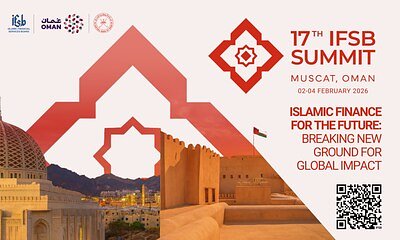
KUALA LUMPUR, Malaysia and MUSCAT, Oman – December 29, 2025 – As the global financial landscape navigates persistent economic disruptions and rising societal demands for ethical practices, the Islamic finance industry is preparing for a landmark gathering. From February 2-4, 2026, the Omani capital of Muscat will host the 17th Islamic Financial Services Board (IFSB) Summit, an event poised to mark a strategic turning point for the rapidly growing sector.
Hosted by the Central Bank of Oman, the summit operates under the ambitious theme, 'Islamic Finance for the Future: Breaking New Ground for Global Impact'. This signals a deliberate shift from a historically reactive posture to a proactive strategy aimed at embedding Sharia-compliant finance firmly within the future architecture of the global economy. The event will convene a powerful assembly of policymakers, regulators, and thought leaders from the world's most influential financial institutions, including the International Monetary Fund (IMF), World Bank, and United Nations, alongside central bank governors from over 30 jurisdictions.
A Strategic Pivot for Global Stability
At its core, the summit represents a concerted effort to fortify the global financial system. The IFSB, an international standard-setting body with 188 members across 58 countries, has been instrumental in promoting the stability of the Islamic financial services industry. Since its inception in 2003, it has issued 32 prudential standards and guiding principles, working to harmonize regulations and narrow the gap between Islamic finance and conventional global benchmarks.
The Muscat summit's agenda directly addresses the industry's most pressing challenges. Key sessions will focus on strengthening the non-bank financial sector, enhancing crisis preparedness, and developing robust financial safety nets. This focus on resilience is particularly timely. By bringing together senior figures from the IMF, which played a key role in the IFSB's establishment, and the International Association of Deposit Insurers (IADI), the summit aims to advance a globally integrated approach to financial stability.
Discussions will also center on deepening market liquidity through the development of sukuk, or Islamic bonds. The sukuk market, which reached an estimated $1.21 trillion in 2024, is a critical tool for financing everything from large-scale infrastructure to sustainable development projects. By improving the mechanics and accessibility of these instruments, the industry hopes to unlock new pools of capital and offer governments and corporations more diverse and ethical funding sources.
Oman's Ascent as an Islamic Finance Hub
The choice of Muscat as the summit's location is no coincidence. Oman is rapidly emerging as a key player in the Islamic finance world, making it a fitting backdrop for a discussion on future growth. The country's Islamic finance sector has posted impressive double-digit growth, with assets reaching approximately $23.6 billion by mid-2025, a year-on-year increase of 16.8% that significantly outpaces the growth of its conventional banking counterparts. Today, Islamic banks and windows account for about 20% of Oman's total banking system assets, a figure projected to grow substantially.
This expansion is underpinned by a deliberate and forward-looking regulatory strategy from the Central Bank of Oman (CBO). The CBO recently launched a regulatory framework for digital banks and issued a new banking law with dedicated provisions for Islamic finance. Furthermore, it has rolled out new Sharia-compliant instruments, such as the Wakalah money market, to help Islamic banks manage liquidity more effectively—a long-standing challenge for the sector.
Oman's success is driven by more than just religious affinity. The asset-backed, transparent nature of Islamic financial products has attracted a broad base of retail customers, while small and medium-sized enterprises (SMEs) are increasingly drawn to its partnership-based financing models. The country's first Sharia-compliant IPO by OQGN was oversubscribed 14 times, signaling immense investor appetite. For Oman's leadership, hosting the summit is seen as a "strategic inflection point," offering a chance to cement its status as a hub for innovation and visionary dialogue in the industry.
Embracing Sustainability and Digital Transformation
A central theme of the summit is the powerful alignment between Islamic finance and the principles of sustainability and Environmental, Social, and Governance (ESG) investing. Islamic finance inherently promotes ethical resource use, social responsibility, and risk-sharing, making it a natural partner in the global push for sustainable development. This synergy is most visible in the rise of green and sustainable sukuk, which are used to fund projects with positive environmental and social outcomes.
The Islamic Development Bank (IsDB), a founding member of the IFSB, has already mobilized over $6 billion by issuing sukuk through its sustainability framework. However, a significant challenge remains: while philosophically aligned, many Islamic financial institutions are still in the early stages of integrating climate risk assessment and mitigation into their core operations. The summit will provide a crucial platform for leaders to discuss scaling up these efforts to meet the estimated $75-90 billion in annual climate adaptation funding required by IsDB member countries.
Parallel to the sustainability push is a focus on digital transformation. Fintech is revolutionizing financial services, and the summit will explore how emerging technologies can make Islamic finance more efficient, accessible, and inclusive. Digitalization is a key priority for the IFSB, which recognizes that harnessing technology is essential for the industry to remain competitive and break new ground on a global scale.
Beyond Profit: Addressing Social Impact and Inclusion
Beyond market growth and technological innovation, the summit will spotlight the ethical imperatives at the heart of Islamic finance. The industry's principles of social justice and resource sharing are powerful tools for promoting financial inclusion. Through mechanisms like risk-sharing contracts for SMEs, micro-insurance (takaful), and wealth redistribution via Zakat and Waqf (charitable endowments), Islamic finance offers a framework for more equitable economic growth.
This values-driven approach aligns closely with the United Nations' Sustainable Development Goals (SDGs). Both the UNDP and UN Environment have highlighted the potential of Islamic finance to help protect the planet and foster shared prosperity. To further this dialogue, the summit includes a public pre-summit program designed to engage a wider group of stakeholders, with sessions on youth empowerment, NGO engagement, and business leadership.
This inclusive approach is vital for tackling persistent industry challenges, including a shortage of professionals skilled in both finance and Sharia law and a need for greater global standardization of products. As the world's financial leaders prepare to gather in Muscat, the 17th IFSB Summit stands as a clear declaration of intent. Islamic finance is no longer content to be a niche alternative; it is actively charting a course to become an indispensable and proactive force for stability, sustainability, and social impact in the 21st-century global economy. With limited seats available, prospective delegates are encouraged to register early for what promises to be a defining event for the industry.