
- 85% of patients maintained residual hearing one year post-surgery with robotic-assisted insertion vs. 71% with manual insertion.
- 51% reduction in maximum insertion force and 78% reduction in force variation with iotaSOFT® system.
- 1,000+ clinical procedures completed by late 2025, with adoption in 30+ leading cochlear implant centers in the U.S.
Experts agree that iotaMotion's robotic-assisted cochlear implant system significantly improves surgical precision and hearing preservation, positioning it as a transformative advancement in hearing loss treatment.
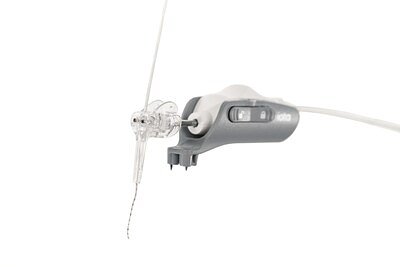
iotaMotion Cements Lead in Robotic Hearing Surgery with New Patent
ST. PAUL, Minn. – March 11, 2026 – Medical technology firm iotaMotion, Inc. today announced the issuance of a new U.S. patent, further securing its leadership position in the burgeoning field of robotic-assisted cochlear implant surgery. The patent, U.S. No. 12,558,123, strengthens the intellectual property shield around its iotaSOFT® Insertion System, the first and only robotic-assisted system cleared by the FDA for this delicate procedure.
The move signals a strategic deepening of the company's competitive moat as it aims to transform the standard of care for severe hearing loss, a condition affecting tens of millions globally with a surprisingly low rate of intervention.
Advancing Surgery Beyond Human Limits
At the heart of iotaMotion's innovation is a solution to a fundamental surgical challenge: inserting a fragile electrode array into the cochlea—the snail-shaped, fluid-filled structure of the inner ear—without causing trauma. The human hand, no matter how skilled, has inherent limitations in speed and steadiness for such a microscopic task. Damage to the delicate intracochlear structures can compromise surgical outcomes and destroy any remaining natural hearing.
The iotaSOFT system is designed to overcome these limitations. The small, robotic device provides slow, controlled, and consistent insertion of the electrode array at speeds as low as 0.1mm/s. Clinical data has validated this approach, with early evaluations showing a 51% reduction in maximum insertion force and a 78% reduction in force variation compared to manual insertion by a surgeon.
The clinical benefits are becoming increasingly clear. A 2025 study published in The Laryngoscope reported that 85% of patients who underwent robotic-assisted insertion maintained their residual hearing one year post-surgery, compared to 71% in the manual insertion group. Surgeons using the system report a new level of precision and consistency, enabling them to perform the procedure with greater confidence, case after case. This reliability is crucial in making the life-changing benefits of cochlear implants more predictable.
Recognizing the critical window for hearing development, the FDA recently expanded clearance for the iotaSOFT system to include children as young as four. This pediatric clearance, granted in January 2026, opens the door for younger patients to gain access to sound during crucial years of language and cognitive development, potentially improving their long-term educational and social outcomes.
Patent Power in a High-Stakes Market
The issuance of the new patent is more than a technical footnote; it is a critical business strategy in the fiercely competitive medical robotics landscape. As robotic surgery expands from general procedures into highly specialized fields like neurotology, a robust intellectual property portfolio is paramount for sustaining innovation and market leadership.
"This new patent augments our strong intellectual property portfolio, which broadly covers systems and methods related to robotic positioning and control in cochlear implant surgery," said Mike Lobinsky, CEO of iotaMotion, in a statement. "As iotaSOFT becomes increasingly integrated across leading cochlear implant centers, protecting the technologies that standardize and control electrode insertion is central to sustaining our leadership in the field."
This strategy appears to be paying off. The company has seen significant adoption, surpassing 1,000 clinical procedures by late 2025. The iotaSOFT system is now in use at over 30 leading cochlear implant centers across the United States, including nearly half of the nation's neurotology fellowship training programs, ensuring the next generation of surgeons is trained on this technology. The system's open-platform design, compatible with electrodes from all major implant manufacturers, has also been a key factor in its widespread integration.
While giants like Intuitive Surgical dominate the broader surgical robotics market, iotaMotion has carved out a defensible niche by being the first and only company with an FDA-cleared solution specifically for cochlear implant insertion. This first-mover advantage, now buttressed by a growing wall of patents, positions the Minnesota-based company to capture a significant share of a rapidly advancing market.
Tackling a Silent Global Crisis
The technological and business advancements of iotaMotion are set against the backdrop of a staggering global health challenge. According to the World Health Organization, over 430 million people suffer from disabling hearing loss, and that number is projected to grow to 700 million by 2050. Within this population, an estimated 60 million individuals have hearing loss severe enough to benefit from a cochlear implant.
Yet, a vast treatment gap persists. Fewer than 5% of eligible patients worldwide ever receive one. The reasons for this low adoption rate are complex, ranging from lack of public awareness and restrictive insurance policies to a pervasive fear of the surgery itself—specifically, the risk of complications and the potential loss of any remaining natural hearing.
Technologies like the iotaSOFT system directly address this surgical hesitancy. By demonstrating a safer, more consistent procedure with better hearing preservation outcomes, robotic assistance can help demystify the surgery for both patients and referring physicians. Improving the consistency of outcomes, regardless of a surgeon's experience level, could build confidence across the healthcare system and encourage more candidates to explore the option.
The global cochlear implant market is already on a steep growth trajectory, with various analysts projecting it to reach between $4 billion and $4.7 billion by 2030. This growth is driven by rising awareness and an aging global population. Innovations that make the procedure safer, more effective, and more reliable are poised to accelerate this trend, potentially unlocking treatment for millions who currently live in a world of silence. By refining the critical step of electrode insertion, iotaMotion's robotic technology may play a pivotal role in closing the vast and silent gap in global hearing healthcare.