
- 56% of SMBs are burdened by unpaid invoices
- Average amount owed per business: $17,500
- Intuit manages over $2 trillion in invoices annually
Experts view this partnership as a strategic move to improve SMB cash flow by reducing payment delays and risks, while potentially increasing sales conversion rates through flexible payment options.
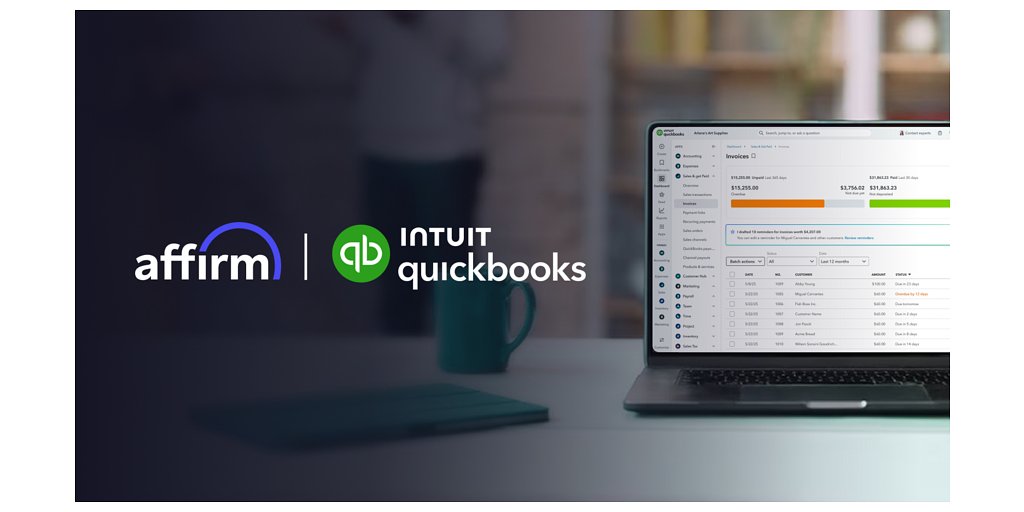
Intuit & Affirm Target SMB Cash Flow with New Payment Partnership
MOUNTAIN VIEW, Calif. & SAN FRANCISCO – February 02, 2026 – Intuit, the financial technology giant behind QuickBooks, has announced a multi-year, exclusive partnership with Affirm, a leading Buy Now, Pay Later (BNPL) provider. The collaboration will embed Affirm’s pay-over-time solution directly into QuickBooks Payments, aiming to solve one of the most persistent challenges for small and mid-market businesses (SMBs): managing cash flow.
A Lifeline for Small Business Cash Flow
For millions of entrepreneurs, getting paid on time is a constant struggle that stifles growth and creates operational stress. According to recent survey data from Intuit, more than half of all SMBs (56%) are burdened by unpaid invoices, with the average amount owed reaching a staggering $17,500 per business. This new partnership directly confronts this issue by fundamentally changing the invoicing dynamic.
Through the integration, businesses using QuickBooks Payments can offer their customers the option to split an invoice into smaller, more manageable payments over time. Crucially, the business itself receives the full invoice amount upfront from Affirm. This model effectively eliminates the repayment risk for the SMB, transferring the responsibility for underwriting, financing, and collection to the BNPL provider.
"By partnering with Affirm to bring native, pay-over-time functionality to QuickBooks, we are giving businesses a powerful new way to increase conversion and improve cash flow, while offering their own customers flexibility,” said David Hahn, EVP and GM of Intuit's Services Group.
The benefits extend beyond immediate payment. By offering flexible terms, businesses can potentially increase sales conversion rates and boost their average order value, as larger purchases become more accessible to their clients. This can also serve as a powerful tool for attracting new customers who value or require payment flexibility, all without the business owner having to manage the complexities of a loan.
Reshaping the B2B Payment Landscape
While BNPL has become a common feature in online consumer retail, its application in the business-to-business (B2B) space has been slower to develop. This partnership marks a significant push for flexible payments beyond the consumer checkout page, challenging traditional B2B credit methods like trade credit (offering "Net 30" or "Net 60" terms) and costly invoice factoring.
Unlike traditional trade credit, where the seller carries the risk of late or non-payment, the Intuit-Affirm model ensures sellers are paid immediately. It also presents a more transparent and often more affordable alternative for the buyer compared to high-interest business credit cards or other financing. Affirm's model, which famously includes no late fees or hidden charges, is a core part of its appeal. Approved customers will have access to various payment plans, including some with 0% APR.
"Integrating Affirm directly into QuickBooks Payments will give these businesses another lever for growth — offering customers a transparent, responsible way to pay over time while the business continues to get paid upfront,” noted Pat Suh, SVP of Revenue at Affirm.
The seamless nature of the integration is a key differentiator. For the millions of businesses already operating within the QuickBooks ecosystem, there will be no additional technical setup required to activate the feature. This low barrier to entry could accelerate adoption and establish a new standard for how services are invoiced and paid for in the B2B sector.
Intuit's Grand Strategy and the Fintech Ecosystem
This collaboration is more than just a new feature; it is a calculated move in Intuit's long-term strategy to position QuickBooks as the central operating system for small businesses. By embedding a critical financial service like BNPL directly into its payments platform, Intuit deepens its ecosystem, making its software more indispensable to its user base. This follows a pattern of expanding its platform to create an all-in-one hub for business management, similar to its acquisition of Mailchimp for marketing services.
The scale of the opportunity is immense. Intuit manages over $2 trillion in invoices annually on its platform, giving this partnership a vast, pre-existing market to tap into. For Affirm, it provides unparalleled access to the SMB market, a significant expansion beyond its traditional consumer-facing focus.
The exclusive nature of the deal gives Intuit a distinct competitive advantage over other accounting software and payment processors. While competitors like Stripe and Square have their own installment products, they are often more consumer-focused. This native, B2B-invoicing-centric solution within the dominant SMB accounting software could prove difficult for rivals to replicate quickly.
The Path Forward and Potential Hurdles
The rollout, planned for the coming months for eligible U.S. QuickBooks Online customers, is designed for simplicity. However, the partnership's ultimate success will depend on both merchant adoption and the receptiveness of their business customers. While the value proposition for merchants is clear—improved cash flow and reduced risk—educating their end customers on using BNPL for business invoices may present an initial learning curve.
Another consideration for SMBs will be the cost. While the press release highlights the benefits, BNPL services are not free for merchants. Typically, providers charge a merchant discount rate—a percentage of the transaction value—that is often higher than standard credit card processing fees. Businesses will need to weigh this cost against the benefits of guaranteed upfront payment, reduced administrative burden, and potentially higher sales volume.
Despite these considerations, the strategic alignment between Intuit's massive SMB footprint and Affirm's modern financing model represents a powerful force for change. By directly tackling the pervasive issue of late payments, this partnership is poised to not only enhance the financial health of countless small businesses but also to accelerate the evolution of how business itself gets done.
Topics & Related
API Economy
Related Company Pulse