
- 35% cost reduction: InnovizThree is over 35% cheaper than its predecessor, making high-performance LiDAR more affordable for mass-market vehicles.
- 600 grams weight: The sensor weighs just 600 grams, enabling flexible installation behind a vehicle's windshield.
- 250+ meter range: The sensor offers a detection range exceeding 250 meters, crucial for safe autonomous highway driving.
Experts view InnovizThree as a pivotal development in making autonomous driving technology more accessible and scalable, addressing key barriers of cost, size, and performance.
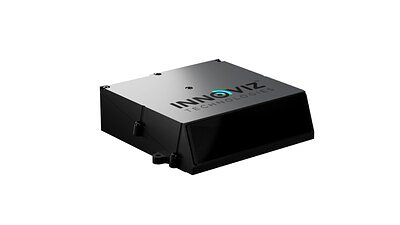
Innoviz Unveils Cheaper, Smaller LiDAR to Push Self-Driving Mainstream
TEL AVIV, Israel – December 23, 2025 – Innoviz Technologies today unveiled InnovizThree, a next-generation LiDAR sensor that marks a significant stride toward making advanced autonomous driving a mainstream reality. The new device is dramatically smaller, consumes less power, and costs over 35% less than its predecessor, addressing the key barriers that have long hindered the mass adoption of high-performance LiDAR in consumer vehicles.
Designed for seamless integration behind a vehicle's windshield, the InnovizThree promises to deliver the high-resolution 3D environmental data essential for safe autonomous navigation without compromising vehicle aesthetics or manufacturing cost. The Israeli Tier-1 supplier also highlighted the sensor's potential beyond the automotive sector, targeting emerging markets in AI-powered robotics and drones. The company announced that the new technology will be demonstrated live for the first time at the upcoming CES 2026 in Las Vegas.
Breaking the Cost Barrier for Autonomous Vehicles
The journey toward widespread vehicle autonomy has been consistently challenged by the high cost and cumbersome nature of its most critical sensor: LiDAR. For years, automotive original equipment manufacturers (OEMs) have grappled with the trade-off between performance and price, often relegating the most advanced driver-assistance systems to luxury models. The bulky, roof-mounted spinning sensors of early autonomous prototypes were never a viable solution for mass-market consumer cars, creating a pressing need for a sensor that is not only powerful but also affordable and discreet.
Innoviz appears to be tackling this challenge head-on. The company's announcement of a greater than 35% cost reduction for InnovizThree compared to the already production-ready InnovizTwo is a pivotal development. This price drop moves high-performance LiDAR from a niche, high-end component toward a scalable sensor that could feasibly be included in a wider range of vehicle models, accelerating the deployment of Level 2+ and Level 3 autonomous systems.
"InnovizThree is our answer to the automotive industry's most pressing challenge: delivering high-performance LiDAR that is both economically viable and scalable," said Omer Keilaf, CEO and Founder of Innoviz Technologies. "With unmatched range and resolution, InnovizThree meets OEM requirements with the quality of vision required for safe, autonomous driving."
This focus on economic viability is crucial. Market analysts project the automotive LiDAR market to grow exponentially, but this growth is contingent on sensors reaching a price point that makes business sense for OEMs. By engineering a solution that significantly cuts costs while enhancing performance, Innoviz is positioning itself as a key enabler of this market expansion.
A New Benchmark in Integrated Sensing
Beyond cost, the InnovizThree introduces significant technical advancements in a remarkably compact package. Weighing only 600 grams and featuring a slim profile, the sensor is specifically designed for flexible installation. Its ability to be mounted behind the windshield is a standout feature, as this placement protects the sensor from the elements, reduces aerodynamic drag, and preserves the vehicle's design lines. Furthermore, a low-power operational mode of just 13 watts allows for this interior placement without generating disruptive heat or cabin noise, a critical consideration for driver and passenger comfort.
Despite its small size, the sensor's performance has been enhanced. Innoviz claims a detection range extending beyond 250 meters with superior long-distance accuracy. This capability is vital for highway driving scenarios, where vehicles need to identify obstacles and other road users far in advance to make safe decisions at high speeds.
When benchmarked against the competitive landscape, InnovizThree carves out a strategic niche. While some competitors like Luminar promote longer detection ranges with their 1550 nm wavelength technology, InnovizThree aims for a compelling balance of performance, size, power, and cost. It offers a range that surpasses many 905 nm-based systems like the Velodyne Puck (100m) and Cepton's Vista-P60 (200m), while being significantly lighter than both the Luminar Iris (approx. 907g) and Vista-P60 (900g). Compared to Aeva's sophisticated 4D FMCW technology, Innoviz's solution appears focused on delivering proven, automotive-grade performance at a price point ready for immediate mass-market scaling.
Beyond the Car: A Vision for a Robotic Future
While the automotive industry remains the primary target, Innoviz has explicitly designed InnovizThree with other rapidly growing technology sectors in mind. The sensor's compact dimensions and low power draw make it an ideal perception tool for a new generation of AI-powered machines, including humanoid robots, autonomous drones, and industrial micro-robotics.
In these applications, weight and energy efficiency are paramount. For a drone, a lighter payload means longer flight times. For a humanoid robot, lower power consumption extends operational duration on a single battery charge. Historically, developers in these fields had to choose between low-performance, compact sensors or powerful but bulky and power-hungry LiDARs. InnovizThree promises to bridge that gap, effectively democratizing high-performance 3D vision.
This strategic diversification could open up significant new revenue streams for Innoviz and accelerate innovation across the robotics landscape. By providing an affordable, off-the-shelf solution for robust environmental perception, the company is enabling developers to focus on higher-level AI and application-specific challenges rather than reinventing the sensory hardware.
From Design Win to Mass Production
An advanced product is only as valuable as a company's ability to produce it reliably and at scale. Innoviz reinforces its readiness by highlighting its status as a Tier-1 direct supplier to the automotive industry. This designation is not merely a title; it signifies that the company has undergone rigorous vetting and has established the manufacturing processes and supply chain necessary to meet the demanding quality and volume requirements of global automakers.
Innoviz has already secured major design wins, including a significant deal with Volkswagen's commercial vehicles division (VWCV) to supply LiDAR for the ID. Buzz autonomous shuttles. This partnership serves as a powerful testament to the company's capability to deliver automotive-grade technology for a large-scale deployment. The launch of InnovizThree is built on this foundation of proven execution.
As Keilaf noted, the future of mobility depends on real-time decision-making in increasingly complex environments. The industry's attention will now turn to Las Vegas for CES 2026, where Innoviz plans to offer the first live look at InnovizThree in action. The demonstration, which will include a purpose-built display showing the behind-the-windshield integration, will be a critical opportunity for automakers, robotics developers, and the wider tech community to validate the company's claims and witness the future of integrated sensing firsthand.