
- Net-Zero Target: India aims to achieve net-zero emissions by 2070, with interim goals including a 45% reduction in emissions intensity of GDP by 2030 and 50% of electric power capacity from non-fossil fuel sources. - Renewable Energy Progress: India has reportedly met its non-fossil fuel capacity target years ahead of schedule. - Cybersecurity Regulation: The Digital Personal Data Protection (DPDP) Act of 2023 establishes a comprehensive framework for data handling in India.
Experts agree that India's dual focus on decarbonization and digital security is strategically essential, requiring integrated governance frameworks and proactive risk management to ensure sustainable and secure economic growth.
India's Dual Engine: Greening the Economy, Securing the Digital Frontier
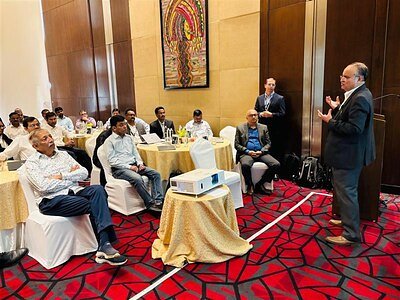
PUNE, India – November 24, 2025 – India stands at a critical juncture, navigating a dual transformation of unprecedented scale and complexity. On one hand, the nation is pursuing one of the world's most ambitious decarbonization agendas. On the other, it is fortifying its rapidly expanding digital economy against a rising tide of sophisticated cyber threats. These are not separate challenges; they are intertwined facets of a single, strategic imperative. A recent high-level roundtable hosted here by global assurance firm LRQA, titled 'Tackling ESG, Compliance, Cybersecurity & Net Zero Goals', brought this convergence into sharp focus, convening industry leaders, technology experts, and regulators to chart a course for a future that is both sustainable and secure.
The Net-Zero Imperative and India's Green Ascent
The scale of India's green ambition is staggering. With a national target of achieving net-zero emissions by 2070, the country has set formidable interim goals for 2030 under its updated Nationally Determined Contributions (NDCs). These include reducing the emissions intensity of its GDP by 45% from 2005 levels and achieving 50% of its electric power capacity from non-fossil fuel sources. Impressively, progress is already palpable; India has reportedly met its non-fossil fuel capacity target years ahead of schedule, a testament to its aggressive push into renewables.
The discussions in Pune underscored that this transition is moving from high-level policy to on-the-ground implementation. The keynote address by Shishir Joshipura, the influential former CEO of Praj Industries, provided a powerful example. Drawing on his deep experience in making Praj a global leader in bioenergy, Joshipura outlined practical pathways for reducing organizational carbon footprints, particularly through advanced biofuels. His insights highlighted a crucial shift: decarbonization is not just an environmental mandate but a source of industrial innovation, particularly in leveraging agricultural waste to create second-generation ethanol.
Beyond bioenergy, the dialogue explored a suite of solutions critical to India's energy transition, including green hydrogen, Carbon Capture, Utilisation, and Storage (CCUS), and advanced battery storage. The conversation also emphasized the need for standardized frameworks to ensure these efforts are credible and effective. The introduction of ISO 14068-1, a new standard for carbon neutrality, was presented as a vital tool for organizations to systematically manage and verify their net-zero journey, moving beyond pledges to provable performance.
Securing the Digital Frontier: From Data Protection to AI Governance
As India's industries decarbonize, they are also digitizing at a breakneck pace, creating a vast new surface for cyber threats. The roundtable dedicated significant attention to this parallel challenge, acknowledging that a green transformation cannot be built on an insecure digital foundation. Experts highlighted the growing sophistication of AI-driven cyberattacks, which pose a significant risk to the nation’s critical infrastructure, from energy grids to manufacturing plants.
In this high-stakes environment, India’s regulatory landscape is evolving. The Digital Personal Data Protection (DPDP) Act of 2023 represents a landmark step, establishing a comprehensive framework for data handling that grants individuals greater control and places stringent obligations on businesses. While the rules for its full implementation are still being finalized, the message to the industry is clear: data governance is no longer optional.
The conversation, however, moved beyond mere compliance. A key focus was the emergence of proactive governance for Artificial Intelligence, crystallized in the new global standard ISO/IEC 42001 for AI Management Systems. This framework encourages organizations to build ethical considerations, transparency, and accountability directly into their AI development and deployment. For Indian companies, adopting such standards is not just about mitigating risk; it is about building trust with consumers and partners, and positioning themselves as responsible leaders in the global AI race. It represents a strategic pivot toward using ethical governance as a competitive differentiator.
The Assurance Backbone: Building Resilience in a Complex World
Connecting the green and digital transformations is the concept of assurance—the systematic process of verifying that systems, processes, and products meet specified requirements. The discussions in Pune made it clear that for India's industries to thrive, they need a robust assurance backbone to manage risks ranging from climate impacts to data breaches.
This extends to the very heart of industrial operations. For manufacturers looking to compete globally, compliance with stringent international engineering standards like the ASME Boiler and Pressure Vessel Code (BPVC) or Europe's Pressure Equipment Directive (PED) is non-negotiable. These certifications are not bureaucratic hurdles; they are passports to market access and fundamental guarantors of operational safety and product quality. Organizations like LRQA play a critical role as Authorized Inspection Agencies and Notified Bodies, providing the expertise and certification pathways necessary for Indian firms to meet these global benchmarks.
This collective need for verifiable trust and resilience was a recurring theme. "The strong engagement at this event reflects a collective drive to strengthen governance, reduce risk, and improve transparency," noted Satish Singh, Business Director for South Asia at LRQA. His comments capture the essence of the moment: a recognition that collaboration and a shared commitment to high standards are essential for building a resilient economic future. This integrated risk management approach allows businesses to prepare for, prevent, and protect against a complex web of interconnected threats.
From Pune to Pan-India: A Blueprint for Proactive Strategy
The dialogue at the LRQA roundtable is indicative of a larger, more profound shift occurring across Indian industry. Spurred by government policy, investor pressure, and a growing awareness of global risks, leading companies are moving away from a reactive, compliance-focused mindset. Instead, they are proactively embedding sustainability, security, and robust governance into the core of their business strategies. This shift is being championed by industry bodies like FICCI and CII, which are actively helping businesses, including small and medium-sized enterprises, build capacity and navigate this new landscape.
The key takeaway from Pune is that ESG, net-zero, and cybersecurity are no longer siloed functions handled by separate departments. They are deeply intertwined components of enterprise risk and strategic opportunity. Companies that successfully integrate these domains will not only be more resilient but will also be better positioned to innovate, attract capital, and win in an increasingly demanding global market. This fusion of green ambition and digital resilience is no longer a future concept; it is the strategic core of India’s new economy.