
- Date: February 17-19, 2026
- Participants: Senior policymakers, global CEOs, investors, and heads of multilateral institutions
- Focus Areas: Infrastructure financing, advanced manufacturing, resilient supply chains, and the global energy transition
Experts view this summit as a strategic move by India to position itself as a leader in fostering global economic cooperation amid rising geopolitical tensions and fragmentation.
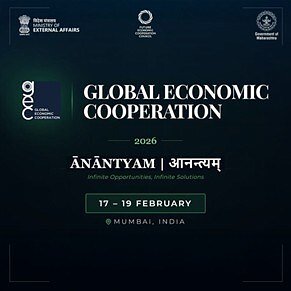
India to Host Global Summit on Reshaping Economic Cooperation
MUMBAI, India – January 16, 2026 – As the global economy navigates an era of heightened geopolitical friction and structural change, India is positioning itself as a central convenor for a new era of international partnership. From February 17-19, Mumbai will host the inaugural Global Economic Cooperation 2026 (GEC), a high-level, invitation-only forum designed to chart new pathways for growth and resilience in an increasingly multipolar world.
Convened by the newly formed Future Economic Cooperation Council (FECC) in partnership with India's Ministry of External Affairs and the Government of Maharashtra, the summit will bring together senior policymakers, global CEOs, investors, and heads of multilateral institutions. The gathering aims to move beyond theoretical debates and forge practical solutions to the economic fragmentation threatening global prosperity.
Charting a New Course in a Fragmented World
The GEC 2026 forum arrives at a critical juncture. International institutions have warned of a turbulent global outlook, with the World Economic Forum identifying "geoeconomic confrontation" as a primary global risk. The International Monetary Fund has cautioned that a fractured world, divided into competing economic blocs, could be a disaster for the global economy, potentially unwinding decades of progress gained through globalization.
It is precisely this challenge that the Mumbai summit seeks to address. The agenda is built to tackle the deep structural shifts reshaping commerce, investment flows, and economic governance. Organizers state the goal is to foster cooperation that extends beyond traditional trade agreements, focusing on areas now central to economic sovereignty and stability.
"The global economy is entering a decisive decade where economies need to protect themselves against the threats of fragmentation, protectionism and uncertainty," said Priyam Gandhi-Mody, Director of the Future Economic Cooperation Council, in a statement announcing the forum. "Through Global Economic Cooperation 2026, India is stepping forward to convene governments, investors and industry leaders to shape practical pathways for cooperation across capital, infrastructure, technology and energy that reflect the realities of a multipolar world."
India's Bid for Global Economic Leadership
The decision to host GEC 2026 is a clear signal of India's growing ambition on the world stage. Building on the diplomatic momentum from its successful G20 presidency, where it effectively championed the interests of the Global South, India is now asserting itself as a proactive leader in shaping global economic architecture. This move aligns with the nation's foreign policy of "multi-alignment," which emphasizes maintaining strategic autonomy while building durable partnerships across different power blocs.
Indian leaders have increasingly stressed the need for economic security and de-risked supply chains. External Affairs Minister S. Jaishankar has frequently highlighted the fragility exposed by over-reliance on single markets and the necessity for nations to build resilience. The GEC forum appears to be a direct manifestation of this strategic thinking, providing a platform to operationalize these ideas.
"Under the able guidance of our Prime Minister Shri Narendra Modi, India has built durable partnerships with global leaders that have stood the test of time in an increasingly multipolar world," noted Mr. Vijay Chauthaiwale, a Director of the convening Council. "Today, economic engagement is inseparable from geopolitics. At a time like this, we're hosting GEC 2026, which further underscores India's commitment to shaping cooperative, rules-based economic frameworks that advance national interest while strengthening global stability."
Beyond Trade: A Focus on Structural Cooperation
The forum's discussions will pivot away from legacy trade issues toward the foundational elements of the 21st-century economy. High-level plenaries and closed-door dialogues are slated to cover infrastructure financing, advanced manufacturing, resilient supply chains, and the global energy transition. A significant portion of the agenda will be dedicated to the new frontiers of economic statecraft: building secure economic corridors, establishing common ESG frameworks, ensuring digital connectivity, and creating governance models for emerging technologies like artificial intelligence.
The Future Economic Cooperation Council, though a new entity, enters the scene with powerful backing. With Maharashtra's Chief Minister, Shri Devendra Fadnavis, serving as Chief Patron, the council is positioned to act as a strategic connector between emerging and advanced economies navigating this new era of technological independence and shifting trade norms. The forum's focus on capital alignment and investment partnerships in critical sectors like clean energy, logistics, and fintech underscores its pragmatic, business-oriented approach.
Nurturing the Next Generation of Leaders
Looking beyond immediate challenges, GEC 2026 is also investing in the future of global economic stewardship. The third day of the summit will feature the launch of the Emerging Leaders Circle, a dedicated platform designed to engage young business minds and future leaders in the dialogue on global economic change and innovation.
This initiative will be convened in collaboration with premier academic institutions, including the prestigious Indian Institutes of Management (IIMs) and Columbia University. The partnership underscores the forum's commitment to fostering a new generation of leadership equipped with the cross-cultural and interdisciplinary perspectives necessary to navigate a complex global landscape. By integrating academic rigor with high-level policy discussions, the circle aims to create a lasting network of innovators prepared to shape a more inclusive and prosperous global economy.
Envisioned as an annual convening, the GEC forum aims to become a key fixture in the international economic calendar. While established forums like the World Economic Forum in Davos address a wide spectrum of global issues, GEC 2026 is carving a distinct niche. It is positioning itself as a focused, action-oriented platform dedicated to building the very architecture of cooperation for a world in transition, with India serving as a trusted architect and bridge. The inaugural edition in Mumbai is set to lay the foundation for this ambitious and necessary renewal of global economic cooperation.