
- Global occupancy for independent hotels slipped by 0.6% year-over-year in 2025.
- The share of bookings from OTAs rose to 63.4% for independent hotels in 2025.
- The cancellation rate for OTA bookings hit 21.8%, more than double the 10.6% rate for direct bookings.
Experts conclude that independent hotels are facing significant challenges due to OTA dominance, declining performance metrics, and regional disparities, but strategic adoption of technology and direct booking strategies can help mitigate these pressures.
Independent Hotels Face a Reckoning Amid OTA Dominance, Report Finds
SAN DIEGO, CA – March 25, 2026 – The global landscape for independent hotels grew increasingly precarious in 2025, marked by softening demand, tightening profit margins, and a growing dependence on online travel agencies (OTAs), according to a major new industry report. The findings paint a picture of a sector facing a critical divergence, where challenges are mounting even as new opportunities for strategic growth emerge.
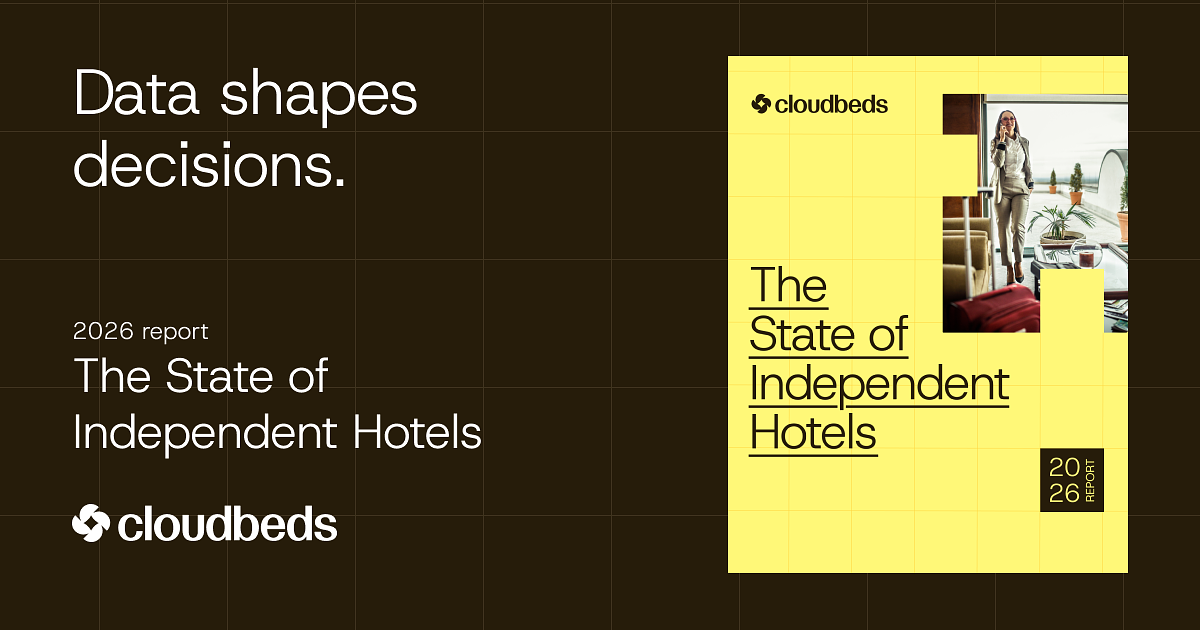
The fourth annual State of Independent Hotels Report, released today by hospitality technology platform Cloudbeds, analyzed 90 million bookings across tens of thousands of properties in 180 countries. The data reveals that independent operators lost ground across key performance metrics in 2025. Global occupancy for these hotels slipped by 0.6% year-over-year, while the Average Daily Rate (ADR) and Revenue Per Available Room (RevPAR) fell by 5.8% and 5.4%, respectively.
“2025 told many different stories for Independent hotels, and that divergence is only the beginning,” said Adam Harris, CEO of Cloudbeds, in the report's announcement. “With AI reshaping discovery, OTA dependence deepening, and margin pressure mounting, independent lodging has never needed clarity more.”
The Widening Performance Gap
The declines detailed in the Cloudbeds report are particularly stark when contrasted with the performance of the broader hotel industry. While independents saw revenues fall, other major industry analyses from firms like STR and PwC projected a more stable, albeit muted, 2025 for the overall hotel sector, which includes large branded chains. STR, for instance, forecasted a slight 1% RevPAR increase for the U.S. hotel market in 2025.
This discrepancy suggests that independent hotels are not simply weathering a difficult market but are potentially losing market share to their larger, branded counterparts. While higher-priced hotels in the general market have been buoyed by resilient group travel and spending from high-income households, independent properties appear to be feeling the squeeze more acutely.
The Squeeze of OTA Dominance
A central factor driving this pressure is the deepening reliance on OTAs like Booking.com and Expedia. The Cloudbeds report found that the share of bookings from these third-party platforms rose to 63.4% for independent hotels in 2025, with some markets approaching an 80% dependency.
While OTAs provide invaluable visibility and reach, this reliance comes at a significant cost. Commission rates, which can range from 15% to as high as 30% per booking, directly erode the profitability of each reservation. This financial strain is compounded by another key finding: the cancellation rate for OTA bookings hit 21.8%, more than double the 10.6% rate for bookings made directly with the hotel. This creates a volatile revenue stream and increases the administrative burden on operators who must constantly manage and resell canceled inventory.
For many independent hoteliers, this creates a challenging cycle. They depend on OTAs for guest acquisition but find their margins significantly diminished, making it harder to invest in the very marketing and technology needed to attract more profitable direct bookings.
A Tale of Two Worlds: The Great Regional Divide
The report also highlights a dramatic split in performance across different regions, underscoring that the recovery and current state of travel are far from uniform. The standout performer was the EMEA region (Europe, Middle East, and Africa), which was the lone bright spot in the data. In EMEA, independent hotels saw ADR rise by a healthy 6.0% and RevPAR grow by 3.9%.
This growth aligns with broader trends of high travel demand in Europe, stimulated in part by central bank policies and a strong return of international visitors. European hotel investment also saw a strong year, signaling confidence in the market. In contrast, the Asia Pacific region recorded the steepest declines. Independent hotels there saw ADR plummet by 16.2% and RevPAR drop by a staggering 17.5%. This downturn is likely linked to a number of factors, including a slower-than-expected recovery of outbound tourism from China and lingering economic uncertainty in key regional markets.
North America posted modest declines overall, though the data revealed a split within the continent. Canada outperformed its southern neighbor, posting RevPAR growth of 6.0%, while the U.S. market saw its independent hotel RevPAR decline by 4.4%.
A Path Forward Through Strategy and Tech
Despite the headwinds, the report emphasizes that the data also reveals a clear “path forward” for operators who respond strategically to shifting traveler behaviors. One key shift is that travelers are planning further ahead. The average booking window lengthened to 40 days in 2025, up from 38 days in 2023. Similarly, the average cancellation lead time grew from 35 to 39 days. This gives hoteliers a wider and more valuable window to resell inventory and optimize pricing.
Furthermore, while short stays of one to two nights continue to dominate, the report uncovered a 25% year-over-year surge in bookings of seven nights or more. This signals a growing and lucrative demand for extended stays, likely fueled by the persistence of remote work and “bleisure” travel, which presents a significant opportunity for properties that can cater to this segment.
To capitalize on these trends and combat OTA dependence, industry experts stress the importance of a multi-pronged strategy focused on driving direct bookings and embracing technology. This includes optimizing hotel websites for a seamless user experience, implementing loyalty programs with exclusive perks, and using metasearch platforms to capture direct traffic. Offering value-added incentives that OTAs cannot match, such as complimentary local experiences or spa credits, can also be a powerful tool.
Technology, particularly artificial intelligence, is emerging as a critical lifeline. AI-powered systems can help smaller operators level the playing field by automating communications, personalizing guest offers, and implementing dynamic revenue management strategies that were once the exclusive domain of large hotel chains. By leveraging these tools, independent hotels can enhance operational efficiency to combat rising costs while simultaneously crafting the unique, personal guest journeys that remain their core competitive advantage.