
- 22 new experts appointed to InCommon's steering and advisory committees
- 1,000+ participating organizations rely on InCommon for secure digital collaboration
- 4 new members on the InCommon Steering Committee bring specialized cybersecurity and IT governance expertise
Experts agree that InCommon's community-led governance and new leadership appointments strengthen its ability to address evolving cybersecurity threats and maintain digital trust across research and education institutions.
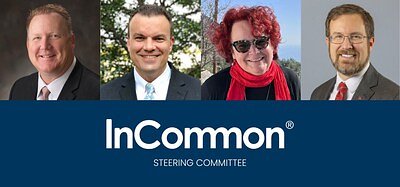
InCommon Fortifies Digital Trust with New Leadership Slate
WASHINGTON, DC – February 12, 2026 – Internet2 has announced a significant leadership refresh for its InCommon Federation, appointing 22 new experts to its steering and advisory committees. This move reinforces the community-led governance that underpins secure digital collaboration for thousands of research and education institutions across the globe.
The appointments include four new members to the high-level InCommon Steering Committee and 18 new members to four specialized advisory committees. These individuals, drawn from a diverse range of universities, colleges, and technology organizations, will begin three-year terms, tasked with guiding the future of identity and access management (IAM) in an increasingly complex digital landscape.
InCommon, powered by Internet2, provides the critical trust and identity framework that allows researchers, students, and staff to use their home institution's credentials to access shared resources securely. With over 1,000 participating organizations, its work is foundational to inter-institutional collaboration.
"InCommon's strength lies in its community — leaders across research and education who show up not just to advise, but to actively shape the future of identity and access management," said Christopher Misra, chair of the InCommon Steering Committee and CIO at the University of Massachusetts Amherst. "Their contributions ensure that our solutions reflect real-world needs, and that we continue building secure, seamless pathways for collaboration across institutions and borders."
A Collective Shield Against Evolving Threats
The timing of this leadership infusion is critical. Higher education is facing an unprecedented wave of sophisticated cyber threats. The sector has seen a dramatic rise in ransomware attacks, with double-extortion tactics becoming commonplace. Furthermore, the advent of advanced AI has introduced new vectors for fraud, including AI-generated "ghost students," deepfake documents, and highly convincing phishing campaigns that challenge traditional security measures.
In this high-stakes environment, InCommon's community-governed model acts as a collective shield. By pooling practitioner expertise from across the country, the federation can develop and adapt standards more nimbly than any single institution could alone. The newly appointed committee members bring frontline experience in combating these very threats, ensuring that InCommon's strategic direction is grounded in the practical realities of campus cybersecurity.
This collaborative approach is essential for navigating challenges like fragmented legacy systems, credential sprawl across open networks, and the risks associated with third-party vendors—all common issues in academic IT. The new committee members will directly influence the tools and standards that help over 1,000 institutions fortify their defenses and maintain digital trust.
"Technologies, cyber threats, regulations, and standards are constantly changing," noted Kevin Morooney, vice president of trust and identity and NET+ programs at Internet2. "One dynamic that has remained consistent over the 20-plus-year history of InCommon is the commitment and engagement of community leaders to help guide InCommon's role in enabling inter-institutional collaboration. We're in good hands in the coming year with the new additions to the advising ecosystem we rely upon."
The New Architects of Digital Identity
The strategic direction of the entire federation is guided by the InCommon Steering Committee. The four new members appointed to this body bring a formidable combination of cybersecurity acumen, IT governance experience, and institutional leadership.
- David Seidl, Vice President for IT and CIO at Miami University, is a recognized cybersecurity author and expert in enterprise risk management. His deep knowledge of cyber warfare and security frameworks will be invaluable in shaping InCommon's response to sophisticated adversaries.
- Ryan McDaniel, Associate Vice Chancellor and CIO at the University of Alaska Anchorage, brings extensive, focused experience in secure identity services from his previous roles at Virginia Tech and the University of Colorado. His background in identity governance will directly inform InCommon's core technical and policy direction.
- Rick Haugerud, Interim CIO and Assistant Vice President for IT Security at the University of Nebraska, offers over three decades of experience building and maintaining cybersecurity programs within a large, multi-campus university system, providing crucial perspective on scalable security operations.
- Carrie Rampp, Vice President and CIO at Franklin & Marshall College, ensures that the needs of liberal arts colleges and smaller institutions are represented at the highest level. Her focus on how technology facilitates learning and research will help guide the development of solutions that are not just secure, but also user-friendly and supportive of academic missions.
Together, this new cohort, alongside existing members, will oversee InCommon's strategic initiatives, which include advancing its "Federation 2025" vision for next-generation capabilities and expanding its global partnership framework.
Navigating a Complex Digital Ecosystem
Beyond the steering committee, 18 new members will join four specialized advisory committees, providing the technical and policy-level expertise that translates strategy into action. These committees are the engines of InCommon's day-to-day progress.
The InCommon Technical Advisory Committee (TAC) gains experts like Matthew Economou from RDCT and Kellen Murphy from the University of Virginia, who will help guide the federation's technical architecture and operational standards.
The InCommon Community Trust and Assurance Board (CTAB), which establishes the trust standards that are the bedrock of the federation, welcomes members such as RuthAnne Bevier, retired CISO from Caltech, and Joseph Ryan, CIO and VP at EDUCAUSE. Their work is crucial for maintaining the integrity of inter-institutional trust.
The InCommon Community Architecture Committee for Trust and Identity (CACTI) is tasked with looking ahead, exploring emerging technologies and building future IAM capabilities. New members like Katie Weber from the University of Minnesota will contribute to this forward-looking vision.
Finally, the eduroam-US Advisory Committee adds key personnel, including Mark Breen, CTO of Vail School District, and Christopher Dietrich, a senior network architect from Ohio State University. Their guidance is essential for the popular secure Wi-Fi roaming service used by students and researchers worldwide. The committee's work ensures that eduroam remains a secure, reliable, and seamless experience, a tangible benefit of the InCommon federation that is felt on campuses every day.
These appointments come as InCommon continues to enhance its services, supporting critical needs like the implementation of multi-factor authentication (MFA) for federal research grant access, a direct response to increasing federal regulations. The work of these committees ensures that InCommon not only keeps pace with change but actively leads the community through it. Internet2 also extended its gratitude to the 22 outgoing steering and advisory committee members for their dedicated service and leadership in advancing IAM for the entire research and education community.