
- 10-year milestone: LOMA Agency celebrated its 10th anniversary in 2026, marking a decade of growth in the B2B events space.
- Industry shift: Gartner predicts CMOs will reallocate a majority of budgets to offline channels by 2028.
- Client impact: LOMA's events have been rated among the highest by clients like Great Place To Work®.
Experts would likely conclude that the resurgence of in-person events reflects a broader corporate recognition of human connection as a strategic asset in the digital age, with agencies like LOMA leading this shift by prioritizing trust and relationship-building over logistics.
In the Age of AI, the Business of Being Human Is Booming
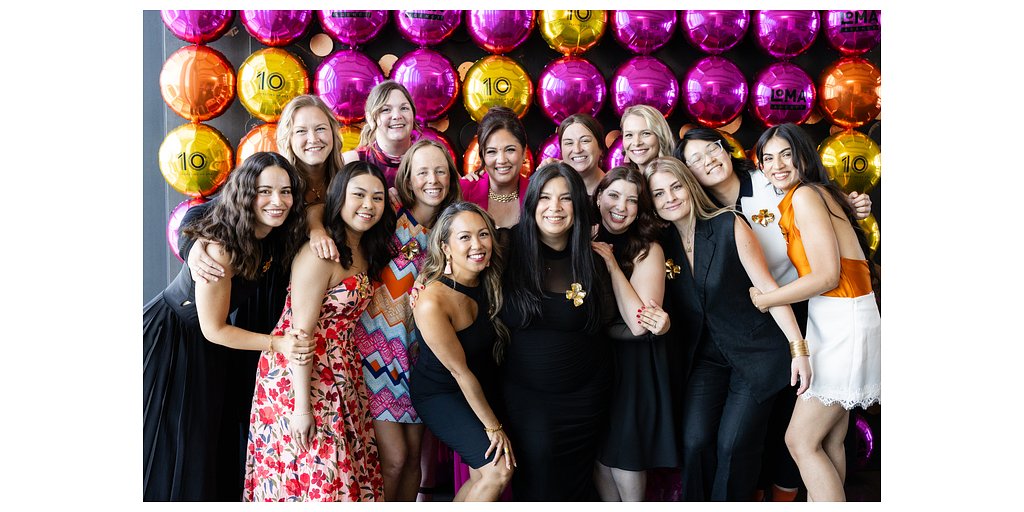
TORONTO, ON – June 08, 2026 – Last week, in a tastefully arranged Toronto venue, LOMA Agency celebrated its 10th anniversary. Clients, partners, and staff gathered to mark a decade of what the company calls “strategic creative event experiences.” On the surface, it was a standard corporate milestone. But beneath the celebratory toasts lies a more profound story, not just about one agency’s success, but about a fundamental shift in the corporate world’s understanding of value.
In an era defined by remote work, digital saturation, and the relentless march of artificial intelligence, the simple act of gathering people in a room has become an act of radical strategy. LOMA’s decade-long journey from a startup with a simple belief to a key player in the B2B events space serves as a case study for a burgeoning industry built on a surprisingly old-fashioned premise: there is no substitute for genuine human connection.
The Prophecy of 'More Than Logistics'
When Loren Maisels founded LOMA Agency in 2016, the corporate event landscape was largely a matter of execution. Success was measured in smoothly run registrations, on-time speakers, and palatable catering. But Maisels, a Certified Meeting Professional, built her agency on a different philosophy. “Events are never just a series of logistics,” she stated, a belief that has become the company’s guiding principle. “They are opportunities to build trust, strengthen relationships, align teams and move businesses forward.”
This perspective, framing events as strategic drivers rather than operational burdens, was prescient. For years, the agency worked with clients like Great Place To Work® and Children’s Mental Health Ontario, designing conferences and galas intended to do more than just fill a ballroom. The goal was to create moments of shared experience that could forge lasting bonds, whether between a company and its clients or a non-profit and its donors. This focus on the ‘why’ behind the gathering, not just the ‘how,’ allowed the firm to build a reputation for becoming an extension of its clients' teams, embedding itself in their strategic objectives.
While the industry at large was still focused on scale and spectacle, LOMA was quietly honing a different craft: the architecture of interaction. This approach would prove to be more than a niche; it was a preparation for a future no one saw coming.
The Great Accelerator and the Return to Offline
The COVID-19 pandemic should have been a death knell for an agency built on in-person experiences. Instead, it became an accelerator. As the world went into lockdown, LOMA was forced to translate its philosophy into a digital-only realm. The pivot from ballrooms to breakout rooms was a test of the agency’s core belief: could you still build trust and strengthen relationships through a screen? The firm’s rapid adaptation to virtual sales kickoffs and fundraising galas demonstrated that the principles of strategic experience design were format-agnostic. The challenge wasn't the technology; it was maintaining a human-centric focus amidst the technological constraints.
Now, in 2026, the pendulum has swung back with force. The digital fatigue that set in during the pandemic has created a powerful craving for tangible, face-to-face interaction. Industry analysts have noted a definitive shift where networking has overtaken content as the primary reason people attend B2B events. It’s a clear signal that professionals are not seeking more information—they are seeking connection. This sentiment is backed by hard forecasts, with firms like Gartner predicting that by 2028, CMOs will re-allocate a majority of their budgets to offline channels.
LOMA’s 10-year milestone arrives precisely at this inflection point. The value proposition they championed in 2016 is now the dominant industry narrative. As companies navigate the complexities of hybrid work and a dispersed workforce, events like the employee retreat LOMA designed for the tech company Loopio are no longer seen as perks, but as essential tools for building a cohesive culture and combating the isolation of remote work.
Navigating the Human-AI Tension
The current landscape is complicated by the rise of AI. Event technology now promises hyper-personalized agendas, AI-powered matchmaking, and streamlined logistics. Yet, for all its efficiencies, a palpable “trust gap” lingers. Can an algorithm truly understand the nuance of human connection? Can AI-generated content replicate the authenticity of a shared moment?
This is the central tension of the modern event industry, and it’s where experiential agencies now find their most critical role. They are becoming the stewards of the human touch. The success of an event is no longer just about flawless execution; it's about curating an environment where genuine interaction can flourish. This is reflected in the praise from LOMA’s clients.
“LOMA made our conference one of the highest rated events of my tenure at Great Place to Work,” said Lizelle Festejo, Senior Director of Brand & Experience. She credited the agency’s “thoughtful recommendations to enhance our attendees’ experience and build relationships.” This language—experience, relationships—speaks to outcomes that are difficult to quantify on a spreadsheet but are deeply felt by attendees.
Similarly, Zak Hemraj, CEO of Loopio, noted the agency’s ability to help a company “show the best version of your company to the world.” In a digital world where authenticity is paramount and easily faked, creating a live experience that reflects a company’s true values is a powerful differentiator.
The industry is responding by shifting focus. There’s a growing trend toward smaller, more intimate gatherings designed for deeper learning and stronger networking. The goal is no longer just to broadcast a message to the largest possible audience, but to foster a community where every individual feels seen and heard. For agencies like LOMA, the mission has evolved from managing events to engineering belonging. Their work demonstrates that in a world increasingly mediated by technology, the most valuable commodity a business can cultivate is trust, quite simply, trust.