
- $2.75M in federal funding allocated to combat anti-Semitism through Holocaust education at four U.S. museums
- 63% of religiously motivated hate crimes target Jewish Americans, who make up just 2.4% of the U.S. population
- Highest number of anti-Semitic incidents recorded since 1979, per ADL's 2023 audit
Experts agree that museums and libraries play a critical role in combating anti-Semitism through education and preserving historical memory, though some debate the use of specific definitions like the IHRA's in policy enforcement.
IMLS Directs $2.7M to Museums to Combat Rising Anti-Semitism
WASHINGTON, D.C. – January 27, 2026 – On International Holocaust Remembrance Day, the Institute of Museum and Library Services (IMLS) announced a significant federal investment of $2,746,932 to arm four American cultural institutions with the resources to combat rising anti-Semitism and expand Holocaust education.
The funding, distributed in Fiscal Year 2025, will support multi-year projects at museums in Florida, Michigan, and Ohio. These initiatives aim to preserve priceless historical artifacts, develop interactive exhibits using cutting-edge technology, and launch wide-ranging educational outreach programs to ensure the lessons of the Holocaust are not forgotten.
Final award decisions were made by IMLS Acting Director Keith Sonderling, who framed the initiative as a core part of the agency's mission. "IMLS is meeting its highest calling not only by strengthening our museums and libraries, but by supporting projects which advance civil discourse and historical memory while challenging racial and religious biases of all types," Sonderling stated. The announcement signals a concerted effort to leverage the nation’s most trusted cultural spaces as a frontline defense against a resurgent form of hatred.
A Federal Response to a Growing Threat
The IMLS initiative arrives at a moment of heightened concern over anti-Semitism in the United States. The urgency is underscored by stark data from federal law enforcement and civil rights organizations. According to the most recently available FBI statistics, Jewish Americans, who make up just 2.4 percent of the U.S. population, are the targets of 63 percent of all religiously motivated hate crimes.
This statistical reality is amplified by reports from groups like the Anti-Defamation League (ADL), which recorded a historic surge in anti-Semitic incidents in recent years. The ADL's 2023 audit documented the highest number of incidents of harassment, vandalism, and assault against Jews since the organization began tracking data in 1979, with a dramatic spike following the events of October 7, 2023.
It is this alarming context that the IMLS seeks to address directly. "We can never forget the horrors of the Holocaust," Sonderling said in the announcement. "Anti-Semitism is not a distant threat—it continues to be a present and urgent challenge. Museums and libraries are uniquely positioned to fight anti-Semitism in numerous ways but especially by educating the public about the gravity of the Holocaust."
The Political Impetus: Executive Orders Shape Cultural Funding
The press release explicitly links this thematic funding emphasis to directives from the Trump Administration. The initiative is motivated by two key executive orders: EO 13899, "Combating Anti-Semitism," signed in 2019, and the more recent EO 14188, "Additional Measures to Combat Anti-Semitism," issued in 2025.
EO 13899 instructed federal agencies to consider the International Holocaust Remembrance Alliance's (IHRA) working definition of anti-Semitism when investigating discrimination complaints under Title VI of the Civil Rights Act of 1964. This move was intended to give federal agencies more clarity in identifying and prosecuting anti-Semitic acts.
Building on that foundation, the 2025 order, EO 14188, was issued in response to what it describes as an "unprecedented wave of vile anti-Semitic discrimination, vandalism, and violence" on school and college campuses. This more recent order directs federal agencies to vigorously prosecute anti-Semitic harassment and has been associated with more assertive federal actions, including the analysis of pending complaints and the potential for financial and legal consequences for institutions and individuals.
While the goal of fighting anti-Semitism is widely supported, the direct link between cultural funding and specific executive orders highlights a growing trend of federal policy shaping the priorities of cultural institutions. The use of the IHRA definition, a cornerstone of the executive orders, has been a subject of debate itself, with some civil liberties groups and academic freedom advocates expressing concern that it could be used to suppress legitimate criticism of Israeli government policies.
Guardians of Memory: Four Institutions, Four Missions
The nearly $2.75 million in funding will be distributed among four highly regarded institutions, each with a distinct mission to expand its impact.
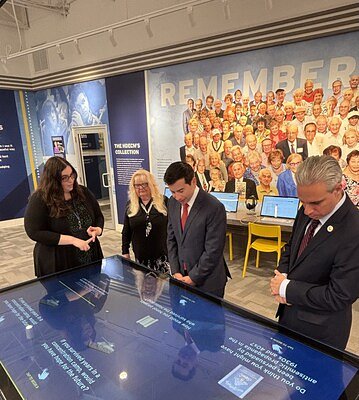
The Florida Holocaust Museum in St. Petersburg will receive funding to design and build a new state-of-the-art core exhibition. The project will incorporate interactive technology to showcase some of its most significant artifacts, including a Danish rescue boat used to save Jews, the archives of Nobel Laureate and Holocaust survivor Elie Wiesel, and a letter signed by Albert Einstein. The goal is to enhance audience reach, particularly among college students and educators.
The Holocaust Documentation and Education Center (HDEC) in Dania Beach, Florida, will use its grant to launch a major educational outreach program in South Florida. The project will leverage the center's new Interactive Learning Center, which features holographic interviews with survivors and interactive displays, to increase student understanding of the Holocaust's universal lessons, with a new focus on K-8 audiences.
The Zekelman Holocaust Center in Farmington Hills, Michigan, will undertake a three-year project to digitize its extensive archive collection. The initiative involves scanning photographs, personal artifacts, and even creating 3D models of objects to make previously untold stories accessible to the public and integrate them into the museum's educational programming, deepening the impact of its collections through digital access.
The Nancy and David Wolf Holocaust and Humanity Center in Cincinnati, Ohio, will partner with the Cincinnati Museum Center to produce community programming for two major exhibitions: "Auschwitz. Not Long Ago. Not Far Away" and "Holding Hope: Stories of Survival During the Holocaust." The project will feature survivor-led tours, workshops, and a new catalogue to share local survivor stories, engaging a broad audience across the Midwest.
These projects represent a multi-faceted approach, combining traditional preservation with modern technology to engage a new generation. They aim not just to recount the past, but to make its lessons relevant to the present by preserving survivor testimony, digitizing fragile archives, and creating immersive educational experiences.
As these institutions embark on their federally funded projects, their work becomes a focal point in a larger national conversation about memory, education, and the responsibility of cultural organizations in fostering a more tolerant society. The IMLS has made its position clear: in the fight against hatred, museums and libraries are not neutral observers but essential participants. With grant applications for Fiscal Year 2026 now available, this emphasis on using cultural heritage to confront contemporary challenges is poised to continue.