
- $86B: IMCO manages $86 billion in public sector assets.
- 5x Increase: New global trade restrictions in 2024 were five times the annual average from 2010-2019.
- Capital Boom: Surge in investment in energy, defense, and AI-driven digital infrastructure.
Experts agree that the global economy is rapidly shifting toward deglobalization, driven by rising protectionism and geopolitical tensions, requiring a fundamental rethink of investment strategies to ensure long-term resilience.
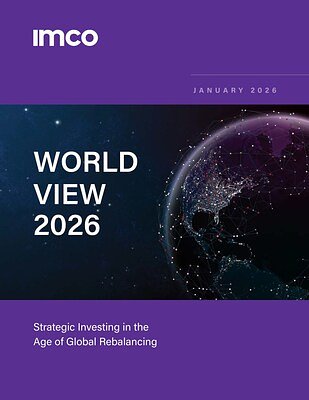
IMCO Unveils $86B Plan for a Fracturing, Volatile Global Economy
TORONTO, ON – January 28, 2026 – The Investment Management Corporation of Ontario (IMCO), which oversees $86 billion in public sector assets, today released a stark assessment of the global economy, warning that an accelerated fracturing of globalization is set to amplify market volatility and demand a fundamental rethink of investment strategy.
In its annual flagship report, IMCO World View 2026, the influential institutional investor argues that the era of open, integrated markets is rapidly giving way to a more polarized and unpredictable landscape. The report identifies a powerful combination of rising protectionism, heightened geopolitical tension, and direct government intervention as the primary drivers of this shift, creating significant headwinds for investors.
"Our World View framework cuts through global economic and market complexity as a cornerstone of IMCO's research-driven investment process," said Nick Chamie, Senior Managing Director and Chief Strategist at IMCO, in a statement accompanying the release. The publication distills these complex developments into a strategic guide designed to position its multi-billion-dollar portfolio for long-term resilience.
The Deglobalization Domino Effect
The central theme of IMCO's analysis is the rapid acceleration of deglobalization, a trend it sees as being intensified by an increasingly interventionist and competitive U.S. policy stance. The report notes that governments worldwide are reasserting economic control through a battery of tools ranging from tariffs and subsidies to currency measures, fundamentally reshaping global trade and financial flows.
This view is strongly supported by wider economic data and analysis. According to the World Bank, the number of new global trade restrictions imposed in 2024 was five times the annual average seen between 2010 and 2019. Major institutions like the International Monetary Fund have already downgraded global growth forecasts for 2025, citing the escalation of trade tensions and policy uncertainty as key risk factors. While some experts debate whether the trend is true deglobalization or a restructuring into regional trading blocs—a so-called "regionalization"—there is broad consensus that the frictionless global commerce of the past is over.
The report highlights how this shift creates a more complex and hazardous environment. Supply chains, once optimized for efficiency, are now being reconfigured for resilience and national security, often at a higher cost. This economic reshoring, combined with persistent geopolitical uncertainty, is a key factor behind IMCO's forecast that the "low for long" era of interest rates and inflation is definitively over.
An Investor's Playbook for a Fractured World
Faced with this new reality, IMCO has outlined a strategic pivot designed to build a more robust and adaptable portfolio. The report’s key investment implications signal a move away from strategies that worked in a more globalized world. A central recommendation is broader currency diversification, a nod to the growing risks associated with an over-reliance on the U.S. dollar as geopolitical shifts encourage "de-dollarization" efforts in global trade.
With inflation expected to be more persistent, the report also advocates for shorter-duration fixed-income assets to mitigate interest rate risk and an increased allocation to safe-haven assets like commodities, which can act as a hedge in uncertain times. The core of the new approach is a "macro-aware" asset allocation framework, emphasizing flexibility, active management, and sophisticated risk-hedging strategies to navigate the anticipated market swings.
This approach mirrors a broader trend among large institutional investors who are grappling with the same challenges. The era of simply buying and holding a diversified index is being questioned, as the growing popularity of passive investing has led to intense market concentrations in a few large-cap stocks. IMCO warns this creates unintended exposures, heightening the need for diversified and actively managed strategies that can look beyond traditional benchmarks.
The Capital Boom and the Rise of Private Markets
While the outlook is fraught with volatility, IMCO's report identifies powerful pockets of opportunity. It points to a burgeoning "capital investment boom" as governments and corporations pour money into critical sectors. Rising capital spending in energy, particularly related to the clean energy transition and energy security, is creating a long-term investment runway. Similarly, increased geopolitical instability is fueling a surge in defence spending, while the rapid adoption of artificial intelligence is driving massive investment in digital infrastructure like data centers.
To capitalize on these long-term, structural trends, IMCO is doubling down on the expanding role of private investments. The report emphasizes that private markets—including private equity, private debt, and real assets like infrastructure—allow institutional investors to support long-term value creation away from the noise of short-term public market volatility.
For an investor with a long horizon, like a pension fund, private assets offer access to a broader and more diverse set of opportunities. This strategy allows IMCO to deploy large pools of capital into nation-building projects and innovative companies, aiming to generate stable, inflation-protected returns over decades.
Guarding Ontario's Public Fortune
Ultimately, the World View 2026 serves as a compass for safeguarding and growing the $86 billion in assets IMCO manages on behalf of its clients, which include some of Ontario's largest public sector pension plans. The strategies outlined are a direct response to the organization's fiduciary duty to protect the financial futures of millions of Ontarians in an increasingly uncertain world.
By proactively identifying global headwinds and adjusting its investment posture, IMCO aims to build a portfolio that is not only resilient to shocks but also positioned to capitalize on the profound transformations reshaping the global economy. The report makes clear that in this new era, innovation, flexibility, and a deep understanding of macroeconomic forces are no longer just advantages—they are essential for survival and success.