
- 510 miles: Length of the treacherous Dalton Highway traversed by Alaska West Express daily.
- -50°F: Extreme winter temperatures drivers face, where exposed skin freezes in minutes.
- $10,000: Reported cost of a single tow on the Dalton Highway due to lack of service stations.
Experts would likely conclude that Alaska West Express's President’s Trophy win underscores a rare mastery of high-risk logistics in extreme environments, combining systemic safety protocols with a deeply ingrained human-centric culture.
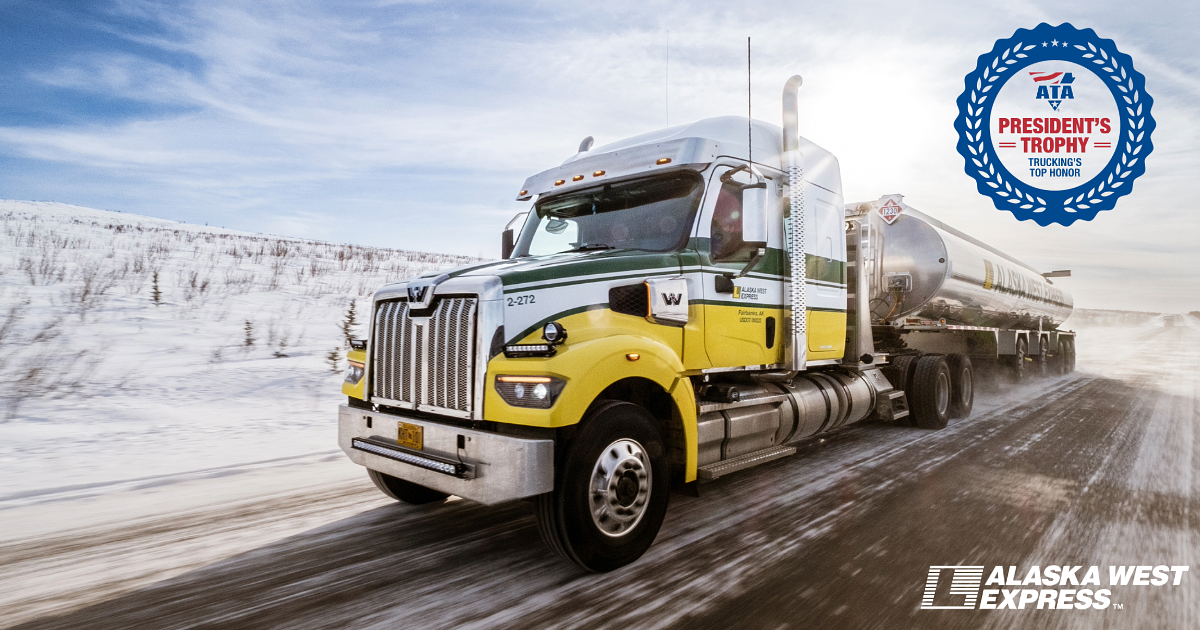
Ice Road Titans: How Alaska West Express Set the Gold Standard for Safety
ANCHORAGE, AK – June 15, 2026 – In the world of logistics, safety awards can sometimes feel like routine acknowledgements. But when the American Trucking Associations (ATA) grants its highest honor, the President’s Trophy, to a company whose daily commute involves traversing one of the most treacherous roads on the planet, it’s time to pay attention. Alaska West Express, a carrier specializing in heavy haul and bulk transport, has just received this very award in the ‘under 25 million miles’ category, a recognition that is less a trophy and more a testament to survival and excellence in the face of extreme adversity.
The award, which recognizes outstanding safety performance, proactive initiatives, and community outreach, was earned not in the controlled environments of interstate highways, but in the unforgiving wilderness of the Last Frontier. The company’s fleet navigates some of the harshest climates and most remote locations in the country, a challenge that redefines the very meaning of risk management.
“We haul a variety of commodities, including hazardous chemicals, on one of the country’s most rugged gravel roads – over 510 miles between Fairbanks and the North Slope oilfields,” noted Alaska West Express President Matt Jolly. “This award represents the hard work, professionalism, and integrity of our managers, operations teams, drivers, freight handlers, and mechanics to maintain safe operations to serve our customers.” His statement, while professional, barely scratches the surface of the daily operational gauntlet his team faces.
The Gauntlet: Conquering America's Most Treacherous Highway
To understand the magnitude of this achievement, one must first understand the Dalton Highway. This 510-mile stretch of mostly unpaved road is less a highway and more a lifeline, a rugged artery connecting Fairbanks to the Prudhoe Bay oilfields. It is the primary operational theater for Alaska West Express, and it is widely regarded as one of the most dangerous roads in the world. For roughly 85% of the year, the road is a frozen, unpredictable beast.
Drivers face a relentless series of hazards. Winter temperatures plummet below -50°F, creating conditions where exposed skin freezes in minutes and diesel fuel can turn to gel. Sudden whiteouts can reduce visibility to zero in an instant, while seasonal floods and ice heaves can buckle and wash away sections of the road without warning. The surface itself is a constant challenge, a mix of washboard gravel, steep grades reaching 19%, and sharp curves with minimal guardrails. A single breakdown is not an inconvenience; it’s a crisis. With service stations and communication signals almost non-existent, and emergency assistance hours away, a simple tow can reportedly cost upwards of $10,000.
In this environment, standard safety protocols are merely the starting point. Alaska West Express’s success demonstrates a deeper, more systemic approach to safety, one that anticipates the compounded risks of transporting heavy, oversized, and often hazardous materials through a landscape that is actively hostile. This isn't just trucking; it's a masterclass in high-risk logistics, where every decision carries immense weight.
Beyond the Road: Fueling Alaska's Economic Engine
The importance of Alaska West Express’s safety record extends far beyond its own fleet. The company is a critical component of Alaska's economic infrastructure, a lynchpin for the state's most vital industries. The energy, mining, and construction sectors that form the backbone of the Alaskan economy depend on the reliable and secure transport of everything from hazardous chemicals for oil extraction to massive pieces of construction machinery.
The Dalton Highway exists to serve the North Slope oilfields, and carriers like Alaska West Express are the circulatory system that keeps that heart pumping. A failure in this supply chain doesn't just mean a delayed shipment; it can mean a halt in production at an oil rig or a critical delay in a multi-million dollar construction project. By mastering safety in this high-stakes corridor, the Lynden subsidiary ensures the stability and continuity of operations that are fundamental to regional and even national economic interests.
This achievement is not an overnight success. As part of the Lynden family of companies, which has over a century of experience in transportation and logistics, Alaska West Express is built on a foundation of deep institutional knowledge. This heritage of navigating complex supply chains, from Alaska and Hawaii to the Pacific Northwest and beyond, provides the strategic depth needed to innovate and lead in such a demanding niche.
The Human Factor: A Culture Forged in Ice
Ultimately, technology and protocols only go so far. The true differentiator for Alaska West Express is its deeply ingrained, people-centric safety culture. This is not a top-down mandate but a shared responsibility, a philosophy cultivated from the ground up. “We are proud of this award and of the Alaska West Express employees that are dedicated to creating a culture of safety inside and outside our company each day,” said Tyler Bones, the company’s Director of HSSE.
This dedication is formalized and constantly reinforced at the Lynden Training Center in Fairbanks. Established in 1995, this facility is a crucible for safety expertise. It’s here that employees, who must be recertified every three years, engage in intense, hands-on training. Using realistic props like a custom-designed roll-over tanker truck, they run through high-stress scenarios for HAZMAT response, confined space rescue, and industrial firefighting. This is about building muscle memory, turning emergency procedures into instinctual reactions. The curriculum, covering everything from OSHA regulations to CPR, transforms every employee into a capable first responder.
This long-term investment in human capital has paid dividends, evident in a history of accolades including multiple Alaska Safe Truck Fleet of the Year awards. It fosters the “all in this together” mentality that is legendary among Dalton Highway drivers, where competitors will stop to help one another because they understand the shared danger. It is this combination of rigorous training, professional integrity, and collective responsibility that allows the company to not just operate, but to excel in an environment where there is no margin for error.