
- Lifting Capacity: 4,000 to 15,500 pounds
- Energy Savings: 75% less energy use vs. diesel models
- Market Potential: Global electric forklift market projected to exceed $150 billion by early 2030s
Experts view Hyster's XTLG series as a breakthrough solution that bridges the gap between electric efficiency and diesel durability, making electrification practical for heavy-duty applications.
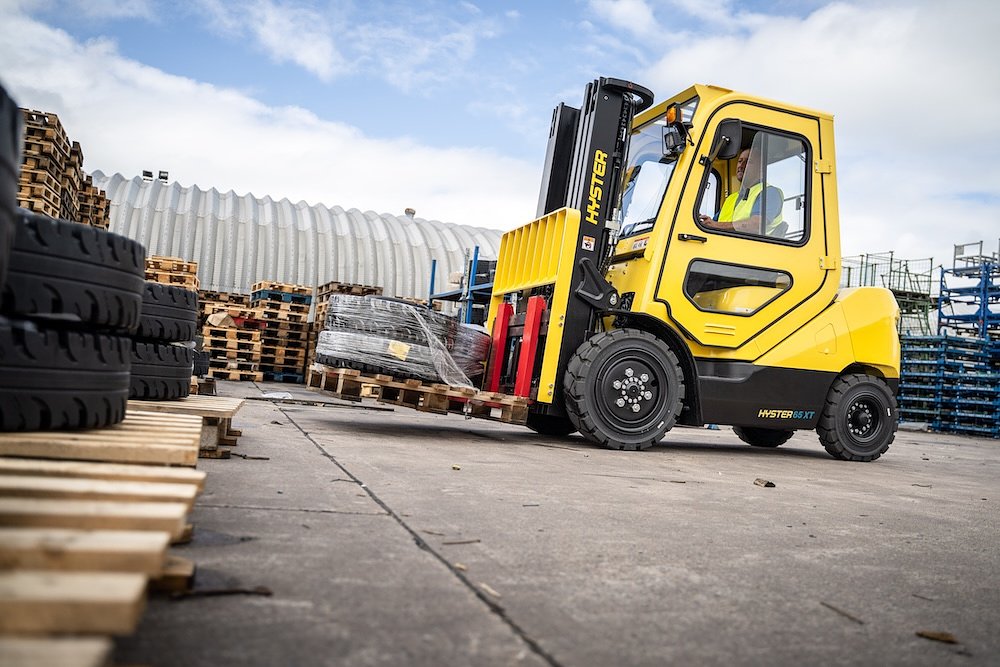
Hyster's New Electric Forklift Wears Diesel Armor for Tough Jobs
GREENVILLE, N.C. – May 19, 2026 – Hyster Company today announced the launch of its XTLG integrated lithium-ion forklift series in the Americas, a move that directly targets a persistent gap in the material handling industry: electrifying heavy-duty, rugged applications traditionally dominated by internal combustion engines (ICE). By mounting a modern, factory-integrated lithium-ion power system onto a proven ICE chassis, Hyster is offering a hybrid-by-design solution that promises diesel-like durability with electric efficiency.
The new series, which won a 2026 SEAL Business Sustainability Award for its design, comes in three ranges with lifting capacities from 4,000 to 15,500 pounds. It aims to convert operations that have been hesitant to electrify due to concerns about performance, durability on uneven terrain, and acquisition cost.
Bridging the Gap Between Power and Practicality
For years, the choice for fleet managers in sectors like lumber, construction materials, and metals has been a difficult one. Diesel forklifts offered the raw power and high ground clearance needed for outdoor yards and uneven surfaces, but came with high fuel costs, significant maintenance, and growing pressure from emissions regulations. Conversely, traditional electric forklifts, while clean and efficient, often lacked the ruggedness for these demanding environments.
The Hyster XTLG series is engineered to be a direct answer to this dilemma. By utilizing the chassis of its established ICE forklifts, the XTLG models inherit a "battle-tested" frame with high ground clearance and robust construction. This design allows the electric forklift to navigate the same challenging outdoor environments—from gravel yards to unfinished construction sites—that were once the exclusive domain of their diesel counterparts. The inclusion of large tires and an available weatherproof cabin further solidifies its role as a true indoor-outdoor workhorse.
This launch comes as the global electric forklift market is projected to surge, with some estimates predicting a market size of over $150 billion by the early 2030s. A key driver of this growth is the increasing demand for high-performance electric models that don't compromise on power. The XTLG, with its ability to handle heavy loads and rough terrain, is positioned to capture a segment of the market that requires both sustainability and uncompromising strength.
The New Calculus of Ownership Costs
While the initial purchase price of lithium-ion-powered equipment can be higher than traditional ICE models, Hyster is banking on a convincing total cost of ownership (TCO) argument. The core of this argument lies in drastically reduced operational and maintenance expenses. According to Hyster, the XTLG series uses approximately 75% less energy than a comparable diesel model, a claim based on standardized VDI cycle testing. With volatile fuel prices, this shift to more stable and lower-cost electricity represents a significant long-term saving.
The savings extend deeply into maintenance. The electric powertrain, featuring a permanent magnet motor and an integrated lithium-ion battery, eliminates a host of service items associated with internal combustion engines. There are no oil changes, spark plugs, filters, or belts to replace. This not only reduces the cost of parts and labor but also dramatically increases uptime by minimizing trips to the service bay. For businesses where every minute of operational availability counts, this is a critical advantage.
“There’s a growing market segment that is eager to electrify but has held back due to acquisition cost and the ability of electric power to match their performance requirements and duty cycle,” said Robert Lally, Product Manager, Hyster. “The XTLG forklift series addresses those challenges and makes electrification an accessible, practical option, with lithium-ion power on a trusted Hyster platform that stands up to operational demands and keeps operating costs in check.”
Furthermore, for fleets that already operate Hyster ICE trucks, the XTLG's shared chassis design offers the potential for parts commonality, simplifying inventory management and technician training. This strategic design choice lowers the barrier to entry for electrification, making the transition smoother and more cost-effective.
A Commitment to Integrated Sustainability
The XTLG's environmental credentials, recognized by the SEAL Business Sustainability Award, go beyond simple energy efficiency. The forklift is powered by a purpose-built Hyster battery system using Lithium Iron Phosphate (LFP) chemistry. This choice is significant, as LFP batteries are free of cobalt, a material often associated with unethical mining practices and a higher environmental footprint during extraction. Iron and phosphate are more abundant and less toxic, making LFP a more sustainable choice over the battery's entire lifecycle.
The factory integration of the battery and truck is another key differentiator. Unlike third-party battery retrofits, Hyster’s integrated system ensures seamless communication between the power source and the vehicle. This allows for a unified view of truck and battery data, providing operators with targeted alerts for low charge or high temperatures that could affect performance. This deep integration mitigates compatibility issues and ensures that service and support can be handled efficiently by a single point of contact through the Hyster dealer network.
Charging is streamlined for maximum uptime. Operators can plug the cable directly into an easy-access port without opening the hood. The system supports fast and flexible "opportunity charging," allowing workers to top off the battery during breaks, which is a key advantage of lithium-ion technology over older lead-acid batteries. Built-in interlock sensors also prevent the truck from being driven while connected to the charger, enhancing workplace safety. By combining a rugged, reusable chassis design with advanced, cobalt-free battery chemistry and an intelligent, integrated system, Hyster presents the XTLG not just as an electric forklift, but as a comprehensive solution for a more sustainable and efficient operational future.
This strategic launch places Hyster in a strong position within a competitive landscape. While rivals like Toyota Material Handling and KION Group offer their own powerful electric models, Hyster's explicit strategy of repurposing a proven ICE architecture for an electric application is a unique approach. It directly addresses the practical concerns of durability and ground clearance that have made many heavy-duty operators hesitant to abandon diesel. By blending the best of both worlds, the XTLG series represents a pragmatic and powerful step forward in the evolution of material handling equipment.