
- 608,000: Australia's international student population as of early 2024, a 70% increase since borders reopened post-pandemic. - 45,000: HungryPanda's merchant partners across Australia. - AUD 21 billion: The value of the Australian online food delivery market in 2024, projected to more than double by 2034.
Experts would likely conclude that HungryPanda's niche strategy of catering to the cultural and culinary needs of international students has positioned it as a resilient player in Australia's competitive food delivery market, leveraging specialization to create a defensible advantage.
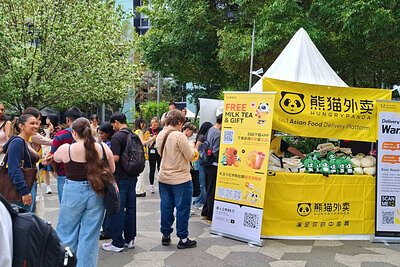
HungryPanda's Niche Strategy Delivers Taste of Home to Students
SYDNEY, AU – February 27, 2026
As the 2026 academic year kicks off across Australia, thousands of students are settling into campus life, a transition often marked by both excitement and anxiety. For many, particularly those from overseas, the search for comfort and familiarity begins in the kitchen. Tapping into this deep-seated need, Asian food delivery specialist HungryPanda is rolling out its back-to-school initiative, offering curated selections of regional cuisines and groceries aimed at making the adjustment a little easier.
The company's focus on providing a "taste of home" goes beyond mere convenience, positioning itself as a cultural lifeline in a competitive market. With offerings like bubble tea, hotpot, and authentic Asian grocery essentials, the platform aims to connect students with the familiar flavors they left behind.
"Returning to school can be an adjustment, particularly for International students studying away from home," said Kitty Lu, HungryPanda's Director of Public Affairs, in a recent statement. "We are proud to support students by offering easy access to familiar cuisines that help make everyday campus life more convenient."
Beyond Convenience: A Lifeline for International Students
HungryPanda's strategy is acutely timed. Australia's international student population has surged to a record high, with over 608,000 student visa holders in the country as of early 2024, a 70% increase since borders reopened post-pandemic. Students from China and India alone constitute over 40% of this demographic, creating a substantial community seeking culturally specific goods and services.
For these students, food is often a primary vehicle for cultural identity and psychological well-being. Navigating a new country, a different language, and academic pressures can be isolating. Access to familiar food—the specific brand of noodles, the right spices for a family recipe, or a comforting bowl of soup from a local dialect's cuisine—can mitigate feelings of homesickness and foster a sense of belonging. The platform's interface, which bridges language barriers, further lowers the friction for students to access these comforts.
This focus on cultural connection is the cornerstone of the company's appeal. While larger, generalist platforms offer some Asian options, HungryPanda's specialization allows for a depth and authenticity that resonates deeply with its target audience. The platform’s own origin story is rooted in this very experience, founded by an international student who struggled to find authentic Chinese food abroad. This narrative of shared experience builds a powerful bond with its user base, transforming a transactional service into a support system.
A Niche Strategy in a Cutthroat Market
The Australian online food delivery landscape is a battlefield littered with casualties. Valued at nearly AUD 21 billion in 2024 and projected to more than double by 2034, the market is lucrative but fiercely competitive. Giants like Uber Eats, which commands over half the market share, and a rapidly growing DoorDash dominate the space. The intensity of this competition has seen major players falter, with Deliveroo exiting the market in late 2022 and Menulog, once a key competitor, slated to cease operations in November 2025 after a dramatic decline in market share.
Amid this high-stakes environment, HungryPanda has not only survived but thrived by deliberately avoiding a head-on collision with the giants. Instead, it has pursued a classic niche strategy, focusing intently on the underserved market of Asian communities. This targeted approach allows it to excel where generalist platforms fall short: providing a curated, culturally fluent experience.
The company solidified its dominance in this niche with the strategic acquisition of its main competitor, EASI, in early 2022. This move consolidated its merchant network, which now boasts over 45,000 partners across Australia, and cemented its status as the go-to platform for authentic Asian food. By serving its 3.5 million Australian users with a specialized inventory, HungryPanda has created a defensible moat, insulating itself from the price and logistics wars waged by broader platforms. Its success demonstrates a powerful business lesson: in a crowded market, depth can be more valuable than breadth.
Empowering Main Street, Digitally
HungryPanda's impact extends beyond the university campus and into the heart of local communities. The platform serves as a critical digital bridge for thousands of small and medium-sized businesses—the family-run restaurants, neighborhood grocers, and specialty food shops that form the backbone of Australia's diverse culinary scene. For many of these merchants, a partnership with the platform is their primary gateway to the digital economy.
The demand for Asian cuisine is booming in Australia, with over 14.2 million Australians regularly consuming it and "Asian-inspired" food accounting for 28% of online food discussions. However, many traditional eateries lack the resources or technical expertise to build an online presence, manage digital marketing, and handle delivery logistics. HungryPanda provides this infrastructure, offering multilingual onboarding, competitive commission rates, and promotional support.
By connecting its 45,000 merchant partners with a large, digitally-engaged customer base, the platform drives significant economic activity. It allows a small dumpling house in a suburban neighborhood to reach students in a downtown dormitory, or a specialty grocer to supply ingredients to home cooks across the city. This digital amplification helps preserve culinary traditions while enabling businesses to grow and adapt to modern consumer habits. Initiatives like "Panda Bento" further empower restaurants to streamline operations and tap into new revenue streams, showcasing a partnership model that aims for mutual growth rather than simple extraction. As the academic year begins, the platform is not just delivering meals; it is delivering customers, opportunity, and a vital connection to a growing market.