
- $Billions in R&D costs saved by identifying unpromising drug candidates early
- 5 human Fcγ receptors (FcγRI, FcγRIIA, FcγRIIB, FcγRIIIA, FcγRIIIB) and the FcRn receptor humanized in the mouse model
- International consortium of biopharmaceutical leaders (genOway, argenx, Innate Pharma, Vir Biotechnology) and academic validation from VIB-Ghent University
Experts agree that the genO-hFcγR humanized mouse model represents a significant advancement in preclinical testing, offering a more reliable way to predict the success of antibody therapies and potentially saving billions in failed drug development.
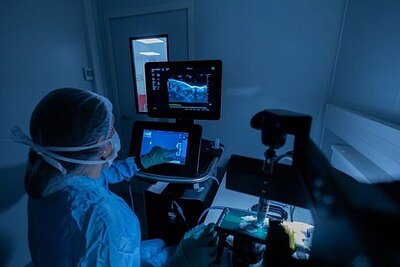
Humanized Mice: A Breakthrough to Fix Antibody Drug Failures
LYON, France – February 26, 2026 – Antibody therapies represent a modern medical revolution, offering powerful new ways to fight cancer, inflammatory diseases, and infections. Yet, for every success story, there is a graveyard of promising drug candidates that fail in late-stage clinical trials, costing billions of dollars and delaying patient access to life-saving treatments. A groundbreaking study published in the prestigious journal Science Immunology details a novel solution: a "humanized" mouse model that promises to dramatically improve the prediction of a drug's success or failure long before it ever reaches a human patient.
Developed by French biotechnology firm genOway and a consortium of international partners, the genO-hFcγR mouse model directly addresses a fundamental flaw in drug development that has plagued the pharmaceutical industry for decades.
Bridging the "Translational Gap"
The journey of a drug from a laboratory bench to a patient's bedside is fraught with uncertainty, a chasm often referred to as the "translational gap." A major reason for this gap in antibody therapy is the unreliability of preclinical testing. For years, scientists have relied on standard laboratory mice to test the efficacy and safety of new human therapies. However, these models have a critical limitation.
Antibody therapies work by engaging the immune system. A key part of this process involves the antibody's "Fc" region binding to proteins on immune cells called Fc-gamma receptors (FcγRs). These receptors act as a switch, telling immune cells to attack a cancer cell, clear an infection, or tamp down inflammation. The problem is that the structure and function of these receptors are significantly different between mice and humans.
"There are so many differences that testing an antibody effector function in mice is just not reliably predicting how it is going to behave in humans," noted one immunologist familiar with the challenges of preclinical development. This species-specific discrepancy means that a drug that appears highly effective in a mouse may be useless in a human, or worse, may cause unforeseen and dangerous side effects. These failures are not discovered until late-stage clinical trials, after a company has already invested hundreds of millions of dollars and years of research.
A More Human Model for a Human Problem
The genO-hFcγR model, developed over years of complex genetic engineering, was designed to close this translational gap. Instead of having murine FcγRs, these mice have had their genes replaced with a full suite of their human counterparts. Critically, this includes not only the entire family of Fcγ receptors (FcγRI, FcγRIIA, FcγRIIB, FcγRIIIA, and FcγRIIIB) but also the human FcRn receptor, which is vital for regulating the lifespan of antibodies in the bloodstream.
This comprehensive humanization, achieved while maintaining a fully functional immune system in the mouse, creates a far more accurate biological environment for testing human antibody drugs. The validation data published in Science Immunology demonstrates that the model allows researchers to achieve several key objectives that were previously unreliable.
Scientists can now rank different antibody candidates by how they are likely to perform in humans, allowing them to prioritize the most promising ones. For example, the model can distinguish between the activity of different anti-cancer antibodies like Rituximab and the more potent Obinutuzumab. It also enables researchers to accurately measure how effectively an antibody targets specific immune cells and evaluate its potential to slow disease progression, providing crucial insights that can guide development decisions and accelerate timelines.
The Power of Global Collaboration
The creation of such a complex and validated biological tool was not the work of a single company. It required an international consortium of leading biopharmaceutical partners, each bringing unique expertise to solve a shared industry-wide challenge. Led by genOway, the group included Belgium's argenx, a pioneer in Fc-engineering and FcRn biology; France's Innate Pharma, a leader in natural killer cell immunotherapies; and Vir Biotechnology from the U.S., which focuses on immunotherapies for infectious diseases.
This industry collaboration was paired with top-tier academic validation from VIB-Ghent University in Belgium. Scientists at the leading immunology institute meticulously mapped the model's receptor expression and regulation, confirming it mimics human disease states more closely and coordinated the publication of the seminal work. This collaborative approach, combining commercial and academic powerhouses, lends significant credibility to the model and ensures its design is relevant to the real-world needs of drug developers.
Economic and Clinical Ripple Effects
The implications of a more predictive preclinical model extend far beyond the laboratory. For the biopharmaceutical industry, the economic benefits are profound. By enabling companies to "fail fast and fail cheap"—identifying unpromising drug candidates early in the process—the genO-hFcγR model could save billions in R&D spending and de-risk investment in new therapeutic programs. This efficiency allows resources to be focused on candidates with a higher probability of clinical success.
The ultimate beneficiaries, however, are patients. Reducing the high attrition rate of antibody therapies means that more effective treatments for cancer, autoimmune disorders, and infectious diseases can reach the clinic faster. The model's potential for broad impact is underscored by its adoption by nonprofit organizations, including the Gates Foundation, which is using it as part of its global health research initiatives to advance new therapies for diseases that disproportionately affect the developing world.
As regulatory bodies like the FDA and EMA seek to modernize drug development, tools that provide more reliable and human-relevant data are in high demand. A preclinical model that can more accurately predict clinical outcomes could provide regulators with greater confidence, potentially streamlining the path to human trials and supporting accelerated approval pathways for urgently needed medicines. By more faithfully replicating human immunology, this innovative mouse model is set to become a critical tool in building a more efficient and effective future for drug discovery.