
- 21% of Bronx children aged 5-17 have a diagnosed behavioral health disorder (nearly 60,000 individuals).
- 40% surge in youth emergency room visits for mental health nationwide.
- Nearly doubled the borough's inpatient capacity for children with mental health needs.
Experts agree that investing in youth mental health infrastructure, like the Montefiore Einstein Center, is a strategic necessity to secure long-term economic vitality and national security by strengthening human capital.
Human Capital as a Strategic Asset: The Bronx's New Blueprint
BRONX, N.Y. – November 24, 2025 – In conversations about national security and global competitiveness, the dialogue is often dominated by hypersonic missiles, satellite constellations, and the race for AI supremacy. These are, without question, critical components of strategic power. Yet, a nation's ultimate strategic asset is not its hardware, but its human capital. The resilience, ingenuity, and health of its people—particularly its youth—form the bedrock upon which all technological and military strength is built. A quiet, escalating crisis in youth mental health is threatening this foundation, posing a long-term risk to America’s economic vitality and national security.
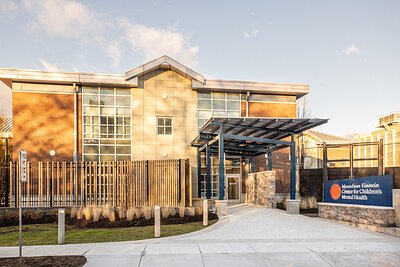
In the Bronx, this national challenge is coming into sharp focus, and with it, a potential blueprint for a strategic response. The recent unveiling of the Montefiore Einstein Center for Children's Mental Health, a 21-bed inpatient facility, is more than a local healthcare story. It represents a critical investment in what could be termed 'human infrastructure,' a recognition that securing the nation's future begins with healing its youngest and most vulnerable citizens.
A National Crisis in Microcosm
The Bronx is not just another borough; it is a microcosm of a systemic failure with strategic implications. The statistics are stark. Of the 282,000 children aged 5 to 17 living in the Bronx, an estimated 21%—nearly 60,000 individuals—have a diagnosed behavioral health disorder. This is not a localized anomaly but a concentrated example of a nationwide trend, with youth emergency room visits for mental health surging by over 40% in recent years. Compounding the crisis, the entire borough is a federally designated Mental Health Professional Shortage Area, a designation affecting 160 million Americans nationwide. The result is a human readiness crisis.
Before the new center's completion, the entire borough had only about 25 acute care inpatient psychiatric beds for children and adolescents. This catastrophic shortfall meant that children in acute distress—suffering from severe depression, psychosis, or suicidal ideation—often languished for days in emergency departments. One 2023 report noted an average wait time of over 48 hours for a psychiatric transfer from Montefiore's own ER. Many families were forced to seek care far outside the borough, and sometimes even outside New York State, severing crucial community and family support systems at the moment they were needed most. This isn't just a healthcare failure; it's a drain on the future workforce and a source of profound social instability.
"At Montefiore Einstein, we are deeply committed to ensuring that every child, no matter their zip code, has access to world-class healthcare," said Dr. Philip O. Ozuah, president and CEO of Montefiore Einstein. "This new center will transform access to critical mental health services in the Bronx and represents our promise to bring the highest level of expertise and compassion to the communities that need it most."
The Public-Private Partnership as a Strategic Tool
The creation of this center is a powerful case study in the effectiveness of public-private partnerships to address complex national challenges. The project was not the result of a single entity's effort but a deliberate collaboration between a major academic health system and state leadership. This strategic alignment of resources is a model that has parallels in the defense-industrial base, where government and private industry collaborate to produce critical assets.
This initiative is a cornerstone of Governor Kathy Hochul's historic $1 billion multi-year plan to overhaul New York's mental health system. The state's commitment is tangible, with funding for the Montefiore Einstein center flowing from the New York State Office of Mental Health (OMH) as part of a pledge to increase inpatient psychiatric bed capacity. Further funds were secured by State Assembly Speaker Carl Heastie and Assemblyman Michael Benedetto, demonstrating a unified political will to tackle the issue. A private philanthropic donation completed the funding puzzle.
"We are committed to increasing options for families that need access to intensive behavioral health services and more importantly, to providing top-notch care to all children who experience serious mental illness," Governor Hochul stated, framing the initiative as a core government responsibility. Dr. Ann Sullivan, Commissioner of the OMH, echoed this, noting, "Under Governor Hochul's leadership, we are expanding beds and strengthening our network of care to provide high-quality services for our children and families in the Bronx."
This fusion of state funding, legislative support, and private sector execution provides a replicable blueprint. It demonstrates how targeted government investment, when partnered with on-the-ground expertise, can rapidly build out critical infrastructure—whether that infrastructure is a semiconductor fab, a shipyard, or a center for healing young minds.
Innovating the Technology of Care
Significantly, the Montefiore Einstein center is not just about adding capacity; it's about advancing the 'technology' of care itself. By nearly doubling the borough's inpatient capacity for children, the center is a game-changer, but its true innovation lies in its design and mission. Developed with direct input from patients and families, the facility features mostly private rooms and spaces designed for therapy, socialization, and education. This patient-centric approach is a critical innovation in a field often constrained by outdated institutional models.
The center is equipped to provide best-in-class intensive treatment for a spectrum of severe conditions, including trauma, psychosis, and high-functioning autism spectrum disorders—complex cases that require specialized, multidisciplinary expertise. This focus on comprehensive, compassionate, and culturally attuned care aims not just to stabilize patients, but to provide them with the tools for long-term recovery and resilience.
This approach transforms the facility from a simple holding area into a strategic asset for human capital development. By providing evidence-based interventions like cognitive-behavioral therapy (CBT) and dialectical behavioral therapy (DBT) in an intensive, supportive environment, the center is effectively repairing and strengthening the nation's most valuable resource. It is an investment that promises a significant long-term dividend, fostering a generation that is healthier, more stable, and better equipped to contribute to society.
The impact extends beyond the patients themselves. The center will serve as a vital training ground for the next generation of mental health professionals, helping to alleviate the very shortage that has plagued the region. By integrating with Montefiore's extensive network of school-based health programs and outpatient services, it will create a continuum of care that can support children and families before, during, and after a crisis. This integrated system is essential for building population-level resilience, ensuring that the strategic investment made today continues to yield benefits for decades to come.