
- 60 battery cells triggered in thermal runaway simultaneously during the test
- 961°C internal fire temperature, with only 45.3°C recorded on adjacent units
- Fire self-extinguished in less than three hours without active suppression
Experts agree that Huawei's successful extreme fire test under the UL 9540A:2025 standard sets a new benchmark for energy storage safety, demonstrating that intrinsic design can effectively contain fire risks without external intervention.
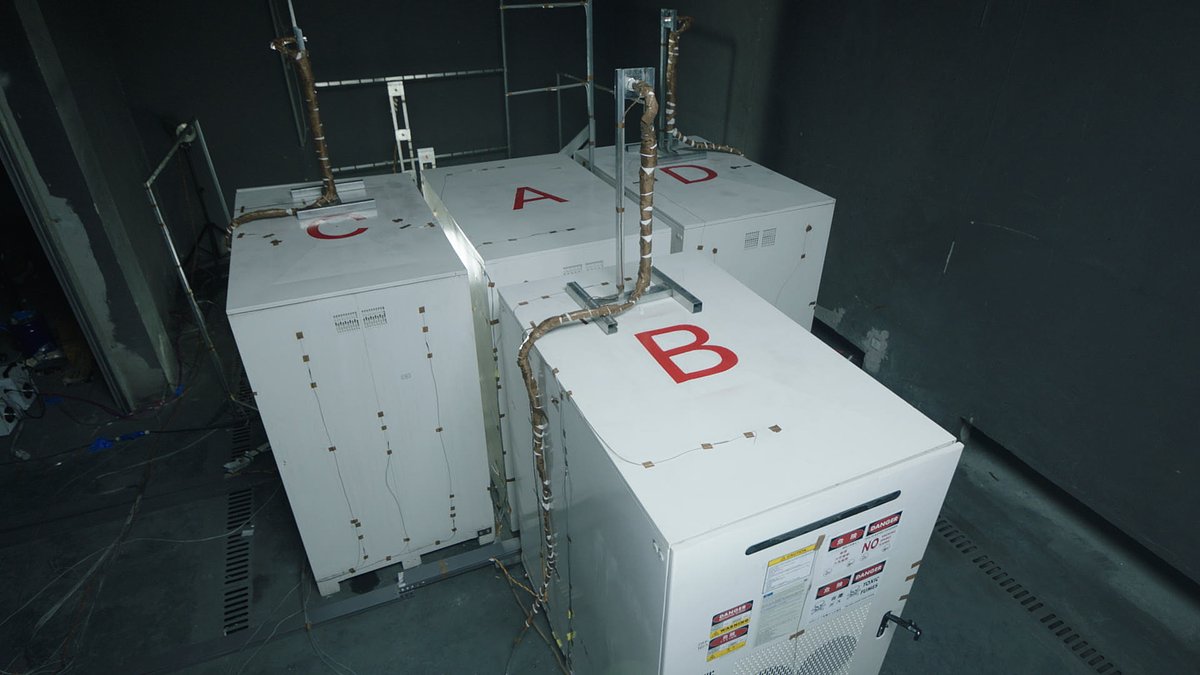
Huawei's Fire Test Sets New Bar for Energy Storage Safety
SHENZHEN, China – December 16, 2025 – In a critical development for the future of renewable energy and grid stability, Huawei Digital Power has successfully subjected its latest commercial energy storage system to an extreme fire test, setting a new and formidable benchmark for safety in the industry. The company's Commercial and Industrial (C&I) Grid Forming Energy Storage System (GFM ESS) is the first in the sector to pass a fire assessment under the stringent conditions of the newly updated UL 9540A:2025 standard, an achievement witnessed and verified by the independent global testing body, TÜV Rheinland.
This is more than a product milestone; it’s a significant step toward resolving one of the most persistent concerns hampering the widespread adoption of battery energy storage systems (BESS): the risk of fire. As our world becomes increasingly electrified - powering everything from data centers that store our health records to the smart devices that monitor our well-being - the safety and reliability of the underlying energy infrastructure have become paramount. This successful test signals a major advancement in building the public and commercial trust necessary to accelerate our transition to a sustainable energy future.
A New Standard for Extreme Conditions
To appreciate the significance of this achievement, one must understand the rigor of the test itself. The UL 9540A standard is the industry’s definitive method for evaluating fire propagation in battery systems. The latest edition, released in March 2025, raises the bar considerably, demanding a more comprehensive assessment of a system's resilience to thermal runaway - a dangerous chain reaction where a battery cell overheats and triggers adjacent cells to fail, potentially leading to a large-scale fire.
Huawei’s test, conducted at a national fire safety laboratory, was designed to create a worst-case scenario. Instead of initiating thermal runaway in a single cell, engineers triggered it simultaneously in 60 battery cells within a fully charged pack. To further escalate the challenge, all proactive fire suppression systems were disabled, forcing the unit to rely solely on its intrinsic structural and design-based safety features. The test was also conducted using the “open-door” ignition method specified in the new standard, maximizing oxygen supply to the fire.
Under these punishing conditions, the system’s performance was remarkable. While internal fire temperatures soared to 961°C, the highest temperature recorded on an adjacent, fully charged energy storage unit was a mere 45.3°C, far below the threshold that would risk a chain reaction. Critically, the test confirmed zero fire propagation between units, meeting a key safety objective of the UL 9540A standard. The fire itself, after reaching a peak heat release rate of 3 MW, self-extinguished in less than three hours, demonstrating exceptional thermal management and containment even without active suppression.
The Anatomy of Intrinsic Safety
The system’s ability to withstand such an extreme event is rooted in what the company describes as a five-level protection design. This multi-layered approach moves beyond reliance on active fire suppression, focusing instead on building safety into the very fabric of the hardware.
At the core of this strategy is advanced inter-cell thermal isolation. By using highly effective insulating materials and structural design, the system slows and contains thermal runaway at the cellular level, preventing a single cell failure from becoming a catastrophic pack-level event. This is the first and most critical line of defense.
Surrounding the cells is an all-metal pack enclosure engineered to withstand temperatures exceeding 1500°C. This robust shell maintains its structural integrity even under intense fire, acting as a formidable barrier to contain flames and heat within the pack.
Further reinforcing this containment is a positive-pressure oxygen blocking and directional smoke exhaust system. This innovative design redirects combustible gases and smoke away from other components and adjacent units, effectively starving the fire of oxygen and minimizing its impact. Complementing this is a fireproof labyrinth design on all sealing surfaces, which acts as a complex maze to block any potential flame spread out of the container.
Finally, the entire container is armored for enhanced fire resistance, providing a comprehensive final layer of protection. The success of this test, with all active suppression systems turned off, validates the effectiveness of this “safety by design” philosophy, proving that a system can be engineered to inherently contain a fire event without external intervention.
Reshaping the Market with a Competitive Edge
This safety validation is not just a technical triumph; it is a strategic masterstroke in the highly competitive C&I energy storage market. While competitors like Fluence, Tesla, and LG Energy Solution all adhere to stringent safety standards and hold certifications under previous UL editions, Huawei’s claim as the first to publicly announce compliance with the rigorous 2025 edition under such extreme test conditions provides a powerful differentiator.
For commercial and industrial customers, from manufacturing plants to data centers and hospitals, risk mitigation is a primary concern. An energy storage system that can verifiably contain a worst-case fire event without propagation is an immensely valuable proposition. This achievement could directly influence purchasing decisions, positioning safety as a key competitive advantage.
Furthermore, this level of certified safety has significant financial implications. Insurance providers for large-scale energy projects are keenly aware of fire risk, which is a major factor in determining premiums. A system with independently verified, superior intrinsic safety could lead to more favorable insurance terms, lowering the overall cost of ownership and making energy storage projects more financially viable. As one industry analyst noted, “Demonstrating this level of resilience under the newest, toughest standard can de-risk projects in the eyes of both investors and insurers, potentially unlocking developments in dense urban areas where safety is non-negotiable.”
Building Trust for a Sustainable Future
Ultimately, the impact of this development extends far beyond market share and product specifications. The transition to a global energy system reliant on intermittent renewable sources like solar and wind hinges on the widespread deployment of reliable and safe energy storage. Public perception of battery safety remains a critical hurdle to overcome.
High-profile incidents, though rare, can undermine public confidence and slow regulatory approvals. By proactively meeting and exceeding the most advanced safety standards in the world, technology leaders can build a foundation of trust with communities, regulators, and policymakers. This is fundamental to integrating large-scale battery systems into our power grids and unlocking their full potential for enhancing grid stability and enabling a carbon-free energy supply.
This elevation of safety standards is not merely an engineering victory; it is a foundational step in building the resilient, trustworthy, and sustainable energy infrastructure that our digital wellness future will depend on.