
- $70 billion: The global market for IoT in retail in 2025, projected to skyrocket.
- Real-time updates: Electronic shelf labels (ESLs) allow retailers to update prices and promotions instantly via Bluetooth Low Energy 5.4.
- AI-driven forecasting: Cognitive Supply Chain solutions analyze vast datasets to optimize logistics and inventory distribution.
Experts view Huawei's AI Retail Suite as a significant step toward reshaping the European retail landscape, offering integrated AI, IoT, and AR solutions that enhance operational efficiency and customer experience, though its success will depend on navigating competitive and regulatory challenges.
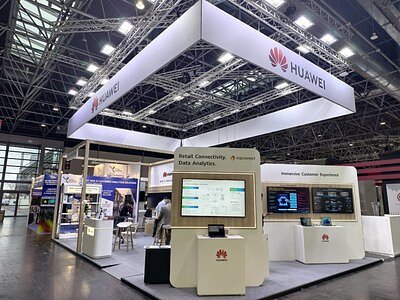
Huawei's AI Retail Suite Aims to Reshape the European Shopping Experience
DÜSSELDORF, Germany – March 02, 2026 – Huawei has made a significant play for the future of retail, unveiling a comprehensive suite of smart solutions at the EuroShop 2026 trade fair. The technology giant is targeting the complete retail value chain, from warehouse to checkout, with an integrated platform of AI, IoT, and augmented reality technologies designed to accelerate the industry's digital transformation. The announcement positions the company to compete directly with established enterprise software and cloud providers in a high-stakes battle to define the next generation of shopping.
The Intelligent Store Becomes Reality
At the heart of Huawei's presentation is the concept of the "intelligent store," an environment where digital and physical retail merge seamlessly. The company showcased tangible technologies aimed at solving long-standing operational headaches while enhancing the customer journey.
A key innovation is the use of electronic shelf labels (ESLs) connected via Bluetooth Low Energy 5.4. This allows retailers to update thousands of prices and promotions in real-time from a central hub, eliminating the laborious and error-prone manual process of changing paper tags. This not only promises significant reductions in operating costs but also enables dynamic pricing strategies that can respond instantly to market changes or competitor actions.
Complementing this is the integration of RFID-enabled access points. By using passive RFID tags on merchandise, retailers can automate inventory tracking with unprecedented accuracy. The system automatically captures stock movements, from the backroom to the sales floor, providing a live, precise picture of what is on hand. This data stream is critical for streamlining restocking, preventing out-of-stock situations that frustrate customers, and minimizing overstock that ties up capital. The global market for IoT in retail, which encompasses these technologies, was valued at over $70 billion in 2025 and is projected to skyrocket, reflecting the industry's urgent push toward hyper-efficiency.
For the shopper, the experience is enhanced through immersive technologies. Huawei demonstrated a virtual showroom platform that uses AI and augmented reality (AR) to create interactive product presentations. Customers can visualize furniture in their homes or try on clothing virtually, bridging the gap between online and in-store browsing. Furthermore, an AI-powered contact center allows for direct video calls with service staff, providing expert advice and support on demand, transforming stores into instant service hubs.
A Cognitive Overhaul for the Supply Chain
Beyond the flashy in-store technology, Huawei is addressing the less visible but critically important backbone of retail: the supply chain. The company introduced its "Cognitive Supply Chain" solutions, which leverage AI-driven predictive planning tools to move retailers from a reactive to an anticipatory model.
These tools analyze vast datasets—including historical sales, weather patterns, social media trends, and promotional calendars—to generate highly accurate sales and order forecasts. This allows for proactive planning across the entire supply chain, optimizing logistics, warehouse operations, and inventory distribution. In an era where nearly all retail executives expect rising costs due to trade policy shifts and logistical disruptions, the ability to predict demand and pre-emptively address potential bottlenecks is a powerful competitive advantage.
This focus on supply chain intelligence aligns with a major industry trend. Competitors like Oracle have also recently launched new cloud solutions, such as its Retail Supply Chain Collaboration platform, aimed at helping retailers manage unpredictable supplier landscapes. The race is on to provide the AI-powered visibility and data-driven insights needed to build resilient, agile, and efficient supply networks.
Navigating a Crowded and Competitive Field
Huawei's ambitious push into retail does not go unchallenged. The company enters a fiercely competitive arena dominated by tech behemoths that have been courting the retail sector for years. Recent industry events, such as the NRF 2026 conference, saw major announcements from key rivals.
SAP has positioned its portfolio as an AI-enhanced "retail operating system," while Microsoft is aggressively rolling out agentic AI solutions like "Copilot Checkout" to automate processes across merchandising, marketing, and operations. Amazon Web Services (AWS), the cloud backbone for many retailers, continues to expand its suite of AI and analytics tools, leveraging its own retail heritage and foundational models like "Amazon Nova."
Against this backdrop, Huawei's strategy appears to be one of deep integration. While competitors often focus on software, cloud platforms, or specific AI agents, Huawei's unique advantage may lie in its extensive background as an ICT infrastructure provider. By offering a solution that spans from the underlying high-performance network and storage infrastructure to the customer-facing applications, the company can promise a more cohesive and potentially more reliable end-to-end system. Its focus on foundational in-store hardware like specialized access points for ESL and RFID further underscores this ground-up approach.
European Ambitions in a Complex Climate
The choice of EuroShop in Düsseldorf for this major launch highlights Huawei's strategic focus on the European market. The company emphasized its "Partner-lead strategy," revealing that its keynote presentations featured case studies with several European companies and that it hosted roundtable discussions with local partners. While the specific partners were not named, this collaborative approach is central to its plan for navigating the nuanced European business and regulatory environment.
This strategy is crucial given the complex geopolitical and trade dynamics that all global technology firms face. With increasing regulatory scrutiny in Europe around data privacy under GDPR, cybersecurity, and fair competition, any technology provider must demonstrate a firm commitment to compliance and local adaptation.
By embedding itself within a local partner ecosystem and delivering industry-specific solutions tailored to regional pain points, Huawei aims to build trust and demonstrate long-term commitment. Its success in the European retail sector will ultimately depend on its ability to execute this strategy, proving that its integrated technology stack can deliver superior efficiency and a richer customer experience while navigating the intricate demands of the global market. The announcements at EuroShop 2026 signal that the company is ready to make its case directly to the heart of the European retail industry.