
- 129 billion face masks and 65 billion gloves used monthly worldwide at the peak of the recent global health crisis
- 8 million tons of pandemic-related plastic waste generated
- Less than 5% of all healthcare plastics recycled in North America and Europe
Experts would likely conclude that RenuCycle represents a significant and necessary step toward addressing the environmental crisis of PPE waste, offering a scalable and brand-agnostic solution that could substantially reduce landfill contributions and promote a circular economy.
Hourglass International Launches RenuCycle to Tackle PPE Waste Mountain
LITTLETON, CO – April 22, 2026 – In a significant move to address the escalating environmental crisis of single-use personal protective equipment (PPE), specialty solutions provider Hourglass International today launched RenuCycle. The groundbreaking program introduces a brand-agnostic recycling system designed to divert billions of disposable gloves, masks, and gowns from overflowing landfills.
For industries ranging from dental offices and research labs to high-tech manufacturing, the disposal of PPE has long posed a logistical and environmental challenge. The sheer volume of waste is staggering; during the peak of the recent global health crisis, an estimated 129 billion face masks and 65 billion gloves were used monthly worldwide. This flood of plastic-based equipment has contributed to over 8 million tons of pandemic-related plastic waste, much of which is destined to persist in the environment for centuries.
Hourglass International's new initiative aims to create a viable circular path for this waste stream. "The launch of RenuCycle reflects something we've believed for a long time — that the PPE industry has a responsibility beyond the point of sale," said Zach Atwood of Hourglass International in the company's announcement. By creating an accessible and scalable solution, the company is positioning itself as a steward of sustainability in an industry grappling with its environmental footprint.
The Scale of the Plastic Problem
The challenge RenuCycle confronts is immense. The vast majority of disposable PPE is made from non-biodegradable plastics like polypropylene, polyethylene, and nitrile. When sent to landfills, these materials can break down into harmful microplastics, which contaminate soil and groundwater. The U.S. healthcare sector alone, a primary user of PPE, generates an estimated 1.7 million tons of plastic pollution annually.
Traditional recycling infrastructure is ill-equipped to handle this type of waste. Most municipal recycling facilities (MRFs) cannot process the complex, multi-material construction of items like N95 respirators, which combine plastic fibers, metal nose clips, and elastic bands. Furthermore, the lightweight nature of masks and gowns can cause them to jam sorting machinery. As a result, less than 5% of all healthcare plastics are currently recycled in North America and Europe, leaving incineration or landfill as the default options.
This is the gap RenuCycle intends to fill. By creating a dedicated collection and processing stream, the program sidesteps the limitations of conventional recycling systems and offers a specialized solution for a specialized waste problem.
A Simple System for Complex Waste
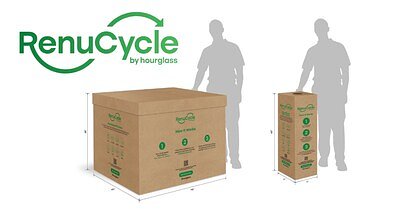
Simplicity and accessibility are at the core of the RenuCycle model. The program is designed to integrate seamlessly into existing business operations without requiring complex training or logistical overhauls. Businesses can order purpose-built collection containers through their existing distributors. These containers ship flat to save space and are available in two sizes to accommodate different scales of operation.
- The PPE Pillar is a tall, slender container designed for smaller facilities or individual departments within a larger organization.
- The Green Giant is a large, pallet-sized container intended for high-volume operations like manufacturing plants or large hospital systems.
Once a container is filled with used PPE, the business simply sends it back for processing. The program accepts an impressively wide array of items, including nitrile, latex, and vinyl gloves; N95 and other procedural masks; surgical gowns and scrubs; boot covers; and even sterile wrappings from medical settings. Critically, the program is brand-agnostic, meaning businesses can recycle PPE from any manufacturer, not just Hourglass International products. This inclusivity is a key differentiator, maximizing the potential environmental impact by removing brand-based barriers to participation.
However, the program has strict guidelines regarding contamination. Any PPE that has come into contact with infectious materials or hazardous chemicals like acids or caustic agents cannot be accepted, ensuring the safety of the recycling process.
Navigating a Competitive Landscape
Hourglass International is not the first company to venture into PPE recycling, but its approach is distinct. Other services, such as TerraCycle's Zero Waste Boxes, have offered similar collection programs for some time. However, many existing options are either brand-specific, like Ansell's RightCycle program, or focus on laundering and reuse rather than material recycling. For example, companies like Bates Enterprises and Closed Loop Recycling specialize in cleaning and repairing durable work gloves to extend their lifespan.
What sets RenuCycle apart is its combination of a brand-agnostic policy with a focus on advanced material recycling for a broad spectrum of single-use PPE. While the company has not disclosed its specific third-party recycling partners, the process reportedly involves state-of-the-art, camera-guided technology to sort materials, followed by a thorough sanitization process. The ultimate goal is to convert the collected plastic waste back into reusable raw materials, supplying them to other industries and fostering a more circular economy.
This strategic initiative extends Hourglass International's role from a supplier of protective equipment to a manager of its entire lifecycle. By launching RenuCycle, the company not only addresses a critical environmental need but also enhances its brand value in an era where corporate sustainability is increasingly scrutinized by customers and investors alike.
Economic and Environmental Viability
For any sustainability program to achieve widespread adoption, it must be both environmentally effective and economically viable. RenuCycle is marketed as a cost-effective solution, with pricing managed through its distributor network, which already includes major suppliers like Fisher Scientific. While costs will vary based on a business's volume and negotiated rates, the program's value proposition lies in simplifying waste management and providing a tangible way for companies to meet their own sustainability goals.
The launch on Earth Day is no coincidence, signaling a clear commitment to environmental stewardship. As businesses across North America now gain access to the program, its success will hinge on broad market adoption. By offering a practical, inclusive, and scalable solution to a pervasive problem, RenuCycle represents a pivotal step forward in the industry's collective effort to mitigate the environmental impact of protecting human health.